Home Remedies for Sore Throat: What Actually Soothes It, According to the NHS and Cleveland Clinic

Few everyday complaints are as familiar, and as miserable, as a sore throat. That raw, scratchy feeling when you swallow can turn a simple cup of coffee into a small ordeal, and it often arrives hand in hand with a cold, the flu, or a night spent breathing dry air. The good news is that most sore throats are not serious and tend to clear up on their own. According to the NHS, sore throats normally get better by themselves within a week. While you wait it out, there is plenty you can do at home to feel more comfortable.
This guide pulls together the most widely recommended home remedies for a sore throat and explains what each one can realistically do. Everything here is grounded in trustworthy sources: the NHS, Cleveland Clinic, and MedlinePlus from the U.S. National Library of Medicine. You will learn why a sore throat happens, how warm fluids and honey may help, how to gargle salt water properly, why rest and humidity matter, what to be careful with, and, just as importantly, the warning signs that mean it is time to stop self-treating and see a health professional. This article is educational and does not replace personal medical advice.
Why a sore throat happens
Understanding the cause helps set realistic expectations for home care. The large majority of sore throats are caused by viruses. As Cleveland Clinic explains, most sore throats happen because of a viral infection, like the common cold or the flu. Viral sore throats cannot be shortened by antibiotics, which is why home remedies focus on comfort while your immune system does the work. You can read more about the symptom itself in our overview of a sore throat.
A smaller share of sore throats are bacterial, the best known being strep throat. Cleveland Clinic notes that bacterial causes such as strep and sinus infections are less common than viral ones. The practical point for home care is this: you usually cannot tell viral from bacterial on your own, and you should not try to diagnose yourself. The NHS is clear that you do not normally need antibiotics for a sore throat, because they will not usually relieve your symptoms or speed up recovery, and they are only given if you could have a bacterial infection. If you are curious about how those medicines work and why they are used so carefully, see our guide to antibiotics. For now, the takeaway is simple: home remedies soothe symptoms, they do not treat the underlying infection.
Warm fluids and honey
When your throat is raw, warmth is comforting, and there is sensible advice behind reaching for a hot drink. Cleveland Clinic suggests soothing liquids such as broth, bouillon, or tea with lemon and honey, and notes that warm liquids help loosen mucus and clear the throat. The NHS similarly lists a hot drink of honey and lemon among the ways to ease the discomfort of a sore throat. None of these cure anything, but they can genuinely make swallowing feel less harsh and help you keep your fluid intake up.
Honey deserves a closer look because it is one of the more consistently mentioned remedies. Cleveland Clinic explains that honey coats your throat and soothes it by easing irritation, and suggests stirring a teaspoon or two into warm water or into tea. It can be enjoyed in a warm drink, in lemon water, or even as a spoonful on its own. A warm honey and lemon drink is closely related to other comforting infusions people lean on when they feel unwell, such as a cup of ginger tea with lemon. The evidence that honey shortens an illness is limited, so think of it as soothing rather than curing.
One safety rule is firm and worth repeating. Cleveland Clinic states clearly that honey should never be given to children younger than 1 year old. For that age group, honey is not a safe choice, no matter how mild a sore throat seems.

The saltwater gargle
If there is a classic home remedy for a sore throat, it is the saltwater gargle, and it is recommended across the sources. The method is simple. The NHS advises dissolving half a teaspoon of salt in a glass of warm water, gargling with the solution, and then spitting it out. Cleveland Clinic gives a very similar recipe of about half a teaspoon of salt per cup of warm water and explains that gargling this mixture can ease inflammation and irritation and may help reduce swelling and soreness. MedlinePlus also lists gargling with warm salt water among the ways to help relieve a sore throat.
A few practical notes make it work better. The water should be warm enough to dissolve the salt and feel comfortable, not scalding. You gargle for a few seconds and then spit the water out rather than swallowing it. Some people repeat it through the day; Cleveland Clinic mentions gargling roughly every few hours. Cleveland Clinic also notes that a baking soda gargle, prepared the same way, can soothe the throat and may help break up mucus.
There is one important caution. The NHS warns that young children should not gargle salt water, because of the choking risk and the difficulty of getting the technique right. For a young child with a sore throat, gentler measures and a conversation with a health professional are the safer path.
Rest, humidity, and hydration
It is easy to overlook the basics, but rest, moisture, and fluids form the backbone of recovery from most viral illnesses. MedlinePlus advises taking time to rest and getting plenty of sleep when you are unwell. Cleveland Clinic agrees, saying you should not underestimate the impact that resting your body and voice can have, and suggests elevating your head at night to avoid extra swelling. If you have strained your voice, giving it a break genuinely helps. Of course, an uncomfortable throat can make sleep harder, and if poor rest becomes a pattern it is worth reading our guide to insomnia for general sleep-friendly habits.
Dry air is a common, underestimated irritant. Cleveland Clinic recommends using a humidifier or vaporizer to add moisture and counter the dry air that can aggravate a sore throat, and notes that steam from a hot shower can help by loosening mucus and preventing dryness. MedlinePlus likewise says a humidifier may help ease symptoms. Keep any humidifier clean and follow the manufacturer instructions so it does not become a source of mold or bacteria.
Finally, staying hydrated matters more than people expect. The NHS recommends drinking plenty of water and suggests aiming for fluids through the day, especially if you also have a fever. MedlinePlus points out that you lose extra fluid when you are coughing and blowing your nose, and advises drinking plenty of water and other caffeine-free fluids. Cool or warm drinks are both fine, whichever feels better on your throat. For a fuller look at why fluids matter and how much to aim for, see our article on hydration. A sore throat sometimes travels with other cold symptoms, including a headache, and good hydration supports you through all of them. Once you feel better, general healthy habits help you stay well, and our overview of vitamin D looks at one nutrient often discussed in that context.

Lozenges, throat soothing, and what to avoid
Beyond drinks and gargles, a few extra comfort measures can help, as long as you use them sensibly. MedlinePlus notes that throat lozenges or sprays can help ease a sore throat. The NHS mentions medicated lozenges, some of which contain a local anaesthetic, antiseptic, or anti-inflammatory ingredient, while Cleveland Clinic suggests sucking on lozenges or hard candy to keep the throat moist and increase saliva. Cold can also soothe an inflamed throat: Cleveland Clinic mentions ice chips, popsicles, and sorbet, and the NHS suggests sucking on ice cubes or ice lollies. Whatever you choose, read the label and follow it, since this article does not give medication doses.
Just as useful is knowing what to skip. Cleveland Clinic advises avoiding very hot liquids, spicy foods, acidic foods, and hard or crunchy foods that can scratch an already sore throat. It also lists some popular folk remedies it does not recommend, including apple cider vinegar and essential oils, so a remedy being well known online is not the same as it being supported. The NHS adds that you should avoid airborne irritants as much as you can. Removing these irritants gives your throat the calmest possible environment to heal.
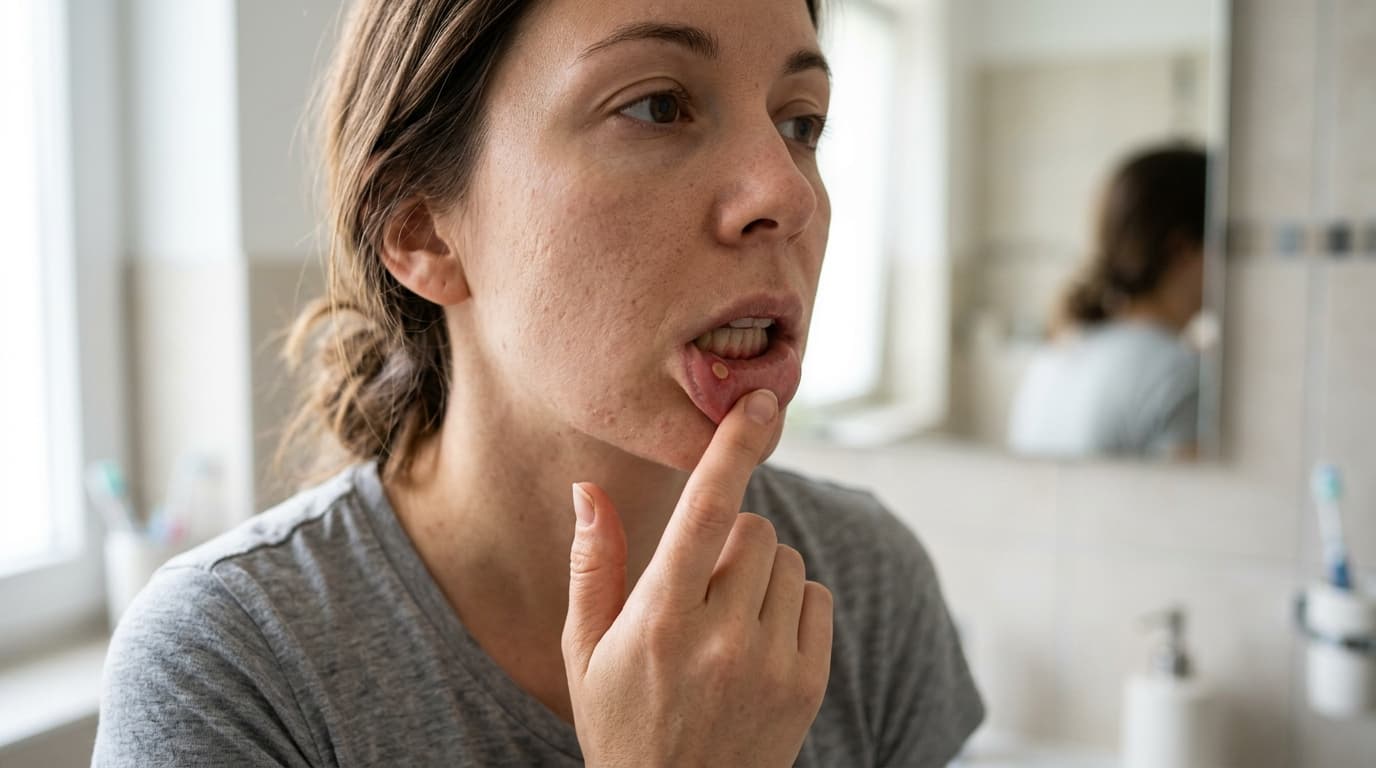
Two more cautions on safety. Cleveland Clinic warns that lozenges and hard candy are a choking hazard for young children, generally those under 5, so they are not suitable for that age group. And if a sore throat comes with an unusual bump or sore spot in the mouth, it can be confusing; our explainer on a swollen taste bud covers a common minor cause, though anything that lingers should be checked.
When home remedies are not enough: red flags and when to see a doctor
Home remedies are for mild sore throats that are clearly part of an everyday cold or similar illness. Some situations call for professional care instead, and a few are genuine emergencies. The NHS advises seeking emergency help if you have difficulty breathing or are unable to swallow, if you are drooling, or if you make a high-pitched sound as you breathe. Those signs can point to a serious problem and should never be managed with home remedies; get urgent medical help right away.
Other signs mean you should contact a health professional promptly rather than waiting. Cleveland Clinic lists severe throat pain, trouble swallowing or breathing, a fever (especially over 100.4 degrees Fahrenheit, which is 38 degrees Celsius), blood in your saliva or phlegm, a visible bulge at the back of the throat, and a body rash as reasons to seek care. The NHS also flags a high fever, signs of dehydration, or a weakened immune system as reasons to get advice. Time is another clue. The NHS recommends seeing a GP if a sore throat lasts longer than a week, and MedlinePlus advises contacting your provider if symptoms get worse or do not improve after about 10 days.
If you do see a clinician, they decide whether tests or treatment are needed. Sometimes that includes a swab to check for strep, and in certain situations a blood test such as a complete blood count may be part of the wider picture. The key principle is that diagnosis and any decision about prescription medicines belong with a health professional, not with self-treatment at home.
The takeaway
For most people, a sore throat is an uncomfortable but short-lived part of a cold or similar viral illness, and the NHS notes it usually clears within a week on its own. Home remedies are about comfort while you recover, not about curing the infection. Warm fluids and a little honey may help soothe irritation (never honey for children under 1), a simple saltwater gargle of about half a teaspoon of salt in warm water can ease soreness, and rest, moisture in the air, and steady hydration support your body through it. Lozenges and cold treats can offer temporary relief, while airborne irritants, very hot drinks, and harsh foods are best avoided. Throughout, keep expectations realistic: these measures may help soothe, but the evidence that they shorten an illness is limited. Most importantly, watch for the red flags. Trouble breathing or swallowing, drooling, a high fever, blood in saliva, or a sore throat that drags on beyond a week all mean it is time to see a health professional rather than rely on home care. Used wisely, these simple remedies can make a rough few days far more bearable.
Frequently asked questions
What is the most reliable home remedy for a sore throat?
There is no single magic fix, but a warm saltwater gargle is one of the most consistently recommended. According to the NHS, you can dissolve half a teaspoon of salt in a glass of warm water, gargle with the solution, and then spit it out. Cleveland Clinic gives a similar mix of about half a teaspoon of salt per cup of warm water and says it can ease inflammation and irritation. It does not cure the cause, but it may help soothe the throat while you recover. This article does not replace advice from a health professional.
Does honey really help a sore throat?
It may help soothe irritation, though it is comfort rather than a cure. Cleveland Clinic explains that honey coats your throat and soothes it by easing irritation, and suggests stirring a teaspoon or two into warm water or tea with lemon. The NHS also lists a hot drink of honey and lemon among ways to ease the discomfort. One firm safety rule applies: honey should never be given to children under 1 year old, as noted by Cleveland Clinic.
How much salt should I use for a gargle?
Authorities describe a small, simple amount. The NHS suggests half a teaspoon of salt dissolved in a glass of warm water, and Cleveland Clinic describes roughly half a teaspoon of salt per cup of warm water. You gargle and then spit it out rather than swallow it. Cleveland Clinic notes the salt water can reduce swelling and soreness. Young children should not gargle salt water because of the choking risk, as the NHS warns.
How long does a sore throat usually last?
Most settle on their own. The NHS states that sore throats normally get better by themselves within a week. MedlinePlus notes that a sore throat caused by a virus usually goes away on its own in about 5 to 7 days and does not need specific treatment. If yours lasts longer or keeps getting worse, that is a reason to check in with a health professional.
Do I need antibiotics for a sore throat?
Usually not. The NHS is direct that you do not normally need antibiotics for a sore throat, because they will not usually relieve your symptoms or speed up your recovery, and they are only given if you could have a bacterial infection. That is because most sore throats are viral, as Cleveland Clinic explains. A clinician decides whether antibiotics are appropriate, never the patient alone.
Does a humidifier help a sore throat?
It may make the air more comfortable. Cleveland Clinic recommends using a humidifier or vaporizer to add moisture and counter dry air that can irritate a sore throat, and MedlinePlus notes a humidifier may help ease symptoms. Steam from a warm shower may feel similar. Keep humidifiers clean and follow the manufacturer instructions so they do not spread mold or bacteria.
Are throat lozenges safe to use?
For many adults they can offer temporary relief. MedlinePlus says throat lozenges or sprays can help ease a sore throat, and the NHS mentions medicated lozenges that may contain a local anaesthetic, antiseptic, or anti-inflammatory ingredient. Cleveland Clinic warns that lozenges and hard candy are a choking hazard for young children, generally those under 5. Always read the label and follow it.
What should I avoid when I have a sore throat?
Cleveland Clinic advises steering clear of very hot liquids, spicy foods, and hard or crunchy foods that can scratch an irritated throat, and lists apple cider vinegar and essential oils among remedies it does not recommend. The NHS also advises avoiding airborne irritants. The goal is to stop adding extra irritation while the throat heals.
Can I eat and drink normally with a sore throat?
Yes, with gentle choices. The NHS suggests eating cool or soft foods and drinking cool or warm drinks, and recommends staying well hydrated. Cleveland Clinic mentions soothing liquids like broth, bouillon, and tea with lemon and honey, plus cold options such as ice chips or popsicles. Pick whatever feels easiest to swallow and keep sipping fluids through the day.
When is a sore throat an emergency?
Some signs need urgent care. The NHS says to seek emergency help if you have difficulty breathing or are unable to swallow, are drooling, or make a high-pitched sound as you breathe. Cleveland Clinic similarly flags severe throat pain, trouble swallowing or breathing, and other warning signs. Do not wait on home remedies if any of these appear; get medical help right away.
Does rest actually matter for a sore throat?
It does. MedlinePlus advises taking time to rest and get plenty of sleep when you are unwell, and Cleveland Clinic says not to underestimate the impact resting your body and voice can have, while suggesting you elevate your head to avoid extra swelling. Resting your voice matters if you have strained it. Rest supports your recovery even though it is easy to overlook.
Can children use the same sore throat remedies as adults?
Not all of them. Cleveland Clinic notes that honey should not be given to children under 1, and that lozenges and hard candy are a choking risk for younger children, generally under 5. The NHS warns that young children should not gargle salt water. For a child with a sore throat, especially with fever or trouble swallowing, it is safest to speak with a health professional rather than self-treat.
Author
Equipe Editorial GuiaDeSaude
The GuiaDeSaude Editorial Team researches and writes content from recognized medical sources (PubMed, Ministry of Health, WHO, Mayo Clinic, among others). All information is checked against at least two sources before publication.