Ginger Tea With Lemon: Benefits, How to Make It, and What the Science Really Says
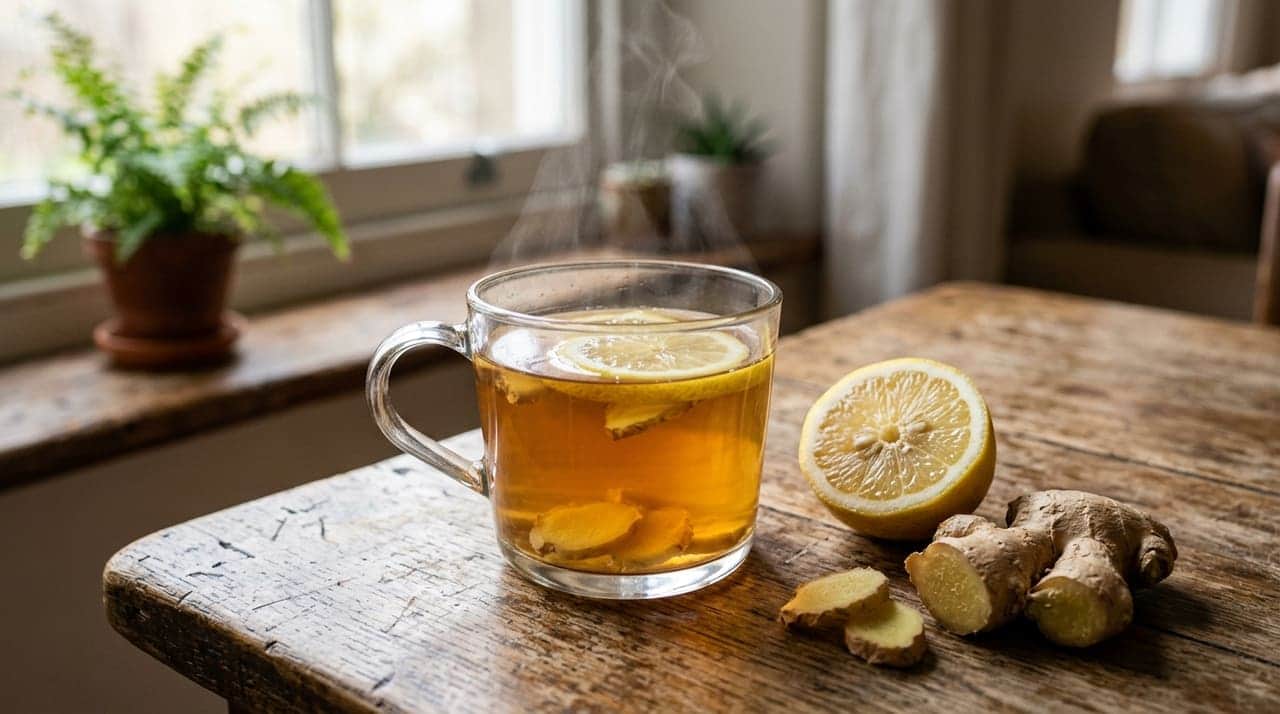
Few warm drinks feel as comforting as a cup of ginger tea with a squeeze of lemon. It is simple to make, smells wonderful, and has a long place in kitchens and home remedies around the world. Many people reach for it when their stomach feels off, when a cold or the flu is settling in, or simply when they want something soothing in the morning. But between tradition and the bold claims you see online, it is easy to lose sight of what this drink can and cannot actually do.
This guide is built as a clear, grounded reference on ginger tea with lemon. You will learn what the drink really is, what ginger has been studied for, which benefits are supported by health authorities and which are not, the modest role lemon plays, how to make a simple cup at home, who should be careful, and which common myths are worth letting go. Everything here is based on trustworthy sources: the NCCIH (U.S. National Center for Complementary and Integrative Health), two systematic reviews published in the scientific literature, and Harvard's Nutrition Source. The aim is balance, not hype.
What ginger tea with lemon actually is
Ginger tea with lemon is, at its heart, hot water infused with fresh ginger root and brightened with a little lemon juice. Nothing more is required. According to the NCCIH, ginger comes from the rhizome, the underground stem, of the plant Zingiber officinale, a plant native to warmer parts of Asia and now grown around the world, and it is used both as a food and for health purposes. That dual identity, kitchen ingredient and traditional remedy, is exactly why it shows up so often in home recipes for an unsettled stomach.
It helps to be honest about categories from the start. This is a beverage, not a medication. The ginger in a cup of tea is a food amount, far gentler than the concentrated doses found in capsules or extracts that researchers typically study. The lemon contributes flavor and a small amount of vitamin C, and the warmth itself can feel calming. Seen this way, ginger tea with lemon sits comfortably in the same group as other simple, low-calorie drinks: pleasant, a small contribution to your daily hydration, and worth enjoying, without expecting it to work like a prescription.
What ginger contains and how it may work
Ginger owes much of its character to natural plant compounds. A systematic review of ginger in gastrointestinal disorders points to active components such as gingerols and shogaols, and proposes that these compounds act on several receptors involved in gastric motility and in the body's nausea signaling, including pathways tied to serotonin and to the cholinergic system. That proposed mechanism is one reason researchers have been interested in ginger for an upset stomach, although a proposed mechanism is not the same as a proven cure.
It is worth keeping perspective on amounts. A cup of tea made from a small piece of ginger contains only a modest quantity of these compounds, far less than the concentrated supplements used in most trials. That is part of why ginger in normal amounts is generally regarded as gentle. The NCCIH states plainly that ginger has been used safely in many research studies where it was taken orally as a dietary supplement, and a systematic review of gastrointestinal studies notes that ginger consumption rarely induces side effects and that the U.S. Food and Drug Administration classifies ginger as Generally Recognized as Safe.
The lemon, for its part, adds vitamin C and the fresh aroma of citrus. Harvard's Nutrition Source lists citrus fruits, including lemon, among good sources of vitamin C, a nutrient the body uses to help heal wounds, to make collagen for connective tissue, and to act as an antioxidant. A single squeeze of lemon is a small contribution, but it is a real one in terms of flavor.
Possible benefits, according to the sources
This is the part everyone wants to read, so it deserves care. The honest summary is that ginger has been studied for several uses, and for some of them the evidence is encouraging, while for others it is limited, uncertain, or even negative. Authorities describe these as possible benefits, not guarantees, and a homemade tea is milder than the amounts used in research, so the realistic expectation is comfort and gentle support, not a powerful effect.
Nausea in pregnancy: the best-supported use
The use with the strongest support is nausea and vomiting in pregnancy. The NCCIH states that research shows ginger may be helpful for nausea and vomiting associated with pregnancy. A systematic review of randomized controlled trials reinforces this: it reported that all ten trials it examined on nausea and vomiting of pregnancy concluded that ginger was as effective as other anti-nausea medicines, or more effective than placebo, generally at modest daily amounts. The gastrointestinal review similarly highlights pregnancy-related nausea as an area where ginger has shown particular promise. This is where ginger's reputation is best earned, and it lines up with the long tradition of sipping ginger tea when the stomach feels queasy.
Motion sickness, chemotherapy, and surgery: weaker or uncertain
It is just as important to say where the evidence does not hold up as cleanly. The NCCIH notes that studies of ginger for motion sickness have not shown it to be helpful, and that the evidence is uncertain for nausea related to chemotherapy and for nausea after surgery. The systematic review of randomized controlled trials reached a similar verdict, describing the results for chemotherapy-induced nausea and for postoperative nausea as controversial, with roughly half the studies showing a benefit and others finding too little effect. So while "ginger helps nausea" is partly true, the detail matters: it is best supported for pregnancy, and far less certain elsewhere.
Digestion and other uses studied
Beyond nausea, the gastrointestinal review looked at ginger across a range of digestive topics, including gastric emptying and dyspepsia, irritable bowel syndrome, fatty liver disease, and more. The picture there is mixed and often preliminary. For conditions such as irritable bowel syndrome, the review specifically noted that only a limited number of studies exist, which prevents firm conclusions. It is fair to describe ginger's link to digestive comfort as plausible and worth further study, but not as a proven treatment for any specific digestive condition. Ongoing digestive problems deserve a professional's attention rather than a drink.
What the sources do not promise
The systematic review of randomized controlled trials did report some findings beyond nausea, such as reductions in inflammatory markers, pain relief in primary period pain (a complaint often tied to PMS) comparable to common medicines, and improvements in some metabolic measures like fasting blood sugar in type 2 diabetes studies. It is worth being careful here. Those results came from studies of ginger supplements at measured amounts, not from a cup of tea, and measures like blood sugar are best tracked through proper testing with a doctor, alongside tests such as a complete blood count. The review itself flagged real limitations, noting that fewer than half the trials met its bar for high-quality evidence and that many had small numbers of participants. The fair takeaway is that ginger is an interesting subject of research, while a homemade tea should be enjoyed as a beverage, not relied on as therapy.
The role of lemon
Lemon is the supporting actor in this drink, and it plays a real but modest part. Its first job is flavor: a squeeze of lemon cuts through the warmth of ginger and makes the tea brighter and more refreshing. Because it is naturally caffeine-free, it can also be a gentle alternative for people who find that too much caffeine triggers a headache. That alone is a good reason to add it, especially if it helps you enjoy and drink more of a sugar-free beverage.
Nutritionally, lemon is a citrus fruit and a source of vitamin C, which Harvard's Nutrition Source describes as important for healing wounds, making collagen, and neutralizing free radicals as an antioxidant. The catch is quantity and handling. The amount of lemon juice in a cup of tea is small, and Harvard notes that vitamin C can be destroyed by heat and light, so a hot infusion is not an efficient way to take in the vitamin. This is also why it makes sense to add the lemon after the tea has cooled a little rather than during the strongest heat.
One popular belief deserves a clear answer. Many people drink lemon in hot water hoping to fend off a cold, but Harvard's Nutrition Source is direct that for the average person there is no evidence that large doses of vitamin C prevent colds, and that megadoses above 500 mg daily have no significant effect on the common cold. In short, value the lemon for taste and a small bonus, and get most of your vitamin C from eating whole fruits and vegetables throughout the day.
How to make ginger tea with lemon
Making this tea is refreshingly simple, and there is no medicinal recipe to follow, only a pleasant one. Because it is a beverage, the goal is a cup you enjoy, made with a modest, food-sized amount of ginger.
A simple method looks like this:
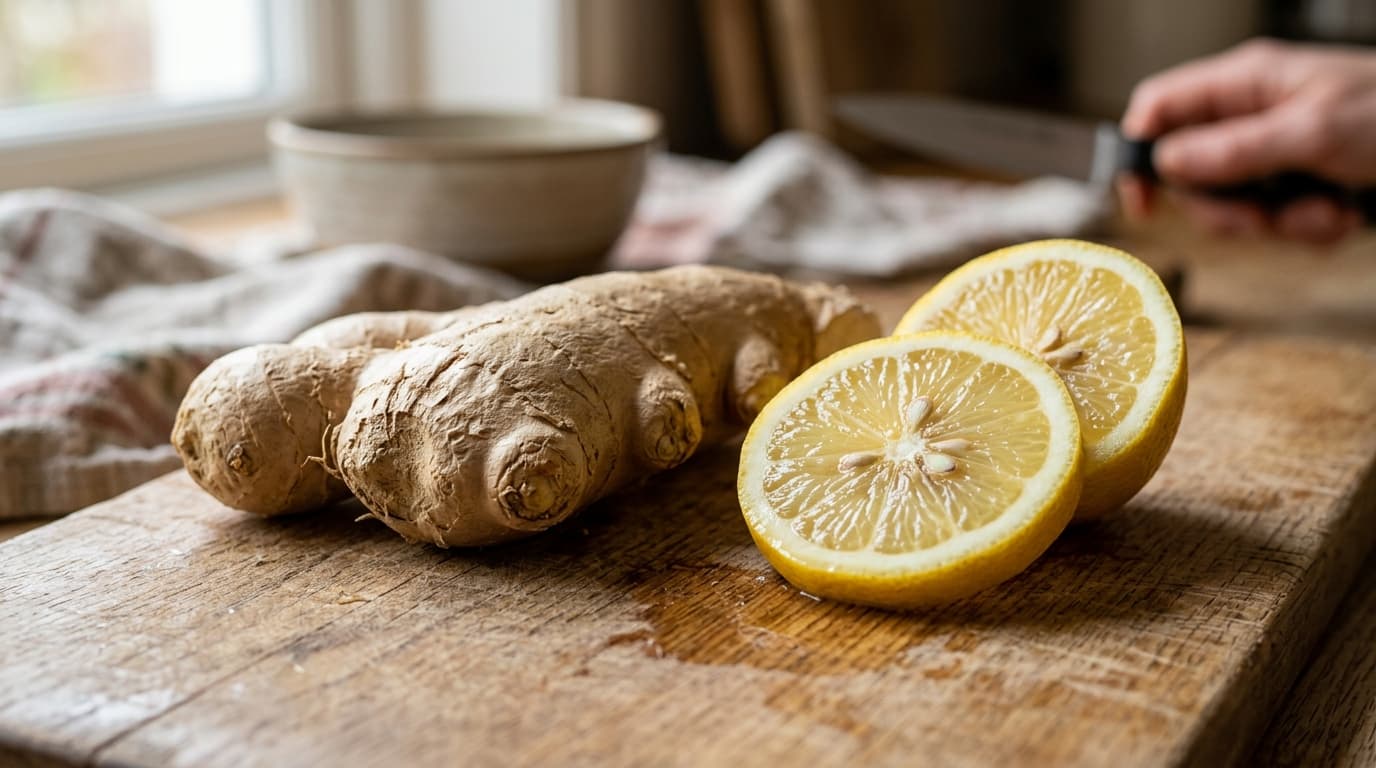
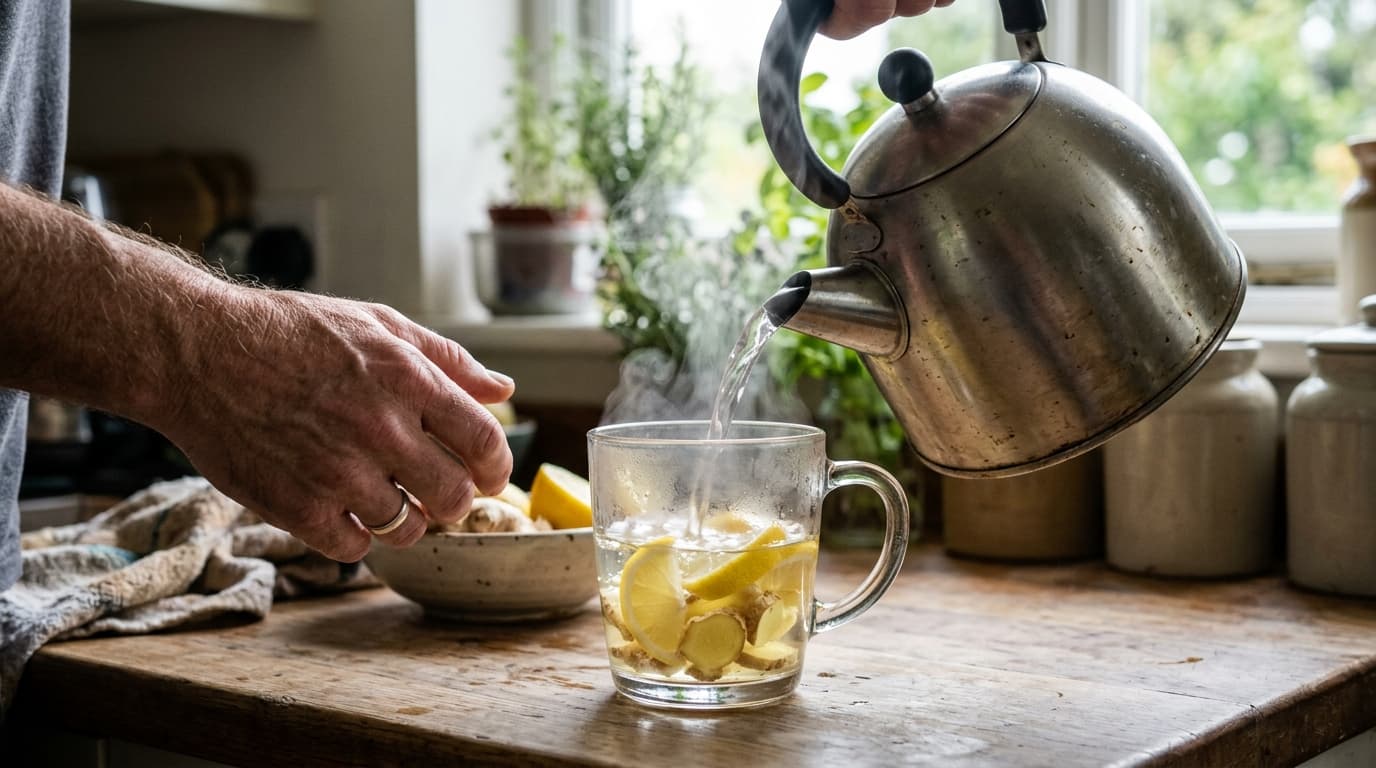
- Prepare the ginger. Peel a small piece of fresh ginger root, then thinly slice or grate it. A piece roughly the size of your thumb is plenty for a cup or two.
- Simmer. Add the ginger to about one to two cups of water and let it simmer gently for around 10 minutes. A longer simmer makes a stronger, spicier tea, so adjust to taste.
- Strain. Pour the tea through a strainer into your mug to remove the pieces of ginger.
- Add lemon. Once the tea has cooled slightly, stir in a squeeze of fresh lemon juice. Adding it after the strongest heat helps keep the bright citrus flavor, and since vitamin C is sensitive to heat, it also protects what little the lemon provides.
- Sweeten if you like. A little honey can round out the flavor, though keeping it unsweetened keeps the drink low in calories.
A warm, caffeine-free cup can also fit nicely into a calm evening routine, the kind of wind-down that good sleep hygiene encourages for anyone working on insomnia.
That is the whole recipe. Use ground (dried) ginger if that is what you have, since it comes from the same plant and works well, just in a smaller amount because it is more concentrated. Treat the strength as a matter of taste, not dosing.
Who should be careful
For most people, ginger in normal amounts is well tolerated. The NCCIH says ginger has been used safely in many research studies, and a systematic review of randomized controlled trials found no severe or life-threatening effects in its included studies. Still, "well tolerated" is not the same as "free of any effect," and a few groups have good reason to be thoughtful. The safest approach is to ask a health professional when any of these apply to you.
People taking certain medications. The NCCIH advises talking with your health care provider before using ginger, because some herbs and medicines can interact in harmful ways. The concern is greater for concentrated supplements than for an occasional cup of tea, but if you take any regular medication, it is wise to check with your doctor or pharmacist before using ginger often.
Pregnant and breastfeeding people. Ginger is studied most for nausea in pregnancy, and the NCCIH notes that the use of ginger dietary supplements during pregnancy may be safe, while advising people to consult their providers. A large systematic review reported no statistically significant differences in adverse pregnancy outcomes in the studies it reviewed. The NCCIH also points out that little is known about whether ginger is safe while breastfeeding. A small amount in tea is one thing; making it a routine remedy is a question for your care team.
People with reflux or a sensitive stomach. The NCCIH lists possible side effects of oral ginger such as abdominal discomfort, heartburn, diarrhea, and irritation of the mouth and throat. The systematic review of randomized controlled trials found heartburn was the side effect most consistently reported across studies. The acidity of lemon may add to that for some people. If you notice discomfort, use less or stop.
Children. A mild, modest cup may be fine, but children are not small adults. Any concern about a child's symptoms is best discussed with a pediatric professional rather than managed with tea.
The thread running through all of these is the same. Ginger tea is a gentle drink, but it is not a free-for-all, and individual circumstances matter more than any general rule.
Myths and facts about ginger tea with lemon
"Ginger tea cures colds and the flu." Myth. None of these sources support that. On vitamin C specifically, Harvard's Nutrition Source says there is no evidence that megadoses prevent colds for the average person. A warm drink can feel soothing, can ease a sore throat, and help you stay hydrated while you recover, which is genuinely useful, but comfort is not a cure, and it is no substitute for antibiotics when a doctor confirms a bacterial infection.
"Ginger helps with every kind of nausea." Partly true, with care. The NCCIH says ginger may help nausea and vomiting in pregnancy, and a systematic review of trials backs that strongly, but the same NCCIH notes that ginger has not been shown to help motion sickness and that the evidence is uncertain for chemotherapy and post-surgery nausea. The benefit is real for pregnancy and far less certain elsewhere.
"Ginger tea with lemon burns fat and causes weight loss." Myth. No source here supports the tea causing weight loss on its own. A review found some metabolic effects from ginger supplements in diabetes studies, but that is not a cup of tea melting fat. As an unsweetened, very low-calorie drink the tea can be a sensible swap for sugary beverages, but it is not a weight-loss treatment.
"The lemon makes it a great source of vitamin C." Myth. Harvard's Nutrition Source lists citrus among vitamin C sources, but the amount of lemon in a cup is small and vitamin C can be destroyed by heat. Lemon is mainly for flavor, and most vitamin C should come from whole fruits and vegetables.
"If a little ginger is good, a lot is better." Myth. Ginger in normal amounts is generally gentle, but the NCCIH lists effects such as heartburn, abdominal discomfort and diarrhea, and the review of trials found heartburn the most consistent side effect at the higher amounts studied. More is not automatically better.
"Ginger tea is safe for absolutely everyone." Myth. It is well tolerated by most, but the NCCIH advises caution about interactions and consulting a provider during pregnancy, and little is known about breastfeeding, so some people have real reasons to seek individual advice first.
The takeaway
Ginger tea with lemon is what it appears to be: a simple, warming, low-calorie drink with a long tradition behind it. According to the NCCIH, ginger is the rhizome of Zingiber officinale, used as both food and remedy, and the strongest support, echoed by a systematic review of randomized controlled trials, is for easing nausea and vomiting in pregnancy. For motion sickness, chemotherapy and post-surgery nausea the evidence is weaker or uncertain, and broader claims that ginger tea cures colds or causes weight loss are not supported by these sources. The lemon adds flavor and a small touch of vitamin C, a nutrient Harvard notes is sensitive to heat and, in large doses, no proven defense against colds. Making the tea is easy and needs no medicinal dose. The important caveats are individual: people on regular medication, those who are pregnant or breastfeeding, and those with reflux should check with a professional first. Enjoyed as a comforting beverage rather than a treatment, ginger tea with lemon has an honest and welcome place in everyday life.
Frequently asked questions
What is ginger tea with lemon, exactly?
Ginger tea with lemon is simply hot water infused with fresh ginger root and a squeeze of lemon. According to the U.S. National Center for Complementary and Integrative Health (NCCIH), ginger comes from the rhizome, the underground stem, of the plant Zingiber officinale, and it is used both as a food and for health purposes. The lemon adds flavor and a small amount of vitamin C. It is a drink, not a medicine, and it is not a substitute for care from a health professional.
Does ginger tea with lemon really help with nausea?
It may help in some situations, especially nausea and vomiting in pregnancy. The NCCIH states that research shows ginger may be helpful for nausea and vomiting associated with pregnancy. A systematic review of randomized controlled trials found that all ten trials on nausea and vomiting of pregnancy concluded ginger was as effective as other anti-nausea medicines or more effective than placebo. A homemade tea is milder than the amounts used in studies, and severe or lasting nausea always deserves medical attention rather than tea alone.
Does ginger help with motion sickness or chemotherapy nausea?
The evidence here is weaker. The NCCIH notes that studies of ginger for motion sickness have not shown it to be helpful, and that the evidence is uncertain for chemotherapy-related nausea and for nausea after surgery. A systematic review of RCTs likewise described the results for chemotherapy-induced nausea and postoperative nausea as controversial, with about half the studies showing benefit and others not. In short, pregnancy nausea has the best support, while these other uses are far less certain.
Can ginger tea with lemon cure a cold?
No. None of the sources support ginger or lemon curing a cold. On vitamin C and colds, Harvard's Nutrition Source is direct: for the average person there is no evidence that large doses of vitamin C prevent colds, and megadoses above 500 mg daily have no significant effect on the common cold. A warm drink can feel soothing while you recover, but that is comfort, not a cure.
How do I make ginger tea with lemon at home?
Peel and thinly slice or grate a small piece of fresh ginger root, add it to about one to two cups of water, and simmer for around 10 minutes. Strain into a mug, then stir in a squeeze of fresh lemon juice once it has cooled slightly. Adding lemon after the strongest heat matters because, as Harvard's Nutrition Source notes, vitamin C can be destroyed by heat and light. There is no medicinal dose for a homemade tea, so use it as a pleasant beverage.
Is ginger generally safe to drink?
For most people, yes, in normal amounts. The NCCIH says ginger has been used safely in many research studies where it was taken orally. A systematic review of gastrointestinal studies noted that ginger consumption rarely induces side effects and that the FDA classifies ginger as Generally Recognized as Safe. This article does not give medical doses. If you are considering ginger supplements or large amounts, talk with a health professional first.
Are there side effects from ginger tea with lemon?
In normal food amounts ginger is usually well tolerated, but it can cause mild effects. The NCCIH lists possible side effects of oral ginger such as abdominal discomfort, heartburn, diarrhea, and mouth and throat irritation. A systematic review of RCTs found heartburn was the only symptom consistently reported across studies, and noted no severe or life-threatening effects. The acidity of lemon may also bother some people with reflux or sensitive teeth.
Can ginger interact with medications?
It can, so caution matters. The NCCIH advises talking with your health care provider before using ginger, because some herbs and medicines interact in harmful ways. The concern is greater for concentrated supplements than for an occasional cup of tea, but if you take any regular medication, it is sensible to check with your doctor or pharmacist before using ginger often.
Is ginger tea with lemon safe during pregnancy?
Ginger is studied most for nausea in pregnancy, and the NCCIH notes that the use of ginger dietary supplements during pregnancy may be safe, while advising people to consult their providers. A large systematic review reported no statistically significant differences in adverse pregnancy outcomes in studies of ginger. Even so, pregnancy calls for individual caution, so the safest path is to ask the professional following your pregnancy before using ginger regularly.
Does ginger tea with lemon help you lose weight?
None of these sources support ginger tea with lemon causing weight loss on its own. A systematic review of RCTs did report that ginger supplementation lowered fasting blood sugar and improved some metabolic markers in type 2 diabetes studies, but that is a research finding about supplements and metabolic measures, not a claim that a cup of tea melts fat. As an unsweetened drink the tea is very low in calories, but it is not a weight-loss treatment.
How much vitamin C does the lemon add?
Harvard's Nutrition Source lists citrus fruits, including lemon, among good sources of vitamin C, which the body uses to help heal wounds, make collagen, and act as an antioxidant. But a squeeze of lemon in hot tea adds only a small amount, and Harvard notes vitamin C can be destroyed by heat and light. Lemon mainly improves flavor; get most of your vitamin C from whole fruits and vegetables across the day.
Has ginger been studied for digestion beyond nausea?
Yes, though with mixed certainty. A systematic review of ginger in gastrointestinal disorders looked at nausea and vomiting, gastric emptying and dyspepsia, irritable bowel syndrome, fatty liver disease and more, and proposed that ginger compounds such as gingerols and shogaols act on receptors involved in gastric motility and nausea signaling. For conditions like irritable bowel syndrome the review noted only a limited number of studies, so firm conclusions are not yet possible.
Is fresh ginger better than ground ginger for tea?
Both come from the same plant, Zingiber officinale. Fresh ginger root makes a brighter, more aromatic tea and lets you control the strength, while ground (dried) ginger is more concentrated and convenient. The safety message from the sources is the same for both: ginger is generally well tolerated in normal amounts, with mild effects like heartburn possible in larger amounts, as the NCCIH and the RCT review describe. Use whichever you have, in a modest amount.
When should I avoid relying on ginger tea and see a professional instead?
Treat ginger tea as a comforting drink, not a treatment. If you have persistent or severe nausea or vomiting, ongoing digestive problems, symptoms during pregnancy, or you take regular medication, seek individual advice rather than self-treating. The NCCIH supports ginger only as something that may help in some cases, mainly pregnancy nausea, and advises consulting a provider about interactions, so use the tea alongside proper care, not instead of it.
References
- Ginger (NCCIH, U.S. National Center for Complementary and Integrative Health)
- The role of ginger in gastrointestinal disorders: a systematic review (PMC)
- Clinical effects of ginger: a systematic review of randomized controlled trials (PMC)
- Vitamin C (The Nutrition Source, Harvard T.H. Chan School of Public Health)
Author
Equipe Editorial GuiaDeSaude
The GuiaDeSaude Editorial Team researches and writes content from recognized medical sources (PubMed, Ministry of Health, WHO, Mayo Clinic, among others). All information is checked against at least two sources before publication.