Hydration: how much water to drink a day, signs of dehydration and when to worry

Water is at once the most abundant and the most underestimated nutrient in the human body. It makes up most of our weight and takes part in nearly every process that keeps the body running, from regulating temperature to transporting nutrients. Even so, we often see hydration only as a way to "quench thirst," when in fact it is a silent foundation of everyday health. Staying well hydrated is no mystery, but it is surrounded by popular rules, loose numbers, and myths that confuse more than they help.
This guide was built to serve as a complete reference on hydration. You will understand why water matters so much, how much to drink a day according to the main health authorities, what increases your need, how to recognize the signs of dehydration from mild to severe, who needs extra attention, when the situation becomes an emergency, and why drinking water in excess also calls for caution. All based on official sources such as the NHS (UK National Health Service), MedlinePlus (from the U.S. National Library of Medicine), the CDC (U.S. Centers for Disease Control and Prevention), the EFSA (European Food Safety Authority), and the Harvard T.H. Chan School of Public Health.
Why hydration matters: what water does in the body
Water is not a detail of the body, it is the environment in which it happens. Almost all the chemical reactions that sustain life occur in a watery medium, which is why a lack of fluid affects the whole body, not just one organ. Combining what the CDC and the Harvard T.H. Chan School of Public Health describe, we can understand water's main functions in the body.
The first is regulating temperature. When the body heats up, whether from the surrounding heat or from physical effort, sweating kicks in: sweat evaporates on the skin and carries away part of the heat. This mechanism depends on water. Second, water lubricates and cushions the joints and protects sensitive tissues, such as the spinal cord, working as a natural shock absorber. Third, it is the body's main transport vehicle, carrying nutrients and oxygen to the cells and helping to carry waste out.
Another central function is eliminating waste. The CDC notes that the body gets rid of metabolic by-products through urine, perspiration, and bowel movements, and all these paths depend on fluid. That is why adequate hydration is associated with more regular bowel function and kidney health. Water also takes part in digestion, helps keep the skin healthy, and replaces fluids lost through breathing and metabolism, as Harvard observes.
When this balance breaks, the body gives signals. The CDC points out that dehydration can lead to unclear thinking, mood changes, overheating, constipation, and even kidney stones, and by concentrating the blood it can even nudge some values on a complete blood count. Even a mild loss of fluid usually causes fatigue (not to be confused with the tiredness of poor sleep or insomnia) and dizziness and, for some people, headache. In other words: being well hydrated is not a luxury, it is what lets the basics work.
What dehydration is
Dehydration, according to MedlinePlus, is the condition caused by the loss of too much fluid, when the body loses more than it takes in and lacks enough water to function properly. It is not just about "being thirsty": it is an imbalance that can compromise how the body works, in degrees ranging from mild, easily reversed with fluids, to severe, which requires medical care.
The most common causes, again according to MedlinePlus, are diarrhea, vomiting, excessive sweating, increased urination (caused by certain medicines or illnesses), fever, and, of course, simply drinking too little fluid. Note that dehydration does not always come from "forgetting to drink water": often it accompanies an illness that makes the body lose fluid faster, like a stomach bug with diarrhea and vomiting, or the fever of the flu. That is why drinking more in these situations is an important part of care.
How much water to drink a day: what the authorities say
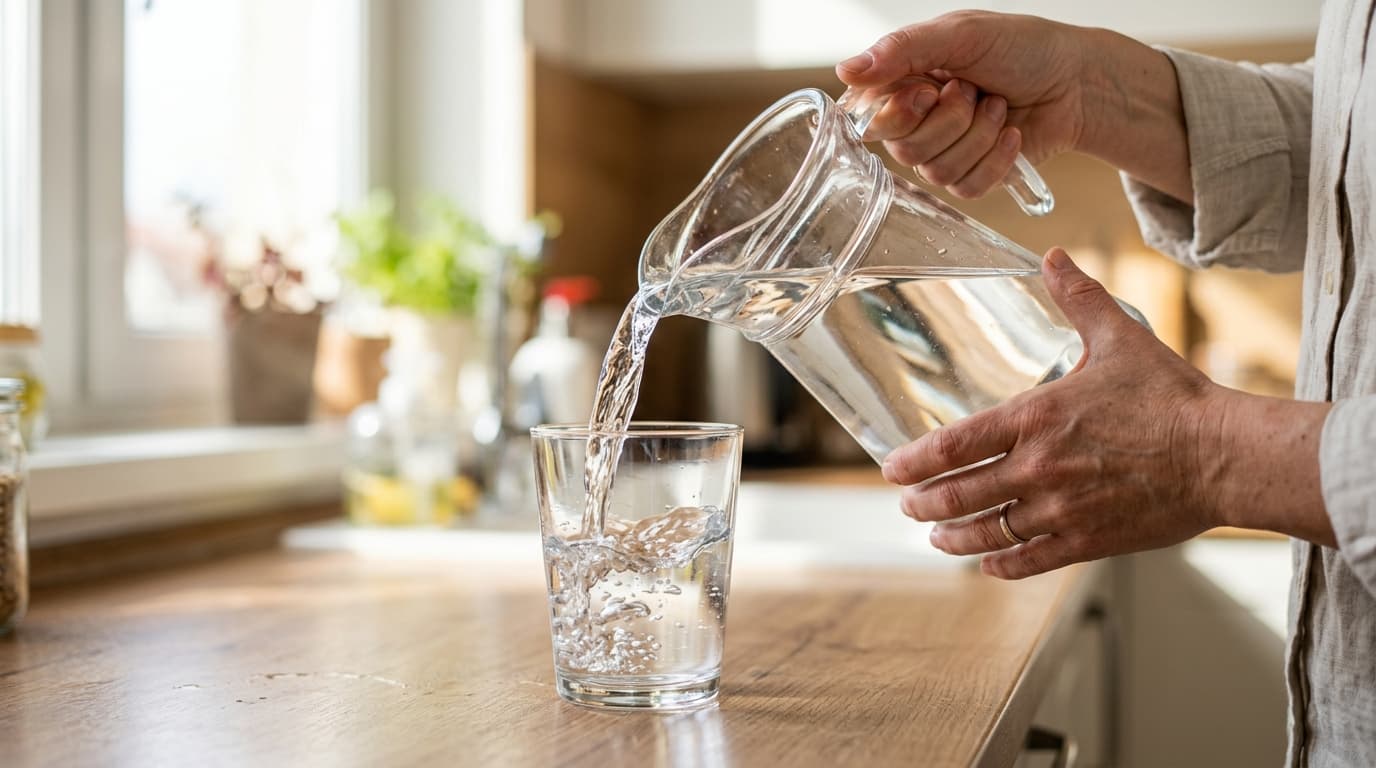
This is the question everyone asks, and the honest answer is: it depends. There is no single, universal number, because the need changes with the body, the climate, the activity, and each person's health status. What exists are reference ranges proposed by health authorities, useful as a general guide. It is worth knowing them and understanding that they are starting points, not individual prescriptions.
The UK's NHS recommends that people aim to drink 6 to 8 cups of fluid a day. It is important to note that the NHS speaks of fluid, not just plain water: according to the British service, water, lower-fat milk, and sugar-free drinks, including tea and coffee, count toward this goal, and part of our hydration also comes from food.
The EFSA, the European food safety agency, set somewhat different reference values, expressed as total water volume. According to the EFSA, a daily intake of about 2.0 liters of total water is considered adequate for women and 2.5 liters for men. The technical detail matters: this total includes the water that comes from food and from all drinks, and it applies to conditions of moderate ambient temperature and moderate physical activity. On very hot days or with intense effort, the need rises.
Harvard's T.H. Chan School of Public Health, in turn, cites the guidance from the U.S. National Academy of Medicine, of about 13 cups a day for men and 9 cups for women aged 19 and over, with lower values for children. Harvard makes a point of stressing that these numbers are not a strict daily target, but a general guide.
What these three sources have in common is more relevant than the small differences between them: all treat the numbers as a reference, not as an obligation to the milliliter. The practical message is to drink fluids throughout the day, give preference to water, drink more when the body loses more, and use simple signs, such as urine color, to guide yourself.
Reference ranges from health authorities
| Authority | Daily reference | What it includes |
|---|---|---|
| NHS (United Kingdom) | 6 to 8 cups of fluid | Water, lower-fat milk, sugar-free drinks, tea, and coffee |
| EFSA (Europe) | About 2.0 L (women) and 2.5 L (men) of total water | Water from drinks of all kinds and from food, in moderate climate and activity |
| U.S. National Academy of Medicine (cited by Harvard) | About 9 cups (women) and 13 cups (men) | General guide, not a strict target; about 20% comes from food |
The myth of "8 glasses of water a day"
Few health rules are as repeated as the one about 8 glasses of water a day. It has the merit of being easy to remember and of encouraging the habit of drinking, but it is important to know that it is not a scientific law. Harvard's T.H. Chan School of Public Health directly notes that this idea may not be appropriate for every person.
The problem with the fixed number is treating different people as if they were the same. A tall man who trains in the sun and a short older adult who spends the day in an air-conditioned space have very different fluid needs. Add to that the fact that part of the water we take in comes from food: Harvard estimates that about 20% of the total comes from water-rich foods, such as fruits and vegetables. So, instead of nailing down a number, it makes more sense to treat the 8 glasses as a friendly reminder and use your own body as a guide.
What increases your need for fluids
The amount of fluid you need is not the same every day. Several factors raise water loss and, with it, the need to replace. The NHS is clear in listing situations where it is wise to drink extra fluids:
- Heat and hot environments: the hotter it is, the more the body sweats to cool down, and the more water it loses.
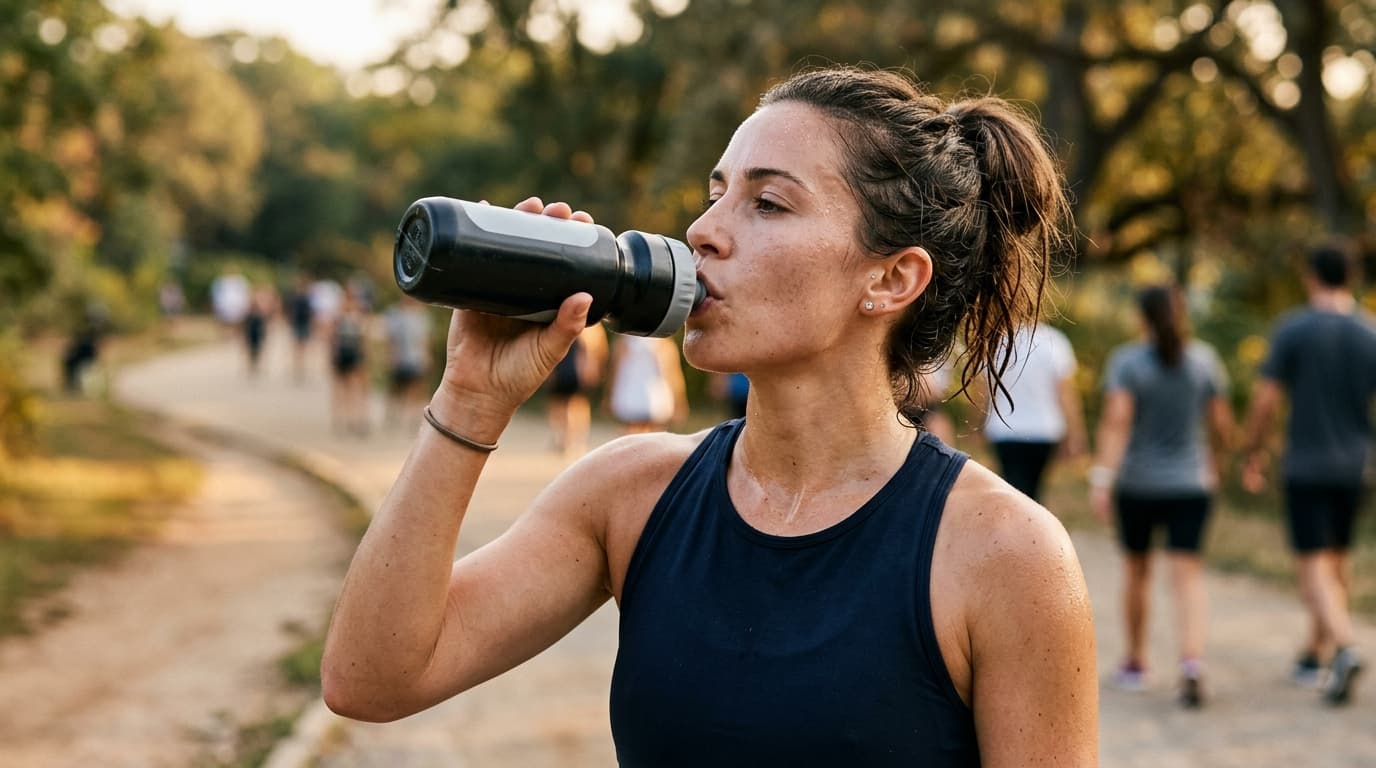
- Prolonged physical activity: exercise increases sweating; the NHS recommends drinking extra fluids when you sweat from physical activity, with water being the best way to replace what is lost.
- Pregnancy and breastfeeding: periods in which the body needs more fluids, as the NHS points out.
- Illness, especially with fever, vomiting, or diarrhea: MedlinePlus lists these factors among the main causes of dehydration, because they greatly increase fluid loss.
There are also less obvious factors. Dry climate, altitude, the use of certain medicines that increase urination, and even spending many hours talking or in air-conditioned spaces can add to the loss. The logic is always the same: when the body loses more, you need to replace more.
Signs of dehydration: from mild to severe
Recognizing the signs of dehydration early is what separates a passing nuisance from a serious problem. The condition progresses in degrees, and the symptoms change according to its intensity. The table below brings together the signs described by MedlinePlus, from mild to severe.
| Stage | Signs and symptoms | What it usually indicates |
|---|---|---|
| Mild to moderate (adults) | Intense thirst, dry mouth, dark urine in smaller amounts, less sweat, dry skin, fatigue, dizziness | Lack of fluid that usually improves by increasing intake |
| In babies and children | Dry mouth and tongue, crying without tears, no wet diaper for 3 hours or more, high fever, unusual sleepiness, irritability, sunken eyes | Immediate attention; children dehydrate faster |
| Severe (warning signs) | Confusion, fainting, no urination, fast heartbeat, fast breathing, signs of shock | Medical emergency that calls for immediate care |
In the mild to moderate stage in adults, the body is just asking for more fluid, and increasing hydration usually resolves it. Urine is a useful gauge: dark and scant suggests a lack of water. The severe stage is another story, and the warning signs should never be managed at home.
Groups that need extra attention
Some people dehydrate more easily or are at greater risk when it happens. MedlinePlus highlights the main risk groups, and each one has its own reason to deserve extra care.
Older adults. With age, the sensation of thirst diminishes, so a person may be dehydrating without feeling the urge to drink. Add to that the frequent use of medicines that increase urination and a smaller reserve of water in the body. So, with older adults, it is worth encouraging fluid intake throughout the day, without waiting for thirst to appear.
Babies and young children. Children have a proportionally smaller body and lose fluid quickly, especially during episodes of vomiting, diarrhea, and fever. Since they cannot always communicate thirst, parents and caregivers need to watch for the signs and offer fluids frequently.
People with chronic diseases. MedlinePlus cites conditions such as diabetes and kidney disease, as well as cystic fibrosis, as higher-risk factors. These diseases can alter the body's fluid balance, and any adjustment in intake should follow the guidance of the professional who manages the case.
Pregnant and breastfeeding women. Pregnancy and breastfeeding increase the need for fluids, and the NHS includes these situations among those that call for extra intake. Prenatal care is the right place to clarify specific questions.
Those exposed to heat and those who use certain medicines. Outdoor workers, athletes, and people who use diuretic medicines lose more fluid and need to replace more. It is worth remembering that any question about medication should be taken to the professional who prescribed it, and never resolved on your own.
When dehydration is an emergency
This is the most important section of the guide. The vast majority of dehydration cases are mild and improve with fluids, but there is a set of signs that indicate severe dehydration and require immediate medical care. According to MedlinePlus, seek an emergency service if dehydration comes with any of these signs:
- Confusion
- Fainting or difficulty staying conscious
- No urination
- Fast heartbeat
- Fast breathing
- Signs of shock
Beyond these, there are situations that call for attention and guidance even before reaching severity: when there is vomiting, intense diarrhea, or excessive sweating that does not improve, fluid loss is large and increasing intake may not be enough on its own. In these cases, especially in children, older adults, and people with chronic diseases, seeking guidance if the condition does not improve is the safest path. The central message is simple: dehydration with confusion, fainting, no urination, or signs of shock is not treated at home.
Excess water and hyponatremia: why more is not always better
With so much encouragement to drink water, a legitimate question arises: can you overdo it? The answer is that yes, although it is rare. Harvard's T.H. Chan School of Public Health explains that taking in a large volume of fluid in a short time, faster than the kidneys can excrete it, can lead to hyponatremia, a dangerous drop in the blood sodium level, sometimes called water toxicity.
Those at greater risk, according to Harvard, are long-distance athletes, such as marathon runners, who may drink very large volumes during long events. For the vast majority of people, in daily life, this danger does not exist: drinking with thirst and spreading intake throughout the day keeps the balance without risk. The message here is not to drink less out of fear, but to understand that healthy hydration is balance, not a contest of volume.
Which drink to choose: water, tea, coffee, and what to avoid
If the goal is to hydrate, plain water is the best choice, and there is consensus among the sources on this point. The Dietary Guidelines for the Brazilian Population, from the Ministry of Health, recommend that water be the preferred drink, instead of sodas and sugary juices. The CDC reinforces the same logic: since water has no calories, replacing sugary drinks with plain water helps reduce calorie intake.
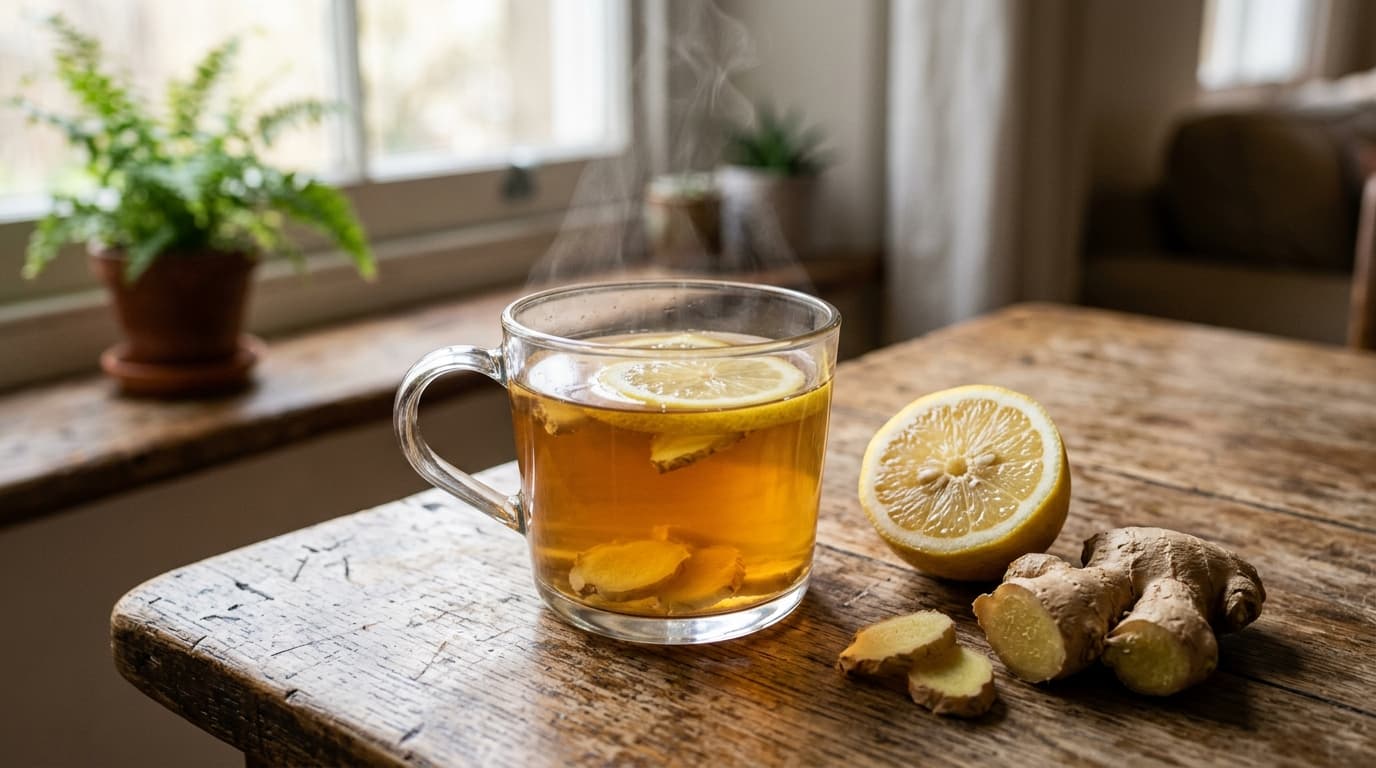
This does not mean that only water counts. As we have seen, the NHS includes lower-fat milk, tea and coffee, and sugar-free drinks in the daily hydration count. A simple unsweetened option such as ginger tea with lemon can add variety without sugar. About coffee, a practical note is worth making: the CDC indicates that moderate caffeine consumption, of up to 400 mg a day, the equivalent of about 2 to 3 cups of plain coffee, can be part of a healthy diet for most adults. Harvard adds that research shows caffeine does not necessarily cause dehydration. Even so, it is best for hydration to be based on water, leaving sugary drinks as the exception.
Practical tips to stay well hydrated
Drinking the right amount of fluid is, at heart, a matter of habit. Combining the CDC's suggestions and general self-care guidance, here are simple measures that help:
- Carry a bottle with you. Having water on hand is the most effective reminder to drink throughout the day, a tip that appears in the CDC's guidance.
- Set milestones during the day. A glass when you wake up, one before each meal, and one when you get home turn hydration into an automatic routine.
- Prefer water when eating out and at meals. Serving water with meals, instead of sugary drinks, is one of the CDC's tips.
- Add flavor without sugar. If the neutral taste bothers you, flavor the water with slices of lemon, orange, or mint leaves, without adding sugar.
- Lean on water-rich foods. Fruits and vegetables such as watermelon, cucumber, and tomato add to hydration, recalling that part of the water we take in comes from food, which also supplies nutrients ranging from vitamin D to minerals in foods high in phosphorus.
- Drink more when you lose more. On hot days, during exercise, and in illness with fever, vomiting, or diarrhea, increase fluids; staying hydrated also helps soothe a sore throat.
- Use urine color as a guide. Aiming for a pale, clear yellow urine, as the NHS suggests, is a practical sign of good hydration.
Myths and facts about hydration
"Everyone needs exactly 2 liters of water a day." Myth. The 2 liters is a general guide. The authorities themselves use ranges, and the EFSA speaks of about 2.0 liters for women and 2.5 for men counting water from drinks and food, while the NHS suggests 6 to 8 cups of fluid. The need is individual.
"Only water counts as hydration." Myth. According to the NHS, lower-fat milk, tea, coffee, and sugar-free drinks also count, and part of the water comes from food. Plain water, however, remains the best choice.
"Coffee dehydrates and should not be counted." Myth, with a caveat. Harvard points out that caffeine does not necessarily cause dehydration, and the NHS includes coffee among the drinks that count. Excess caffeine, however, is not recommended, and the CDC speaks of up to 400 mg a day for most adults.
"Urine color helps assess hydration." Fact. The NHS suggests aiming for a pale, clear yellow urine, and MedlinePlus associates dark urine with a lack of fluid. It is a practical sign, although not absolute.
"Drinking lots of water is always good, the more the better." Myth. Drinking a large volume in a short time, faster than the kidneys excrete it, can cause hyponatremia, according to Harvard, especially in long-distance athletes. Healthy hydration is balance.
"Thirst is a good sign to drink." Fact in most cases, with one important exception: in older adults the sensation of thirst diminishes, so you cannot rely on it alone. That is why MedlinePlus places older adults among the higher-risk groups.
Summary: what to take from this guide
Water sustains essential body functions, from regulating temperature to eliminating waste, which is why hydration is a silent foundation of health. There is no magic number of glasses: the authorities work with ranges, and the NHS suggests 6 to 8 cups of fluid, while the EFSA considers about 2.0 liters adequate for women and 2.5 for men, counting food and drinks. The rule of 8 glasses is a useful reminder, not a law, as Harvard notes. Drinking more when it is hot, during exercise, and in illness is essential, and urine color is a simple daily guide. Special attention applies to older adults, children, pregnant women, and people with chronic diseases. The non-negotiable point is the warning signs: dehydration with confusion, fainting, no urination, or a fast heartbeat and breathing is an emergency and calls for immediate care. And, although rare, excess water in a short time also deserves caution. Hydrating well is, in the end, a matter of balance and habit, with plain water as the best choice.
Frequently asked questions
Do I have to drink exactly 2 liters of water a day?
No. The 2 liters works as a practical reminder, not a fixed rule. The real need varies with age, weight, climate, physical activity, and health status. Authorities use different ranges: the UK's NHS suggests 6 to 8 cups of fluid a day, and the EFSA, the European agency, considers about 2.0 liters of total water adequate for women and 2.5 liters for men, counting what comes from food and all drinks. A simple way to keep track is to look at the color of your urine.
Where does the myth of 8 glasses of water a day come from?
It is a popular rule that spread without a single scientific basis. Harvard's T.H. Chan School of Public Health notes that the idea of 8 glasses may not be appropriate for every person. It works as an easy-to-remember starting point, but each person's need is individual and changes with the day, the climate, and the level of effort.
Do teas, coffee, and juices count as hydration?
Yes, they do. According to the NHS, water, lower-fat milk, and sugar-free drinks, including tea and coffee, are part of the daily fluid intake. Harvard's T.H. Chan School of Public Health adds that about 20% of the water we take in comes from water-rich foods, such as fruits and vegetables. Even so, plain water is the best choice, and the Dietary Guidelines for the Brazilian Population recommend preferring water over sugary drinks.
How can I tell if I am well hydrated by my urine color?
The NHS suggests drinking enough during the day so your urine is a pale, clear yellow. Dark urine, according to MedlinePlus, usually signals a lack of fluid, while light urine generally indicates good hydration. It is a practical sign, but not absolute: certain foods, vitamins, and medicines can change the color.
What are the first signs of dehydration in adults?
According to MedlinePlus, the early signs in adults include intense thirst, dry mouth, dark urine in smaller amounts, less sweat, dry skin, fatigue, and dizziness. Recognizing these signs early and increasing fluid intake usually resolves mild cases.
How do I identify dehydration in babies and young children?
In babies and children, MedlinePlus points to signs such as dry mouth and tongue, crying without tears, no wet diaper for three hours or more, high fever, unusual sleepiness, irritability, and sunken eyes. Children dehydrate faster, especially with vomiting or diarrhea, so they deserve evaluation without delay.
Who is at greater risk of dehydration?
MedlinePlus lists as higher-risk groups older adults, who feel less thirst, babies and young children, people with chronic diseases such as diabetes and kidney disease, those who use certain medicines, and people who exercise or work exposed to heat. These groups should pay extra attention to fluid intake.
Is it possible to drink too much water?
Yes, although it is rare. Harvard's T.H. Chan School of Public Health explains that drinking a large volume of fluid in a short time, faster than the kidneys can excrete it, can lead to hyponatremia, a dangerous drop in blood sodium. The risk is higher in long-distance athletes. For most people, drinking with thirst and throughout the day poses no such danger.
Do I need to drink more water when it is hot or when I exercise?
Yes. The NHS advises drinking extra fluids when you sweat from physical activity, in hot environments, during pregnancy and breastfeeding, or when you are unwell. Sweating increases water loss, so replacing fluids in these situations helps keep the body in balance.
When does dehydration become an emergency?
Seek immediate care if dehydration comes with confusion, fainting, no urination, a fast heartbeat, fast breathing, or signs of shock, as MedlinePlus warns. Vomiting, intense diarrhea, or excessive sweating that does not improve also call for guidance, especially in children and older adults.
References
- Water, drinks and your health (NHS, UK National Health Service)
- Dehydration (MedlinePlus, U.S. National Library of Medicine)
- Water and Healthier Drinks (CDC, U.S. Centers for Disease Control and Prevention)
- EFSA sets European dietary reference values for nutrient intakes (EFSA, European Food Safety Authority)
- Water (The Nutrition Source, Harvard T.H. Chan School of Public Health)
Author
Equipe Editorial GuiaDeSaude
The GuiaDeSaude Editorial Team researches and writes content from recognized medical sources (PubMed, Ministry of Health, WHO, Mayo Clinic, among others). All information is checked against at least two sources before publication.