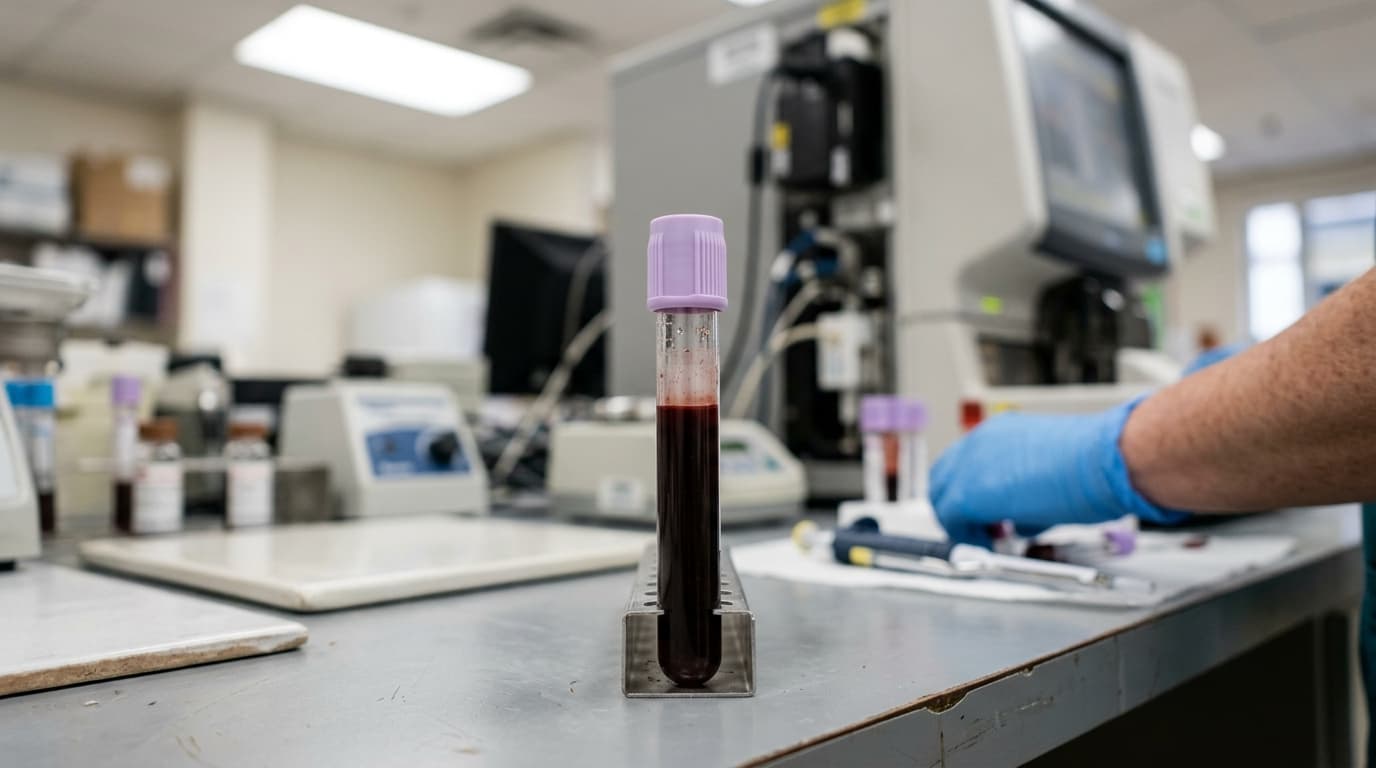
Complete blood count (CBC): what it is, what it is for, and how to understand it

The complete blood count is probably the blood test you have done most often in your life, even without quite knowing what it measures. Whenever a doctor wants a general snapshot of how your health is doing, it tends to be on the list. According to the MSD Manual, the CBC is the most frequently performed blood test and works as an evaluation of all the cellular components of the blood: the red blood cells, the white blood cells, and the platelets. It is a simple, fast, and inexpensive test, but one that carries a lot of information.
The purpose of this guide is twofold. First, to help you understand, in general terms, what the CBC is, how it is done, what each part of the report means, and why reference values vary so much. Second, and equally important, to make clear a point that no explanation can replace: the CBC is not meant for self-diagnosis. A number outside the reference range is not, by itself, a diagnosis. The person who reads the test and gives meaning to it is your doctor, always within the context of your symptoms, your physical exam, and your history. Everything here is based on official sources such as MedlinePlus (from the U.S. National Library of Medicine), the NHS (National Health Service of the United Kingdom), and the MSD Manual.
What the complete blood count is
The complete blood count, often abbreviated as CBC, is a set of tests done from a single blood sample. According to MedlinePlus, it is a group of blood tests that measures the number and size of the different cells present in the blood. Instead of looking at a single thing, it evaluates, at the same time, three large families of cells and a series of indices related to them.
Blood is not a uniform liquid. It is made up of a liquid part, the plasma, and cells that are suspended in that plasma. It is precisely those cells that the CBC counts and characterizes. Each one has a very different function, and that is why a single test can give clues about topics as varied as the body's ability to transport oxygen, the state of the defenses against infections, and the ability to stop bleeding.
Because it gathers so much information in a fast and accessible way, the CBC has become the starting point of a large share of medical investigations. It rarely establishes a diagnosis on its own, but it often is the test that points in a direction, helping the doctor decide whether it is worth ordering other, more specific tests.
What the complete blood count is for
The CBC has two major uses, which complement each other.
The first is to be part of routine evaluations and checkups. Even in people who feel well, it offers a general view of the blood cells and can reveal silent changes that have not yet caused symptoms. The second use is to investigate complaints and to monitor treatments. When someone sees the doctor with symptoms such as unexplained tiredness, paleness, fever (as in the flu), weight loss, or signs of infection, the CBC tends to be among the first tests ordered. MedlinePlus notes that the test is used to monitor conditions or treatments that may affect blood cell counts, and to help identify situations such as infections, anemia, and blood disorders. Even a common complaint like a persistent headache may prompt the doctor to order one as part of a broader evaluation.
The NHS summarizes well the various purposes of a blood test such as the CBC: to check general health, to help understand whether symptoms are related to certain conditions, to assess risks, and to monitor the response to treatments. In all these situations, the CBC tends to be a screening and follow-up tool, not an isolated verdict.

How the complete blood count is done
The great practical advantage of the CBC is its simplicity. It all starts with the collection of a small amount of blood. According to MedlinePlus, a healthcare professional draws the blood from a vein in the arm using a thin needle, and the procedure usually takes less than five minutes.
The step by step of the draw, described by sources such as the NHS, usually goes like this: the professional may place an elastic band, the tourniquet, around the arm to make the vein easier to see, cleans the skin, inserts the needle, generally in the bend of the arm, and collects the blood into a proper tube. You may feel a slight prick or a brief discomfort at the moment the needle goes in. Afterward, a small bruise in the area is common, and it disappears within a few days.
A detail that helps explain why the result comes out so fast: the cell count is not done by hand, one by one. The MSD Manual explains that automated machines perform the test in less than a minute, from a small blood sample. In some situations, the doctor or the laboratory complements the CBC with the analysis of the cells under a microscope, in what is called a blood smear, to look more closely at the shape and appearance of the cells.
Preparation: do I need to fast?
This is one of the most common questions, and the answer is reassuring. For the CBC alone, no special preparation is usually needed. MedlinePlus itself states that, usually, no special preparation is necessary. Fasting is only generally required when, in the same draw, other tests that demand this condition are done, such as blood glucose or a cholesterol profile. The NHS reinforces that the healthcare team advises on any preparation needed, which may include fasting or, in specific situations, adjustments to some medicines. The golden rule is simple: always follow the instructions of the laboratory and your doctor.
What each part of the complete blood count measures
The CBC report is usually divided into three major blocks, often called series, plus some indices. Understanding each block in general terms helps make the conversation with the doctor clearer. Let us go part by part.
Red cells (red blood cells and indices)
The red cell series deals with the red blood cells, also called erythrocytes. The main function of these cells is to transport oxygen from the lungs to the rest of the body. Along with the red blood cell count, the CBC brings some very important parameters:
- Hemoglobin: according to MedlinePlus, it is an iron-rich protein, present inside the red blood cells, that carries oxygen. It is one of the most observed values of the test.
- Hematocrit: represents the proportion of the blood volume that is occupied by red blood cells, usually expressed as a percentage.
- Red blood cell indices: the MSD Manual describes measures such as the average red blood cell size (MCV), the variation in cell size (RDW), the amount of hemoglobin per cell (MCH), and the hemoglobin concentration (MCHC). These indices help the doctor better characterize the red blood cells, for example, whether they are smaller or larger than expected.
Together, the red cell series gives clues about the blood's ability to transport oxygen. It is the part of the test most associated with the investigation of anemias, but, as we will see, altered values have several possible causes.
White cells (white blood cells and the differential)
The white cell series evaluates the white blood cells, the body's defense cells. The CBC reports the total number of white blood cells and, in the differential count, the percentages and numbers of the different types. The MSD Manual notes that there are normally five major types of white blood cells: neutrophils, lymphocytes, monocytes, eosinophils, and basophils. Each type is recruited in different situations, as the immune system responds to varied stimuli.
This differential count is valuable because it gives a sense of which part of the defense system may be more active. But, again, the caution holds: reading these numbers belongs to the doctor, because the meaning depends on the context.
Platelets
Platelets are small cell fragments that take part in blood clotting, that is, the process of stopping bleeding. The MSD Manual notes that platelets are counted as part of the CBC and that this count helps assess the body's ability to form clots. When there is easy bleeding or bruising with no apparent cause, the platelet count tends to be one of the first points the doctor looks at, always together with the rest of the test.
Table: what each part of the CBC evaluates
The table below summarizes, in general terms, what each component usually evaluates. It is meant to help you understand the test, not to interpret your result on your own.
| Component | What it is | What it usually evaluates, in general terms |
|---|---|---|
| Red blood cells | Cells that transport oxygen | The blood's ability to carry oxygen to the body |
| Hemoglobin | Iron-rich protein inside the red cells | The amount of oxygen the blood can transport |
| Hematocrit | Proportion of red cells in the blood volume | The concentration of red cells in the blood |
| Indices (MCV, MCH, MCHC, RDW) | Measures of red cell size and content | Characteristics of the red cells, such as size and variation |
| White blood cells | Defense cells | The activity of the body's defenses |
| Differential count | The five types of white cells | Which part of the defense may be more active |
| Platelets | Cell fragments | The ability to clot and stop bleeding |
What altered values may indicate, in general terms
Here we reach the part that raises the most questions and, unfortunately, generates the most mistaken self-diagnoses. It is essential to understand one central idea before any other: each CBC value can rise or fall for many different reasons, and the same change has distinct meanings depending on the context. The associations below are general, they are meant to help you understand the test, and they do not tell you what you have. The doctor is the one who interprets.
Low red blood cells, hemoglobin, and hematocrit. In general, low values in these parameters may be associated with anemia. Anemia, in turn, has several possible causes, and MedlinePlus mentions situations such as blood loss, iron deficiency (which can also contribute to hair loss), nutrition problems, and chronic diseases. So low values suggest the possibility of anemia, but they do not, on their own, point to what the cause is.
High red blood cells, hemoglobin, and hematocrit. Values above the range may be associated, in general terms, with situations such as dehydration (a reason good hydration matters), which concentrates the blood, along with other conditions. MedlinePlus notes that several factors influence the result and that a high number does not have a single meaning.
High white blood cells. A high number of white blood cells may be associated with infections, such as a bacterial sore throat, but also with inflammation, intense physical stress, and other situations. A rise in white cells is a common reaction of the body and does not, by itself, confirm a specific cause, nor does it decide on its own whether antibiotics are needed, which is a medical decision.
Low white blood cells. Low values of white blood cells may be associated with different conditions, according to MedlinePlus, including some infections, situations that affect the bone marrow, and certain treatments. Again, it is a clue, not a diagnosis.
Altered platelets. Both low and high platelets have multiple possible causes and are interpreted by the doctor together with the rest of the test and the symptoms, especially when there is a complaint of easy bleeding or bruising.
Notice a pattern: in every item, the key phrase is "may be associated with." No isolated CBC change equals a confirmed disease. The test shows possibilities; the doctor turns those possibilities into an assessment, ordering, when needed, other tests to confirm or rule out hypotheses.

Why reference values vary so much
Anyone who has compared two reports may have noticed that the reference ranges are not always identical. This is not an error, and there are good explanations.
First, reference values depend on age and sex. Children, adults, and older people have different ranges, and men and women do too, especially in red cell parameters. Situations such as pregnancy also influence some results. That is why the same number can be considered normal for one person and atypical for another.
Second, each laboratory defines its ranges based on the equipment, the methods, and the population used as a reference. Different equipment and techniques can generate slightly distinct ranges. That is why the result should always be compared with the reference range printed on the report itself, next to the value, and never with that of another test, another laboratory, or another person.
The practical consequence is important: it makes no sense to be alarmed because your number is different from a relative's number or from a value you saw on the internet. What counts is the reading of your report, with your range, done by your doctor.
When the complete blood count is usually ordered
The CBC appears in many scenarios. Among the most common:
- Routine checkups, as part of the general health evaluation, even without symptoms.
- Investigation of symptoms, such as persistent tiredness (which may also stem from poor sleep or insomnia), paleness, fever, weight loss, signs of infection, or easy bleeding. MedlinePlus mentions symptoms such as fatigue, weight loss, and fever among the reasons for the order.
- Follow-up of conditions and treatments that affect the blood cells, a situation in which the test may be repeated several times to monitor the course.
- Before procedures, when the doctor needs a general view of the state of the blood.
In all cases, the decision to order the test, and to repeat it, belongs to the professional following the person. There is no single frequency that fits everyone.
How to interpret the complete blood count with your doctor
This is the most important section of this guide, and the message is direct: the CBC is a tool to support medical decision-making, not a self-diagnosis app. There are at least three reasons for this.
The first is that an isolated value, outside the range, often has no clinical meaning. It is quite common for one or another item to come flagged as slightly high or low without this representing a problem. Small variations are expected and can reflect factors such as diet, hydration, recent physical activity, stress, and even the time of the draw.
The second is that the same result can have very different meanings depending on the context. A high white cell count in someone with fever and a sore throat is read one way; the same number in a person with no symptoms and right after intense exercise may be read another way. It is the whole, not the isolated number, that matters.
The third is that the CBC almost never walks alone. The doctor cross-checks the results with each other, observes trends compared with previous tests, considers your symptoms and the physical exam, and, if needed, requests complementary tests, such as one to measure vitamin D. This clinical reasoning is precisely what is missing when someone tries to interpret their own report on the internet.
For all these reasons, the recommendation of official sources is consistent: do not draw conclusions or start any treatment on your own. Take the report to the doctor and discuss what it means in your case.
Myths and facts about the complete blood count
"Any value outside the reference means disease." Myth. Small variations are common and do not always have clinical importance. The set interpreted by the doctor is what counts.
"The CBC diagnoses cancer." Myth, at least as a direct claim. The test can show changes that lead the doctor to investigate blood diseases, but, on its own, it does not diagnose cancer. Confirmation depends on medical evaluation and other tests.
"I always need to fast to have a CBC." Myth. For the CBC alone, fasting is usually not needed. It is only generally requested when other tests are collected from the same sample.
"I can compare my result with someone else's." Myth. Ranges vary by age, sex, situation, and laboratory. Always compare with the reference on your own report.
"The CBC is a fast and simple test." Fact. The draw takes a few minutes and the cell count is automated, which makes the test quick and accessible.
"A single normal CBC guarantees everything is fine forever." Myth. The test is a snapshot of a moment. Follow-up over time, according to medical guidance, is what gives a more complete view.
What to ask your doctor
To make the most of the appointment, it is worth arriving with some questions in mind. Among the most useful:
- Is my CBC within what is expected for my age and sex?
- Does any altered value matter in my case, or is it a variation with no meaning?
- Does the result match the symptoms I reported?
- Do I need any complementary test to clarify an altered value?
- Does it make sense to repeat the CBC? In how long?
- Could any medicine or habit of mine have influenced the result?
- What signs should make me come back earlier than planned?
Bringing previous tests for comparison, when they exist, also helps the doctor see trends rather than isolated numbers.
Summary: what to take from this guide
The CBC is the most common blood test and one of the most useful in medicine. It evaluates, at the same time, the red cell series (red blood cells, hemoglobin, hematocrit, and indices), the white cell series (white blood cells and the five types), and the platelets, offering a general view of the blood cells. It is a fast test, done from a simple draw, which in general does not require fasting when it is ordered on its own.
The non-negotiable point is always the same: values outside the reference range may be associated with various situations, but they do not equal a diagnosis. Ranges vary by age, sex, and laboratory, and small isolated changes usually have no clinical importance. The person who gives meaning to your CBC is the doctor, who reads the set of results in the context of your symptoms, your physical exam, and your history. Use this guide to understand the test and to have a better conversation at the appointment, never to diagnose yourself.
Frequently asked questions
Do I need to fast for a complete blood count?
Most of the time, no special preparation is needed for the CBC alone. According to MedlinePlus, usually no special preparation is necessary. Fasting tends to be requested when other tests are collected from the same sample, such as glucose or cholesterol. So the best approach is to always follow the guidance of the laboratory and your doctor before the blood draw.
Does a result outside the reference range mean I have a disease?
Not always. Small variations outside the reference range can happen for reasons such as diet, recent physical activity, hydration, pregnancy, and the use of some medicines. A single value outside the range does not establish a diagnosis. The person who interprets the result is the doctor, always in the context of your symptoms, your physical exam, and your history.
How long does it take to get the CBC result?
The CBC is one of the fastest tests. The blood draw usually takes a few minutes, and the cell count is done by automated machines in a very short time. The time to release the report varies from laboratory to laboratory, but it is usually a few hours to a few days.
Does the CBC detect cancer?
The CBC alone does not diagnose cancer. It can show changes in the blood cells that, in some cases, lead the doctor to investigate blood diseases, such as leukemias. But those same changes have many other common and benign causes. The CBC is a starting point, and the diagnosis depends on medical evaluation and, when needed, other tests.
Why do reference values change from one laboratory to another?
Reference ranges depend on the equipment, the methods, and the population each laboratory uses as a basis, and they also vary by age and sex. That is why the correct approach is to compare your result with the range printed on your own report, not with that of another test or another person.
Do low red blood cells or hemoglobin always mean anemia?
Low values of red blood cells, hemoglobin, and hematocrit may be associated with anemia, which has several possible causes, such as iron deficiency, blood loss, or nutrition problems. But the test needs to be read as a whole. The doctor reviews the indices, your symptoms, and your history before concluding anything and deciding whether other tests are needed.
Do high white blood cells mean I have an infection?
Elevated white blood cells may be associated with infections, but also with inflammation, physical stress, some reactions to medicines, and other situations. Likewise, low white blood cells have several possible causes. The number alone does not confirm an infection. It is the doctor who interprets the result within the complete picture.
Is it normal to have some values flagged as altered on the report?
It is quite common to see one or another value marked as above or below the reference, and this does not always have clinical meaning. Small variations are expected. What matters is not an isolated number, but the set of results interpreted by a professional, together with your clinical history.
Can I interpret my CBC by myself using the internet?
It is not recommended. Looking up the meaning of each abbreviation may help you understand the test in general terms, but self-diagnosis is risky, because the same value can have very different meanings depending on the context. Correct interpretation belongs to the doctor, who cross-checks the result with symptoms, physical exam, and history. Use this guide to understand the test, not to diagnose yourself.
Does the blood draw for the CBC hurt?
The draw involves the prick of a needle in a vein, usually in the bend of the arm. It may cause a slight discomfort or a brief pain at the moment of the prick, and sometimes a small bruise afterward, which disappears within a few days. It is a quick procedure and is considered safe.
Do children and pregnant people have different reference values?
Yes. Reference values vary according to age and sex, and situations such as pregnancy also influence some CBC results. That is why the report should always be interpreted considering these characteristics, which reinforces the importance of an individual medical evaluation.
How often should I repeat the CBC?
There is no single rule. The frequency depends on your age, your health status, and any conditions being followed. In healthy people, it is usually included in routine checkups according to medical guidance. People treating a condition that affects the blood may need to repeat it more often, always as indicated by the professional.
Author
Equipe Editorial GuiaDeSaude
The GuiaDeSaude Editorial Team researches and writes content from recognized medical sources (PubMed, Ministry of Health, WHO, Mayo Clinic, among others). All information is checked against at least two sources before publication.