How to Get Rid of a Canker Sore: Self-Care That Helps It Heal
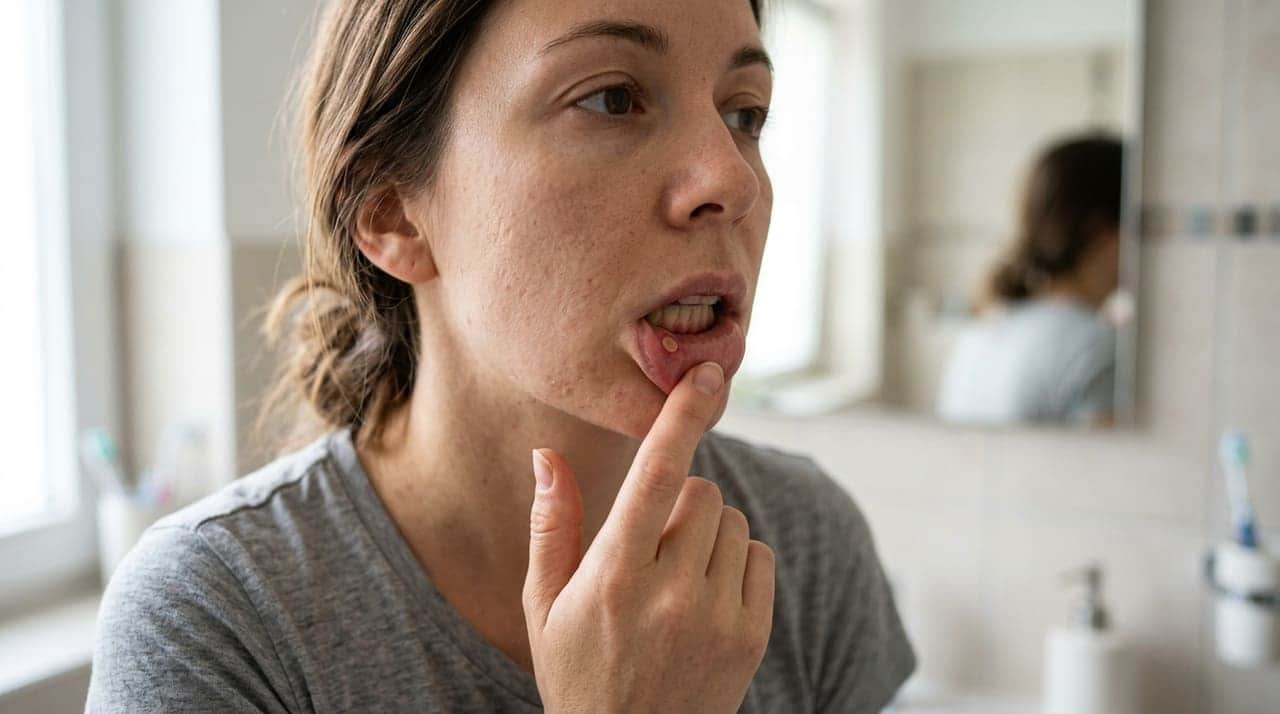
A canker sore is one of those small problems that feels much bigger than it looks. A single ulcer the size of a lentil, tucked inside your lip or under your tongue, can make eating, talking, and even smiling uncomfortable for days. So it makes sense that the first thing most people want to know is how to get rid of a canker sore quickly. The realistic answer is that these sores heal on their own, usually within about 1 to 2 weeks, and there is no magic trick to make one vanish overnight. What you can do is take the sting out of it and avoid anything that slows healing.
This guide walks through what a canker sore actually is, how it differs from a cold sore (they are often confused, but they are not the same thing), and the everyday triggers that bring one on. Then it covers the gentle self-care that may ease the pain and support healing, what to avoid, and how to tell a simple canker sore apart from a problem that needs professional attention. It is educational and does not replace advice from a doctor or dentist, but it should give you a clear, calm picture of what to do.
What a canker sore is and how it differs from a cold sore
A canker sore, also called an aphthous ulcer, is a small open sore that forms in the soft lining inside the mouth. You will usually find one on the inner cheeks or lips, on the gums, under the tongue, or on the floor of the mouth. It tends to look round or oval, with a white, yellow, or grayish center and a red border around the edge. Most are minor, less than about a centimeter across, and they heal without leaving a scar. A smaller number are larger and deeper, and these can be more painful and take longer to settle.
The most important point to clear up is that a canker sore is not a cold sore. They get mixed up all the time, but they are different conditions with different causes. A cold sore is caused by the herpes simplex virus, it usually shows up on or around the outside of the lips, it often begins with a tingling, itching, or burning feeling before it appears, and it is contagious. A canker sore, by contrast, forms inside the mouth, is not caused by a virus you can pass on, and is not contagious. You cannot catch one from someone else, and you cannot give yours away. Knowing which one you have matters, because the care is not the same.
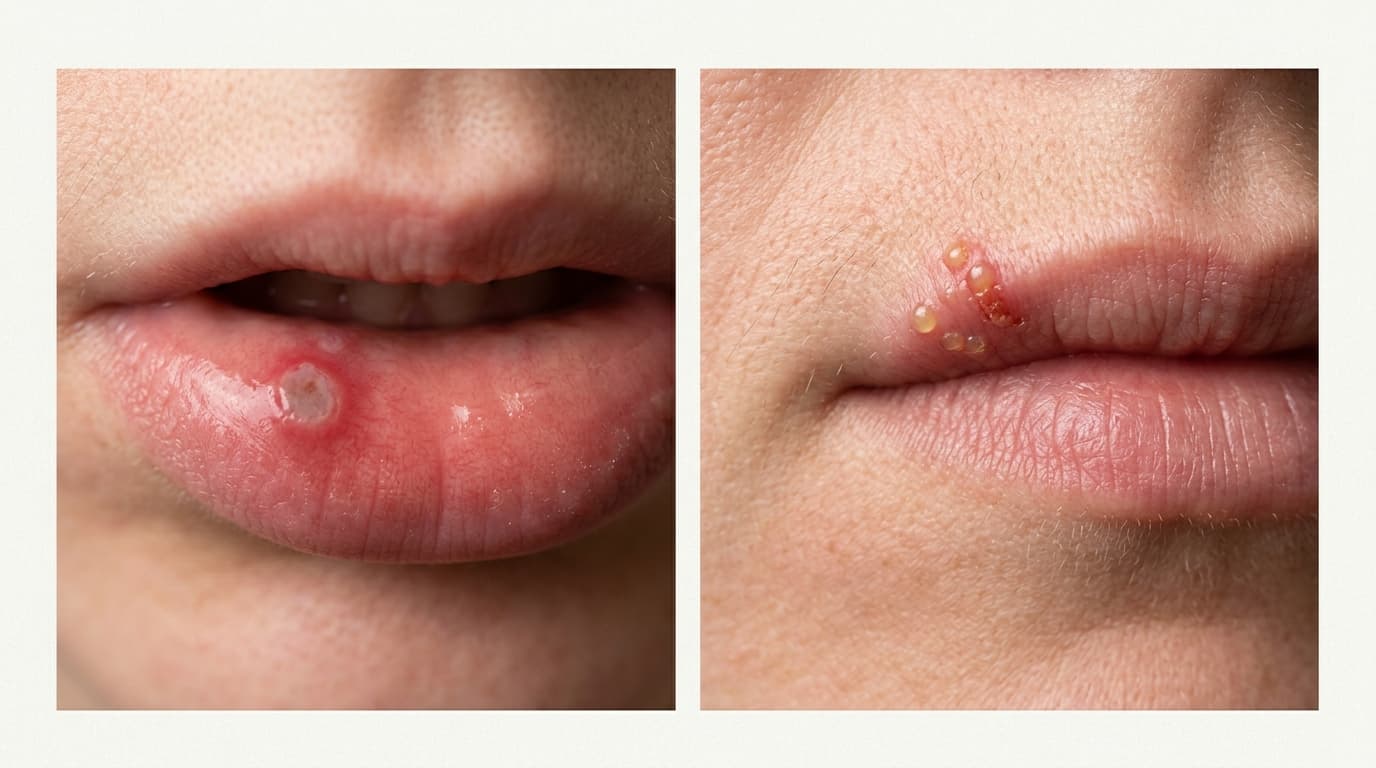
If your sore is on the outside of your lip and started with a tingle, it is more likely a cold sore than a canker sore, and the rest of this guide may not be the right fit. The discomfort can sometimes overlap with a raw, scratchy feeling at the back of the mouth, which is closer to a sore throat than a true mouth ulcer.
Why canker sores happen
The honest answer is that experts are not completely sure what causes canker sores. There is no single explanation, and for many people a sore simply appears without an obvious reason. What researchers have identified instead is a list of common triggers, things that seem to make a sore more likely in people who are prone to them.
Minor injury to the mouth is one of the most familiar triggers. Accidentally biting the inside of your cheek, brushing too hard with a stiff toothbrush, or catching the soft tissue on a sharp tooth, a filling, or braces can all set off a sore. Food plays a role too. Acidic foods such as citrus fruits and tomatoes, along with spicy or salty foods, are linked to canker sores in some people. Some individuals also react to toothpaste that contains sodium lauryl sulfate, the ingredient that makes it foam.
Beyond the mouth itself, general factors are often involved. Stress and tiredness are commonly reported around the time a sore appears. Hormonal changes, such as those during the menstrual cycle, are another recognized trigger. In people who get canker sores frequently, nutritional shortfalls (for example in iron, folate, vitamin B12, or zinc) and certain underlying health conditions can contribute. Keeping up with good hydration and a varied diet that supplies nutrients like vitamin D supports healthy tissue in general, even though no single nutrient is a guaranteed fix.
Self-care to ease pain and help healing
Since canker sores heal on their own, the goal of self-care is not to cure the sore but to make it hurt less and avoid setting it back. A few simple, gentle measures cover most of what helps.
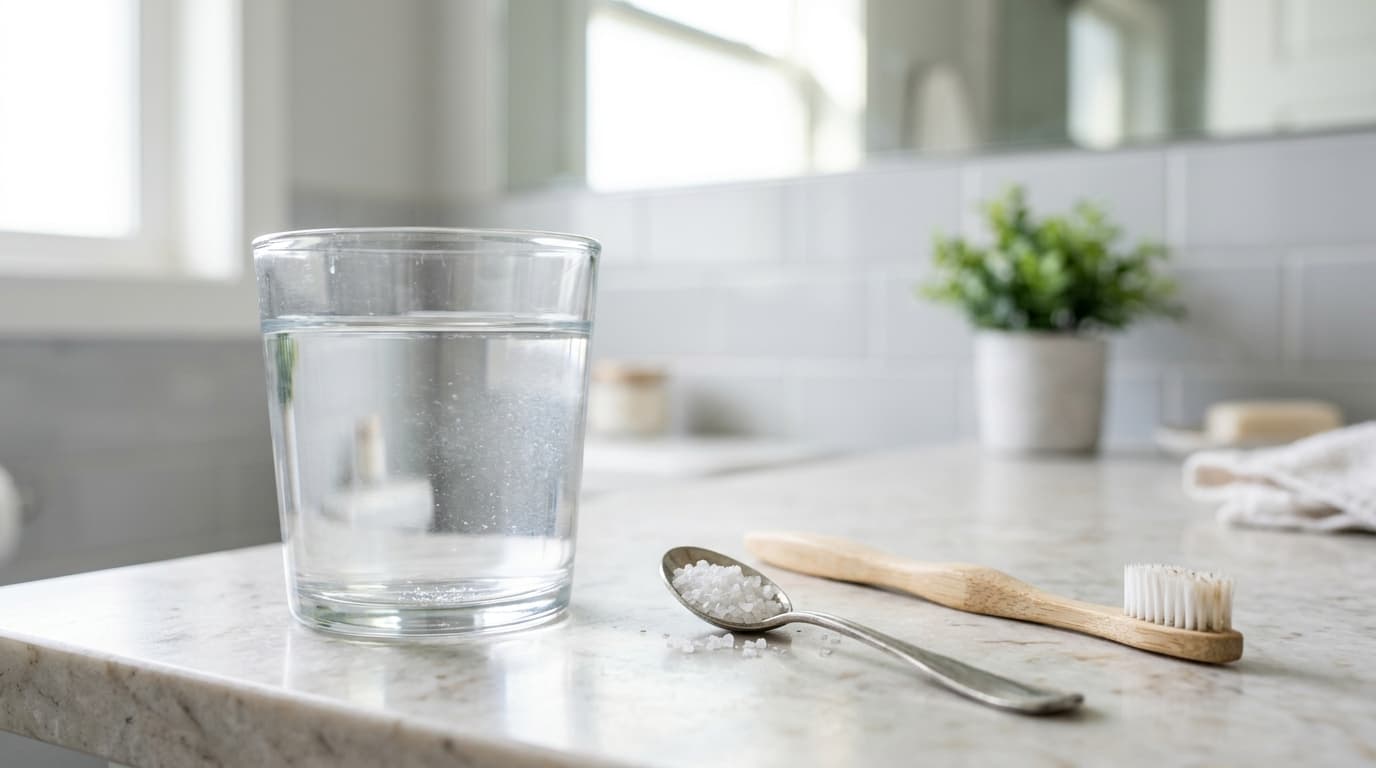
A warm rinse is the classic starting point. Many people find relief from a gentle saltwater rinse, swished around the mouth and then spat out, used a few times a day. A baking soda rinse, made by dissolving a little baking soda in warm water, is used in a similar way and may help soothe the area and keep it clean. Gentle, non-irritating mouthwashes are another mild option. None of these will make the sore disappear, but they can calm the discomfort, and they are easy to do at home.
Gentle oral care matters just as much. Switching to a soft-bristled toothbrush, brushing carefully around the sore rather than scrubbing it, and using a smooth flossing technique all reduce the chance of irritating the ulcer further. Some people find that a toothpaste without sodium lauryl sulfate is kinder while a sore is healing. Drinking cool drinks, sometimes through a straw to bypass the sore, and sticking to softer foods can make eating far more bearable.
Pharmacies also stock products aimed at mouth ulcers, such as protective gels, pastes, and numbing rinses or sprays designed to give short-term relief. These can take the edge off the pain, especially before meals, though they treat the discomfort rather than speeding up healing. If you are ever unsure which product suits you, a pharmacist can point you in the right direction. Avoid reaching for antibiotics on your own, since a simple canker sore is not a bacterial infection and they will not help it.
What to avoid while it heals
Just as important as what you do is what you hold back from. A canker sore is an open wound in a sensitive spot, so the main idea is to stop irritating it and give it room to recover.
Food is the biggest culprit. While a sore is healing, it helps to avoid spicy, salty, and acidic foods, which can make it burn, as well as rough or crunchy items like crisps, toast, and hard crusts that can scrape it. Very hot drinks can also aggravate the area, so letting them cool a little is wise. Some people notice that particular foods reliably trigger their sores; if you spot a pattern, cutting back on those foods may reduce how often you get them.
A few other habits are worth watching. Brushing too aggressively, picking at or poking the sore with your tongue, and using a harsh mouthwash that stings can all slow things down. The general principle is gentleness: treat the area as you would any healing wound, and let it be as much as possible.
Canker sores versus other mouth problems and red flags
Most of the time, a sore that fits the canker sore picture, small, inside the mouth, painful but improving within a couple of weeks, is exactly that and nothing more. But the mouth can develop other kinds of sores and patches too, and a few features should prompt closer attention rather than continued self-care.
The clearest red flag is time. A sore that lasts longer than three weeks should be looked at by a doctor or dentist, because a long-lasting mouth sore can occasionally be a sign of something that needs treatment. Other warning signs include a sore that is unusually large, one that is painless (canker sores are typically tender), new sores that keep appearing before the old ones heal, or sores that affect the outer lips. Sores near the throat, ones that bleed, or ones that come alongside a fever, headache, or feeling generally unwell also deserve a professional opinion, as do sores severe enough to stop you eating or drinking.
It is also worth a check if you get canker sores very frequently, for example more than two or three times a year, since recurring sores can sometimes point to an underlying cause that is worth investigating. A swelling on the tongue is a separate issue; if you notice a swollen taste bud rather than an ulcer, that usually settles on its own but follows its own pattern. And remember that mouth soreness in very young children is often something else entirely, such as the discomfort that comes with teething rash.
When to see a doctor or dentist
You do not need to see anyone for a typical canker sore that is healing as expected. The reasons to book an appointment come down to a short, practical checklist: a sore lasting more than three weeks, a sore that is very large or looks unusual, sores that keep returning, a sore that is making it hard to eat or drink, or a sore that comes with a fever or other symptoms. If any of those apply, a doctor or dentist can take a proper look, rule out other causes, and recommend the right treatment.
When you do go, it can help to mention how long the sore has been there, whether you get them often, what your usual triggers seem to be, and any other symptoms you have noticed, such as a recent illness or signs of the flu. For ongoing or recurring sores, a professional may also consider whether diet plays a part and look at the bigger nutritional picture, including foods that supply minerals like those in foods high in phosphorus. If your sore feels more like a raw, sore throat than a mouth ulcer, the self-care for that is different, and there are gentle home remedies for sore throat worth knowing about.
Summary
Canker sores are small, harmless mouth ulcers that nearly always heal on their own within about 1 to 2 weeks. There is no proven way to get rid of one instantly, so the realistic goal is to ease the pain and avoid making it worse while your body does the healing. Gentle saltwater or baking soda rinses, a soft toothbrush, careful oral care, and steering clear of spicy, salty, acidic, hot, or rough foods are the core of good self-care. Pharmacy gels and numbing products can help with comfort, but they treat the soreness rather than curing the sore.
The key thing to remember is when to step back from self-care. A sore that lasts more than three weeks, one that is very large, painless, or keeps coming back, or one that comes with a fever or stops you eating should be checked by a doctor or dentist. And because canker sores are not the same as cold sores, knowing which one you have helps you choose the right approach. This article is for general education and does not replace personal advice from a qualified health professional.
Frequently asked questions
How long does a canker sore take to heal?
Most canker sores are minor and heal on their own within about 1 to 2 weeks, often without any treatment. The pain usually starts to ease after the first few days. Larger sores can take longer, sometimes several weeks, and may need to be looked at by a professional. If a sore has not improved after about two weeks, or lasts longer than three weeks, it is worth getting it checked.
How can I get rid of a canker sore faster?
There is no proven way to make a canker sore disappear overnight, since these ulcers heal on their own schedule. What you can do is protect the area and ease the discomfort while it heals. A warm saltwater or baking soda rinse may soothe it, a soft toothbrush keeps you from irritating it, and avoiding spicy, salty, acidic, or rough foods stops you from making it worse. Keeping the mouth clean and well hydrated also supports healing.
What is the difference between a canker sore and a cold sore?
They are not the same thing. A canker sore is an ulcer that forms inside the mouth, on the inner cheeks, lips, gums, tongue, or floor of the mouth, and it is not contagious. A cold sore is caused by the herpes simplex virus, usually appears on or around the outside of the lips, often starts with a tingling or burning feeling, and is contagious. Because the causes are different, the care is different too.
Are canker sores contagious?
No. Canker sores form inside the mouth and are not spread from person to person. This is one of the clearest ways they differ from cold sores, which are caused by a virus and can be passed to others through close contact. You cannot catch a canker sore from someone else, and you cannot give yours to anyone.
What causes canker sores?
The exact cause is not fully understood, but several things are linked to them. Common triggers include minor injury to the mouth, such as biting the cheek, a hard toothbrush, or a sharp edge on a tooth or dental work, as well as acidic or spicy foods, stress, tiredness, hormonal changes, and some toothpastes containing sodium lauryl sulfate. Certain nutritional shortfalls and underlying health conditions can also play a role in people who get them often.
Does a saltwater rinse help a canker sore?
A gentle saltwater rinse is a common, simple home measure that may help soothe a canker sore and keep the area clean while it heals. Some people use a baking soda rinse in a similar way. These rinses do not cure the sore, but they can make it more comfortable. Swish gently and spit it out rather than swallowing it, and stop if it stings too much.
What should I avoid when I have a canker sore?
While a canker sore heals, it helps to avoid things that irritate it. That means steering clear of spicy, salty, and acidic foods, very hot drinks, and rough or crunchy items that can scrape the sore. Brushing too hard, or using a toothpaste that seems to make sores worse, can also aggravate it. Going gently with food and oral care gives the area a better chance to settle.
Can certain foods trigger canker sores?
For some people, yes. Acidic foods such as citrus fruits and tomatoes, spicy dishes, and certain trigger foods are linked to canker sores in some individuals. If you notice that sores tend to appear after eating particular foods, it can help to cut back on those and see whether it makes a difference. This is very individual, so what bothers one person may not affect another.
When should I see a doctor or dentist about a canker sore?
See a doctor or dentist if a sore lasts longer than three weeks, is unusually large, keeps coming back, or new sores appear before the old ones heal. Also seek care if the sore is very painful and stopping you from eating or drinking, if it is near the throat, or if it comes with a fever or other symptoms such as feeling generally unwell. A long-lasting mouth sore should always be checked, since it can occasionally signal something that needs treatment.
Can I prevent canker sores from coming back?
You may be able to reduce how often you get them by avoiding your personal triggers. That can mean using a soft toothbrush, being careful not to bite the inside of your mouth, limiting foods that seem to set them off, and managing stress and tiredness where you can. If you keep getting them several times a year, it is worth talking to a professional, because frequent sores can sometimes point to an underlying cause.
Is a canker sore a sign of something serious?
Usually not. The vast majority of canker sores are harmless and clear up on their own. The main reasons to take one more seriously are if it does not heal within about three weeks, if it is very large, painless, or unusual in appearance, or if you get them very frequently. In those cases a professional can rule out other causes. This article is educational and does not replace advice from a health professional.
Author
Equipe Editorial GuiaDeSaude
The GuiaDeSaude Editorial Team researches and writes content from recognized medical sources (PubMed, Ministry of Health, WHO, Mayo Clinic, among others). All information is checked against at least two sources before publication.