How to Test Cortisol Levels: Blood, Saliva, and Urine Explained

Cortisol gets called the stress hormone, and that nickname is fair, but it is only part of the story. This single hormone helps you wake up in the morning, keeps your blood sugar steady between meals, supports your blood pressure, and helps calm inflammation. It moves in a daily wave, high soon after you wake and low in the dead of night, and that rhythm is exactly why testing it is trickier than it first appears. A cortisol number means almost nothing until you know when the sample was taken and how the person was feeling at the time.
This guide explains how to test cortisol levels in plain terms. It walks through the main methods, blood, saliva, and 24-hour urine, plus the dynamic tests doctors use when a simple reading is not enough. It covers why timing changes everything, how to prepare, and what high or low results can suggest in a general sense. None of this replaces a conversation with a health professional, and every result needs a doctor to interpret it against your full history. The aim here is to help you walk into that conversation already understanding the basics.
What cortisol is and why it matters
Cortisol is a steroid hormone made by the adrenal glands, two small glands that sit on top of the kidneys. Its release is controlled by signals that travel from the brain, through the pituitary gland, down to the adrenal glands, in a loop that constantly adjusts how much cortisol is circulating. When the system works well, cortisol rises and falls on a predictable schedule and surges briefly when you face a real demand.
The hormone touches many parts of everyday function. It helps regulate blood sugar and how the body uses fats and carbohydrates for energy, supports healthy blood pressure, dampens inflammation, and plays a role in the immune response. It also helps set the sleep and wake cycle, which is one reason cortisol problems can show up as trouble sleeping. If poor sleep is your main concern, our guide to insomnia looks at the wider picture, and staying well hydrated, as covered in our piece on hydration, supports steady daily function too.
Because cortisol does so much, both too much and too little can ripple across the body. That is why a doctor may want to measure it. But measuring is not as simple as drawing one tube of blood and reading a number, and the next sections explain why.
Signs that may lead a doctor to test cortisol
Most people never need a cortisol test. A doctor usually orders one when symptoms or other findings suggest the body is making too much or too little of the hormone, and the goal is to confirm or rule out a specific concern rather than to satisfy curiosity.
When the worry is excess cortisol, the things a doctor weighs can include weight gain centered on the trunk and face, a rounder facial appearance, skin that bruises easily or becomes thin, purple stretch marks, muscle weakness, raised blood pressure, raised blood sugar, and mood changes. None of these on its own proves anything, since each can have many ordinary causes, but a cluster of them, especially in someone taking steroid medicine, can prompt testing.
When the worry is too little cortisol, the picture is different. People may feel deeply tired or weak, lose their appetite or weight, feel dizzy on standing because of low blood pressure, or notice darkening of the skin in some cases. Vague, persistent tiredness sends many people to the doctor, and it overlaps with countless other issues, from sleep problems to nutrient gaps such as low vitamin D. Symptoms like recurring headache or hair changes such as hair loss are also nonspecific on their own. A professional pieces these clues together and decides whether a cortisol test fits.
The main ways to test cortisol
There is no single best cortisol test. Each method captures a different aspect of the hormone, and the right choice depends on what the doctor is trying to learn.
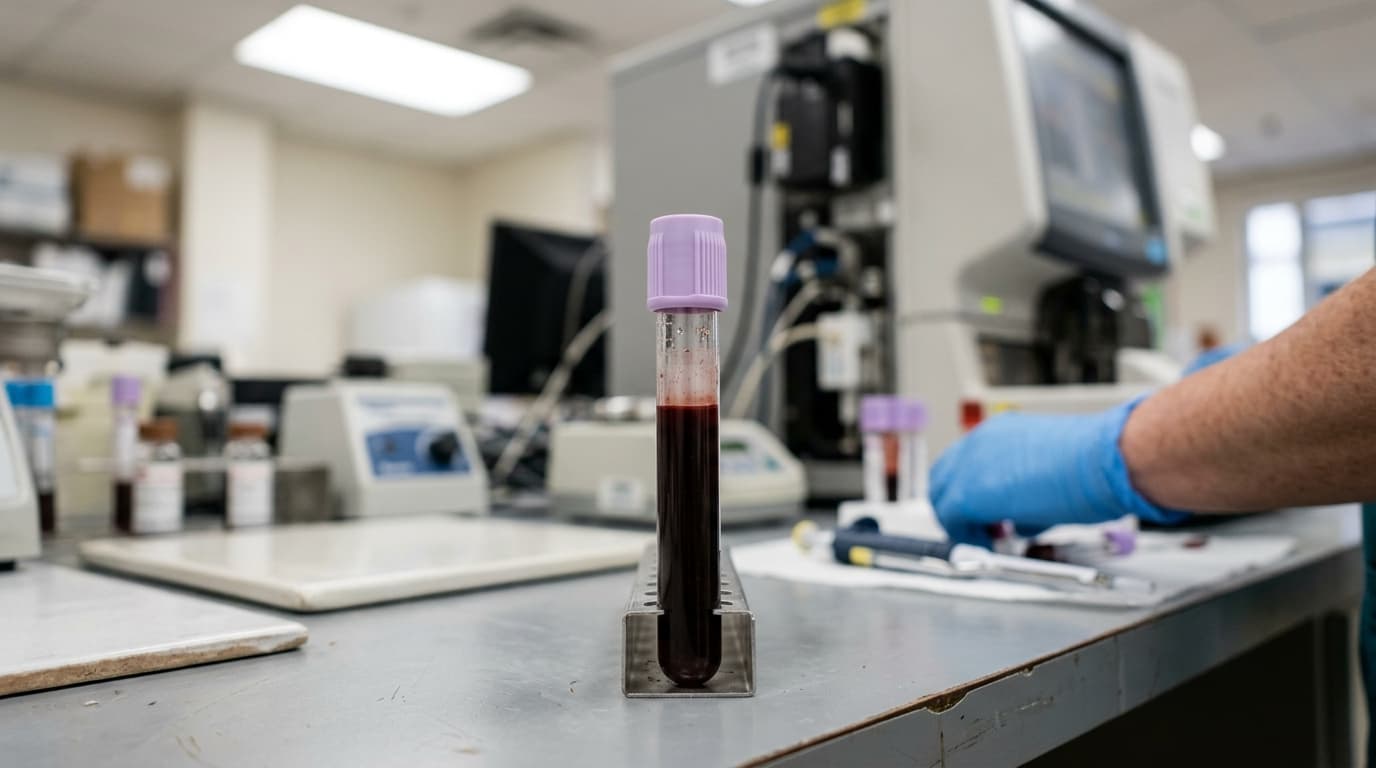
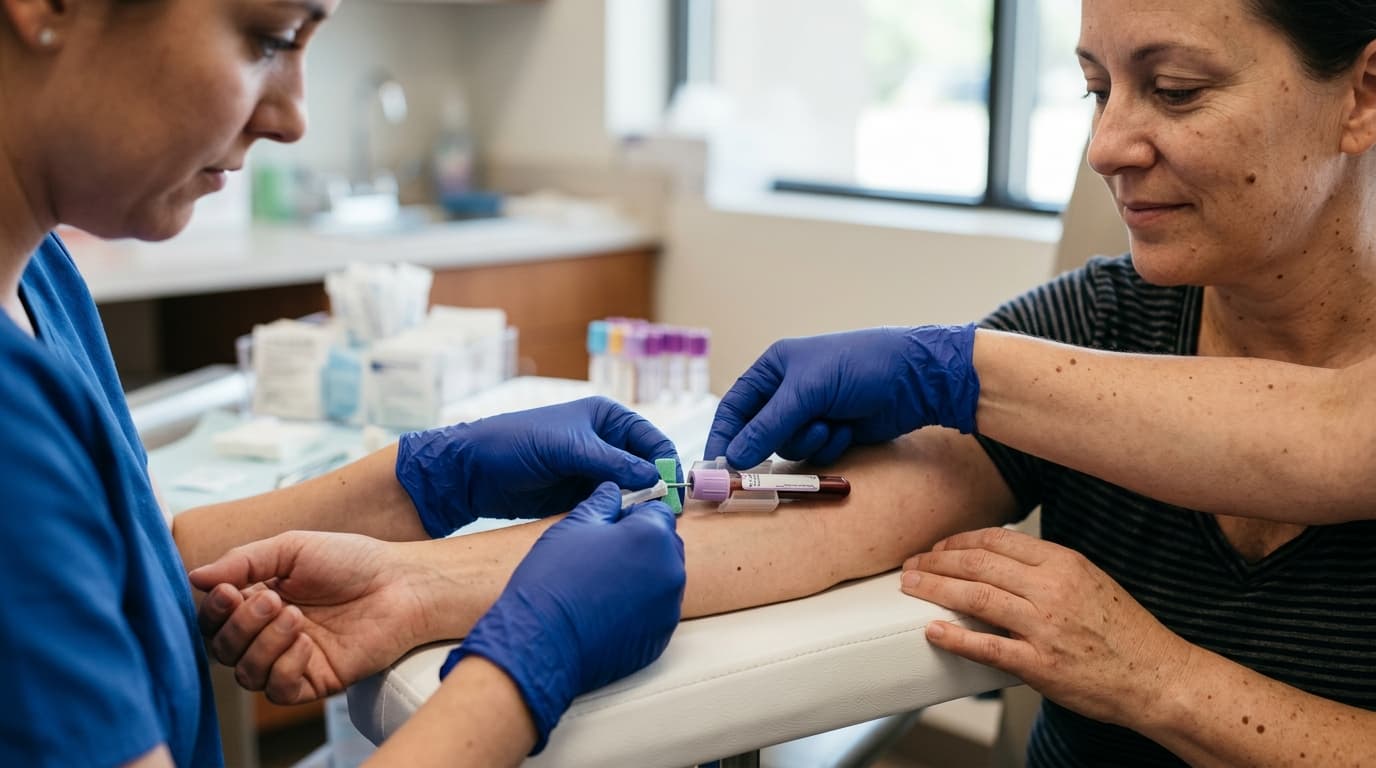
A blood test is the most familiar. A small sample is drawn from a vein, usually in a few minutes. Blood measures both the cortisol bound to carrier proteins and the smaller free, active fraction, giving a total picture at one moment in time. Because cortisol changes through the day, blood is often drawn in the early morning, and sometimes a second time in the afternoon, so the result can be read against the expected rhythm. It can also form part of a wider blood workup, alongside tests like a complete blood count when a doctor is looking at overall health.
A saliva test measures only the free, active cortisol. It is convenient because it is often collected at home, frequently late at night, when cortisol should be at its lowest. You either spit into a small tube or hold a swab in your mouth. This timing makes the late-night saliva sample useful when a doctor wants to see whether the normal night-time dip is happening.
A 24-hour urine test takes the long view. Instead of a single moment, it captures how much cortisol the body releases across a full day by collecting all urine over 24 hours. Averaging a whole day smooths out the natural ups and downs, which can be helpful when a steady excess is suspected.
Finally, dynamic tests do not just observe; they challenge the system. In broad terms, a suppression test gives a synthetic steroid and then checks whether the body responds by turning its own cortisol down, while a stimulation test gives a synthetic signal hormone and checks whether the adrenal glands answer by turning cortisol up. These are arranged and supervised by a medical team and are often what confirms a diagnosis after a simpler test raises a flag.
How timing affects results and how to prepare
The daily rhythm of cortisol is the single most important thing to understand about testing it. Levels climb fast in the hours around waking, peak in the early morning, then drift down across the day to a low point late at night. A value that looks normal at 8 in the morning could look very different at 4 in the afternoon, and the same number can be reassuring or concerning depending on when the sample was taken.
This is why timing is not a detail but part of the test itself. Morning blood draws aim at the natural peak. Late-night saliva aims at the natural trough. A 24-hour urine collection sidesteps the swing by measuring the whole day at once. Whatever method is used, the lab needs to know exactly when the sample was taken, so it is worth keeping appointments and collection times precise.
Preparation supports an accurate reading. Stress and vigorous exercise can push cortisol up, so resting beforehand helps, and a calm, on-time arrival is better than a rushed, anxious one. Tell the team about every medicine and supplement you take, since some, including steroid creams, hormone products, and certain everyday medicines, can affect the result, and never stop a prescribed medicine on your own to take a test. For saliva, the usual advice is to avoid eating, drinking, and brushing or flossing for about 30 minutes before the sample. For 24-hour urine, the key is to collect every single sample over the full window and store the container as instructed.

What high or low cortisol can mean
A test result is a clue, not a verdict. High or low cortisol points a doctor toward certain possibilities, but confirming a cause almost always takes more than one number, and the same reading can have very different meanings depending on the person and the situation.
Persistently high cortisol can be linked to long-term use of steroid medicines or to conditions that drive the body to overproduce the hormone, such as a tumor of the adrenal gland or of the pituitary gland that signals it. The pattern of excess cortisol is sometimes grouped under the name Cushing's syndrome. Short-lived rises are also normal and expected with stress, illness, pregnancy, and exercise, which is part of why a single high reading is interpreted carefully rather than acted on alone.
Low cortisol can point toward adrenal insufficiency, where the glands do not make enough. This may follow autoimmune damage, certain infections, a problem at the level of the pituitary gland, or stopping steroid medicine abruptly after long use. Because the symptoms, fatigue, weakness, low blood pressure, appetite and weight changes, are so general, a low result is usually the start of further testing rather than the end of the story.
Reference ranges add another layer of nuance. They vary from one laboratory to another, change with the type of sample, and depend on the time of day. A morning blood value is read against a different range than an afternoon one. For that reason, the most reliable comparison is always the range printed on your own lab report, interpreted by a doctor who knows your history. None of these ranges is a diagnosis, and they should never be treated as one.
At-home test kits and when to see a doctor
At-home cortisol kits have become easy to find. Most ask you to collect saliva or a finger-prick blood spot at a set time and mail it to a lab, and they can feel like a low-pressure way to start. Used thoughtfully, they can open a useful conversation with a professional.
Their limits, though, are real. Cortisol testing lives or dies on timing and handling, and small errors, collecting at the wrong hour, mishandling the sample, or skipping the rest and preparation steps, can skew a result. Just as important, a number arrives without medical context: no one is weighing your symptoms, your medicines, or your history alongside it. At-home kits also cannot perform the dynamic suppression and stimulation tests that doctors rely on to confirm a diagnosis. So an at-home result is best treated as a prompt to seek guidance, not as a final answer, and certainly not as grounds to start or stop any treatment on your own. The same caution applies to acting on any single health result, whether it is a hormone level, a course of antibiotics, or a self-assessment of a passing illness like the flu.
It is worth seeing a doctor if you have ongoing symptoms that could fit high or low cortisol, such as unexplained weight change, lasting fatigue, muscle weakness, blood pressure that runs high or low, or skin changes, and especially if you take steroid medicine. A professional can decide whether testing makes sense at all, pick the right method and timing, and read the result in context. This matters most when symptoms could be driven by hormones rather than the more familiar causes people first suspect, in the way that fluctuating symptoms are explored in our guides to premenstrual syndrome and to longer-term conditions such as the stages of rheumatoid arthritis.
Summary
Cortisol is a hormone from the adrenal glands that helps you handle stress, steady your blood sugar and blood pressure, calm inflammation, and keep a daily sleep and wake rhythm. That rhythm, high in the morning and low at night, is the heart of why testing it takes care. A cortisol number only makes sense when paired with the time and circumstances of the sample.
To test cortisol levels, doctors use blood, saliva, and 24-hour urine, each capturing a different slice of the hormone, and they add dynamic suppression or stimulation tests when a simple reading is not enough. Preparation, resting beforehand, sharing your medicines, and following timing and collection instructions, protects the accuracy of the result. High cortisol can suggest excess from steroid medicine or a tumor, while low cortisol can suggest adrenal insufficiency, but both are clues, not diagnoses. At-home kits can start the conversation but cannot replace it. Whatever the number, the meaningful step is to bring it to a health professional who can interpret it against your full health picture.
Frequently asked questions
What is cortisol and what does it do?
Cortisol is a steroid hormone produced by the adrenal glands, which sit on top of the kidneys. It helps the body respond to stress, regulate blood sugar, control blood pressure, manage how the body uses fats and carbohydrates, reduce inflammation, and keep a normal sleep and wake cycle. Levels are naturally highest in the early morning and lowest around the middle of the night.
What are the main ways to test cortisol levels?
Cortisol can be measured in blood, in saliva, and in urine collected over 24 hours. A blood test measures cortisol bound to protein plus the free, active form, while saliva and urine tests reflect the free portion. Doctors may also use dynamic tests, such as a suppression test or a stimulation test, to see how the system responds to a trigger rather than relying on a single reading.
Why does the time of day matter for a cortisol test?
Cortisol follows a daily rhythm. It peaks soon after waking, often around 6 to 8 in the morning, then falls through the day to a low point late at night. Because of this swing, a result is only meaningful when the lab knows exactly when the sample was taken. This is why blood draws are often scheduled in the morning, and why late-night saliva is used to capture the expected low point.
How do I prepare for a cortisol blood test?
Preparation depends on the test, so the safest step is to follow the exact instructions you are given. In general, rest before the draw, since stress and vigorous exercise can raise cortisol. Tell the team about every medicine and supplement you use, including steroid creams, hormone products, and over-the-counter items, and never stop a prescribed medicine on your own. The timing of the appointment is part of the test, so keep it as scheduled.
How does a cortisol saliva test work?
A saliva test is often collected at home at a specific time, commonly late at night. You either drool into a small tube or place a swab in your mouth for a short period. For about 30 minutes before the sample, you typically avoid eating, drinking, and brushing or flossing your teeth, since these can affect the reading. The sealed sample is then returned to the lab as instructed.
What is a 24-hour urine cortisol test?
This test measures how much cortisol your body releases over a full day. You collect all of your urine for 24 hours into a special container, usually starting after the first morning trip to the bathroom and including every sample until the same time the next day. The container is often kept cold during collection. Because it averages a whole day, it smooths out the normal hour-to-hour swings.
What are dynamic cortisol tests?
Dynamic tests challenge the system instead of taking a single snapshot. In a suppression test, a synthetic steroid is given and cortisol is measured afterward to see whether the body lowers its output as expected. In a stimulation test, a synthetic signal hormone is given to see whether the adrenal glands respond by raising cortisol. These tests are arranged and supervised by a medical team.
What can high cortisol mean?
Persistently high cortisol can be linked to long-term use of steroid medicines or to conditions that drive excess production, such as a tumor of the adrenal or pituitary gland. Possible signs people notice include weight gain around the trunk and face, easy bruising, thinning skin, muscle weakness, high blood pressure, and mood changes. High cortisol on a test is not a diagnosis by itself and needs a doctor to interpret it alongside other findings.
What can low cortisol mean?
Low cortisol can point to adrenal insufficiency, which may follow autoimmune damage, certain infections, a pituitary problem, or stopping steroid medicine suddenly. People may feel very tired, weak, or dizzy, lose appetite or weight, and notice low blood pressure. As with high results, a low reading is only a clue, and confirming the cause usually takes further testing arranged by a professional.
What are normal cortisol reference ranges?
Reference ranges vary by laboratory, by the type of sample, and by the time of day the sample was taken. As a general guide only, a morning blood sample drawn around 8 in the morning often falls within a defined range that the lab reports, with afternoon values lower. Because methods and cutoffs differ, you should always read your own result against the range printed on your lab report and discuss it with your doctor.
Can I test my cortisol at home?
Some at-home kits let you collect saliva or a finger-prick blood spot and mail it to a lab. They can be convenient, but they have limits: timing errors, sample handling, and the lack of medical context can make results hard to interpret, and they do not replace the dynamic tests doctors use to confirm a diagnosis. Treat an at-home result as a starting point to discuss with a health professional, not a final answer.
When should I see a doctor about cortisol?
Speak with a doctor if you have ongoing symptoms that could fit high or low cortisol, such as unexplained weight changes, persistent fatigue, muscle weakness, high or low blood pressure, or skin changes, especially if you take steroid medicine. A professional can decide whether testing is appropriate, choose the right method and timing, and interpret the result. This article is general information and is not a diagnosis.
Author
Equipe Editorial GuiaDeSaude
The GuiaDeSaude Editorial Team researches and writes content from recognized medical sources (PubMed, Ministry of Health, WHO, Mayo Clinic, among others). All information is checked against at least two sources before publication.