Creatinine vs Creatine: What Is the Difference and Why It Matters

Few pairs of health words trip people up like creatinine and creatine. They look almost identical, they are pronounced in similar ways, and they are even biologically related. Yet they play opposite roles. One is a fuel your muscles burn for quick energy, and the other is the ash left behind once that fuel is spent. Mixing them up is easy, but understanding the difference makes a lot of common lab results far less confusing.
This guide breaks down creatinine vs creatine in plain language. It explains what creatine is and what it does in the body, what creatinine is and why doctors measure it, how the common creatinine blood test and the eGFR estimate fit together, and what high or low readings can suggest in a general sense. It also looks at a question that worries many people who train, namely whether creatine supplements can change creatinine numbers. None of this replaces a conversation with a health professional, and every result needs a doctor to read it against your full history.
Quick answer: how creatinine and creatine differ
If you remember one thing, make it this. Creatine is a compound your body uses to power muscles, and creatinine is the waste product made when that power is used up. Creatine is the input, creatinine is the output, and the kidneys are in charge of clearing the output away.
That single relationship explains why the two words show up together. As muscles work and renew themselves day to day, a small, fairly steady stream of creatine breaks down into creatinine. The creatinine drifts into the bloodstream and the kidneys filter it out into the urine. Because production is steady and the kidneys normally keep up, the level of creatinine left in the blood becomes a handy signal of how well those kidneys are filtering.
So when someone takes creatine as a supplement, they are adding to the fuel side of the equation. When a doctor orders a creatinine test, they are reading the waste side to check kidney function. Same root, different jobs. The rest of this article unpacks each side in turn.
What creatine is and what it does
Creatine is a natural compound the body assembles from amino acids, mostly in the liver and kidneys, and then stores largely inside skeletal muscle. You also take some in through food, since meat and fish are natural sources. Inside the muscle, creatine plays a specific and useful role: it helps rapidly recharge the body's main energy molecule during short, intense bursts of effort, the kind you use sprinting up stairs or lifting something heavy.
Because of that role, creatine has become one of the most widely used sports supplements. People who do strength training or high-intensity work often take it to support power output and recovery between hard efforts. It is commonly grouped with other training aids, and many of the same people also pay attention to protein intake, which is why comparisons like whey protein isolate vs concentrate come up so often alongside it. Good day-to-day habits matter too, since steady hydration supports how the body handles both fuel and waste.
The key point for this article is that creatine is the energy side of the story. It is not the thing measured to check your kidneys. That job belongs to its breakdown product, creatinine, which is where we turn next.
What creatinine is and why it is measured
Creatinine is the waste product created when creatine is used and when muscle tissue goes through its normal, ongoing wear and tear. Your body makes it at a relatively constant rate that tracks with muscle mass, and it does not build up in healthy muscle. Instead it passes into the blood, and from there the kidneys filter it out and send it into the urine.
This steady cycle is exactly what makes creatinine so useful as a marker. Because production stays fairly even and healthy kidneys clear it consistently, the amount left circulating in the blood reflects how well the kidneys are filtering. If the kidneys slow down, less creatinine leaves the body and more of it stays in the blood, so the level climbs. That is why a creatinine measurement is one of the standard ways to look at kidney function during routine care.
Creatinine rarely travels alone on a lab report. It often appears as part of a broader blood workup, sitting near other routine measures the way a complete blood count and a basic metabolic panel do, giving a doctor a wider view of overall health rather than a single isolated number. Other markers are checked in their own dedicated panels, for example the timing-sensitive process described in our guide to how to test cortisol levels.
The creatinine blood test, eGFR, and what results can suggest
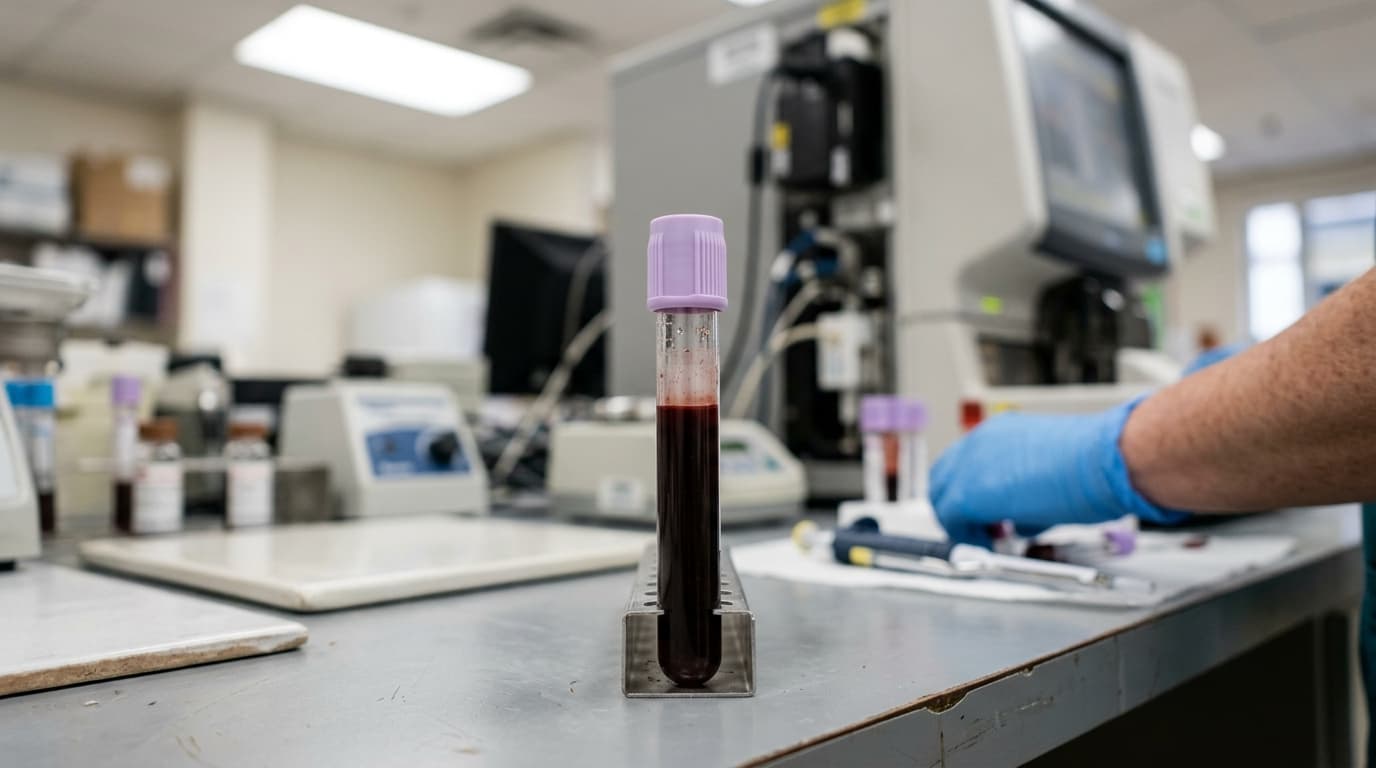
The most common way to check creatinine is a simple blood test, usually drawn from a vein and often bundled into a routine panel. On its own, the creatinine value is informative, but it has a limitation: people differ a lot in muscle mass, so the same number can mean different things in different bodies. To get around this, labs frequently use the creatinine level to calculate the eGFR, an estimate of how much blood the kidneys filter each minute that also factors in age and sex. Reading creatinine and eGFR together usually gives a clearer picture than either alone.
A higher than expected creatinine, or a lower eGFR, can suggest the kidneys are filtering less effectively. But a single reading is never a verdict. Plenty of everyday things can push creatinine up temporarily, including dehydration, a recent hard workout, a meal heavy in meat, certain medicines, or muscle injury. For that reason doctors look at trends across repeated tests and combine creatinine with other measures, such as urine tests, before drawing conclusions.
A lower than usual creatinine often simply reflects less muscle mass, which can be perfectly normal for some people. It can also relate to certain muscle or nerve conditions, marked weight loss, or malnutrition, and it sometimes shows up in pregnancy. Reference ranges vary from one laboratory to another and shift with age, sex, and muscle mass, so the meaningful comparison is always the range printed on your own report. Ranges for men tend to run a little higher than for women because of greater average muscle mass. None of these numbers is a diagnosis by itself, and they should never be treated as one. If a result looks off, the next step is a conversation with a doctor, not self-diagnosis, in the same way you would not self-treat with antibiotics based on a hunch.

How creatine supplements can affect creatinine readings
Here is where the two words tangle together in real life. Because creatinine is the breakdown product of creatine, adding creatine to the body through a supplement can modestly raise the measured creatinine level. More fuel in the system means a little more waste, so the number on the report can edge upward even when the kidneys are working perfectly well.
In people with healthy kidneys, this kind of rise is generally considered a harmless shift in the measurement rather than a sign of damage. The problem it creates is mostly one of interpretation: a slightly higher creatinine driven by supplement use can look, at a glance, like reduced kidney filtering. That is why it matters to tell the lab and your doctor if you take creatine, so they can read the result in context and avoid chasing a number that simply reflects your supplement.
The practical advice is straightforward. Do not start or stop any supplement on your own just to influence a test. Some clinicians prefer to pause creatine for a stretch before testing so the result is cleaner, while others would rather know your everyday baseline. Either way, the right move is to disclose what you take and follow the specific instructions you are given. The same context-first thinking applies to diet around testing, since nutrients and minerals such as those covered in our guides to foods high in phosphorus and vitamin D all sit within the wider conversation about kidney and metabolic health, as do men's habits explored in foods for prostate health.
When to talk to a doctor
Most people meet creatinine without ever thinking about it, as one line on a routine panel that comes back fine. It becomes worth a closer look when a result falls outside your lab's range, when levels are creeping up across repeated tests, or when you have risk factors that put the kidneys under strain, such as diabetes, high blood pressure, or a family history of kidney disease. In those situations a doctor can decide whether to repeat the test, add eGFR or urine measures, and interpret the whole set together.
It is also reasonable to raise the topic if you take creatine and want to understand how it might color your numbers, or if you simply want a clear baseline before starting a new training and supplement routine. Symptoms are trickier, because early kidney changes are often silent, and vague complaints like a passing headache or feeling run down during something like the flu are rarely about creatinine at all. That is exactly why testing and professional interpretation matter more than guesswork.
The bottom line is that creatinine and creatine are easy to confuse but simple to separate once you see the relationship. A doctor can tell you what your specific numbers mean for you, which is something no general article can do. This guide is educational and is not a substitute for that personalized advice.
Summary
Creatinine vs creatine comes down to one tidy idea: creatine is the compound your muscles use for quick energy, and creatinine is the waste product made when that energy is spent. Creatine is sold as a supplement to support strength and high-intensity training, while creatinine is the marker doctors measure to check how the kidneys are filtering.
A creatinine blood test, usually read alongside the eGFR estimate, is one of the most common ways to look at kidney function, but a single value is a clue rather than a diagnosis. High readings can come from dehydration, hard exercise, diet, medicines, or reduced filtering, and low readings often reflect lower muscle mass. Creatine supplements can modestly raise measured creatinine without harming healthy kidneys, which is why telling your doctor what you take helps them read the result correctly. Reference ranges vary by lab, age, sex, and muscle mass, so the most reliable comparison is your own report, interpreted by a health professional who knows your history.
Frequently asked questions
What is the difference between creatinine and creatine?
Creatine is a compound the body makes and stores mainly in muscle, where it helps supply quick bursts of energy. Creatinine is the waste product produced when that energy is used and muscle tissue goes through its normal wear and tear. In short, creatine is the fuel and creatinine is the leftover. Creatinine is filtered out by the kidneys, which is why it is measured to check how well the kidneys are working.
Is creatine the same as creatinine?
No. They are spelled and pronounced similarly, but they are different substances with different jobs. Creatine is an energy-related compound found in muscle and sold as a supplement. Creatinine is the waste left behind after creatine is used, and it is removed from the blood by the kidneys. Confusing one for the other is common, but only creatinine is routinely measured as a marker of kidney function.
What is creatine and what does it do?
Creatine is a compound built from amino acids, mostly in the liver and kidneys, and stored largely in skeletal muscle. It helps recycle the body's main energy molecule during short, intense efforts such as lifting or sprinting. Some creatine also comes from foods like meat and fish. Many people take creatine as a supplement to support strength and high-intensity training.
What is creatinine and why is it measured?
Creatinine is a waste product made at a fairly steady rate as muscles go through normal breakdown. The kidneys filter it from the blood into the urine. Because production is steady and healthy kidneys clear it consistently, the level in the blood reflects how well the kidneys are filtering. That is why a creatinine blood test is a common way to check kidney function.
What is a creatinine blood test?
It is a simple blood test, often part of a routine panel, that measures how much creatinine is circulating in your blood. The result is frequently used to calculate the eGFR, an estimate of kidney filtering capacity that also factors in age and sex. Together these give a clearer picture of kidney function than the creatinine number alone.
What does a high creatinine level mean?
A higher than expected creatinine can suggest the kidneys are filtering less effectively, but it is not a diagnosis on its own. Many things can raise it, including dehydration, a recent heavy workout, certain medicines, a high-meat meal, or muscle injury. Because of this, doctors look at trends, repeat tests, and other measures such as eGFR rather than acting on a single value.
What does a low creatinine level mean?
Lower than usual creatinine often reflects less muscle mass, which can be normal for some people. It can also relate to certain muscle or nerve conditions, significant weight loss, or malnutrition, and it sometimes appears in pregnancy. As with high results, a low number is a clue rather than an answer and should be reviewed by a doctor alongside the full picture.
Does creatine raise creatinine?
Taking creatine supplements can modestly raise measured creatinine, because more creatine in the body means a bit more of its waste product. This is usually a harmless change in the number rather than a sign of kidney damage in people with healthy kidneys. Still, it can make a test harder to interpret, so it helps to tell the lab and your doctor that you use creatine.
Should I stop creatine before a creatinine blood test?
Do not change supplements on your own without checking first. Because creatine can nudge creatinine readings, some clinicians suggest pausing it for a period before testing so the result is easier to read, while others prefer to know your usual baseline. The safest step is to tell the team you take creatine and follow the specific instructions they give you.
What is eGFR and how does it relate to creatinine?
The eGFR, or estimated glomerular filtration rate, is a calculation that uses your creatinine level along with age and sex to estimate how much blood your kidneys filter each minute. It often gives a more useful read on kidney function than creatinine alone, because it accounts for differences between people. A higher eGFR generally points to better filtering, and a lower one prompts closer attention.
What is a normal creatinine level?
Reference ranges vary by laboratory and by factors such as age, sex, and muscle mass, so there is no single universal number. As a very general guide, ranges for men tend to run slightly higher than for women because of greater average muscle mass. The most reliable comparison is the range printed on your own lab report, interpreted by a doctor who knows your history. A range is not a diagnosis.
When should I see a doctor about my creatinine?
Speak with a doctor if a result falls outside your lab's range, if levels are trending up over time, or if you have symptoms or risk factors such as diabetes, high blood pressure, or a family history of kidney disease. A professional can decide whether to repeat the test, add eGFR or urine tests, and interpret everything together. This article is general information and is not a diagnosis.
Author
Equipe Editorial GuiaDeSaude
The GuiaDeSaude Editorial Team researches and writes content from recognized medical sources (PubMed, Ministry of Health, WHO, Mayo Clinic, among others). All information is checked against at least two sources before publication.