PMS: what it is, symptoms, causes, and when to seek help
PMS, short for premenstrual syndrome, is one of the most common experiences in the life of anyone who menstruates, and at the same time one of the most misunderstood. Almost every woman knows, firsthand or up close, that set of signs that appears in the days before the period: tender breasts, a bloated belly, headache, irritability, the urge to cry for no clear reason. According to the Office on Women's Health, part of the U.S. Department of Health and Human Services, more than 90% of women report some premenstrual symptom, and about 75% experience PMS at some point in their lives. Even so, PMS is still often treated as exaggeration or fuss, which keeps many people from seeking guidance when they truly need it.
This guide was built to be a complete and respectful reference: you will understand what PMS is, when in the cycle it happens, how common it is, what the physical and emotional symptoms are, how it differs from the more severe form (premenstrual dysphoric disorder, or PMDD), why it happens, what tends to make it worse, which self-care measures are supported, what the treatment approaches are, and, above all, when it is worth seeking a medical evaluation. All of it based on official sources such as MedlinePlus (from the U.S. National Library of Medicine), the Office on Women's Health, and the NHS (the UK National Health Service).
What PMS is
PMS, or premenstrual syndrome, is the name given to a set of physical and emotional symptoms that arise in the days before the period and improve soon after it begins. According to MedlinePlus, it is a group of symptoms that usually starts one to two weeks before the period and tends to go away once it arrives. The key point is that PMS is not defined by a single symptom in one month, but by the repetition of a pattern over time.
To characterize PMS, health sources point to a fairly consistent timing criterion: symptoms tend to appear in the roughly five days before the period and resolve within four days after it starts, repeating in this pattern for at least three consecutive cycles. It is this regularity linked to the cycle that distinguishes PMS from other discomforts that can occur in any phase of the month.
A note on terminology: tension and premenstrual syndrome are, in practice, the same thing. In everyday speech, people often say tension before the period, while the technical literature usually uses premenstrual syndrome. Throughout this text, we treat the two as synonyms.
When PMS happens in the menstrual cycle
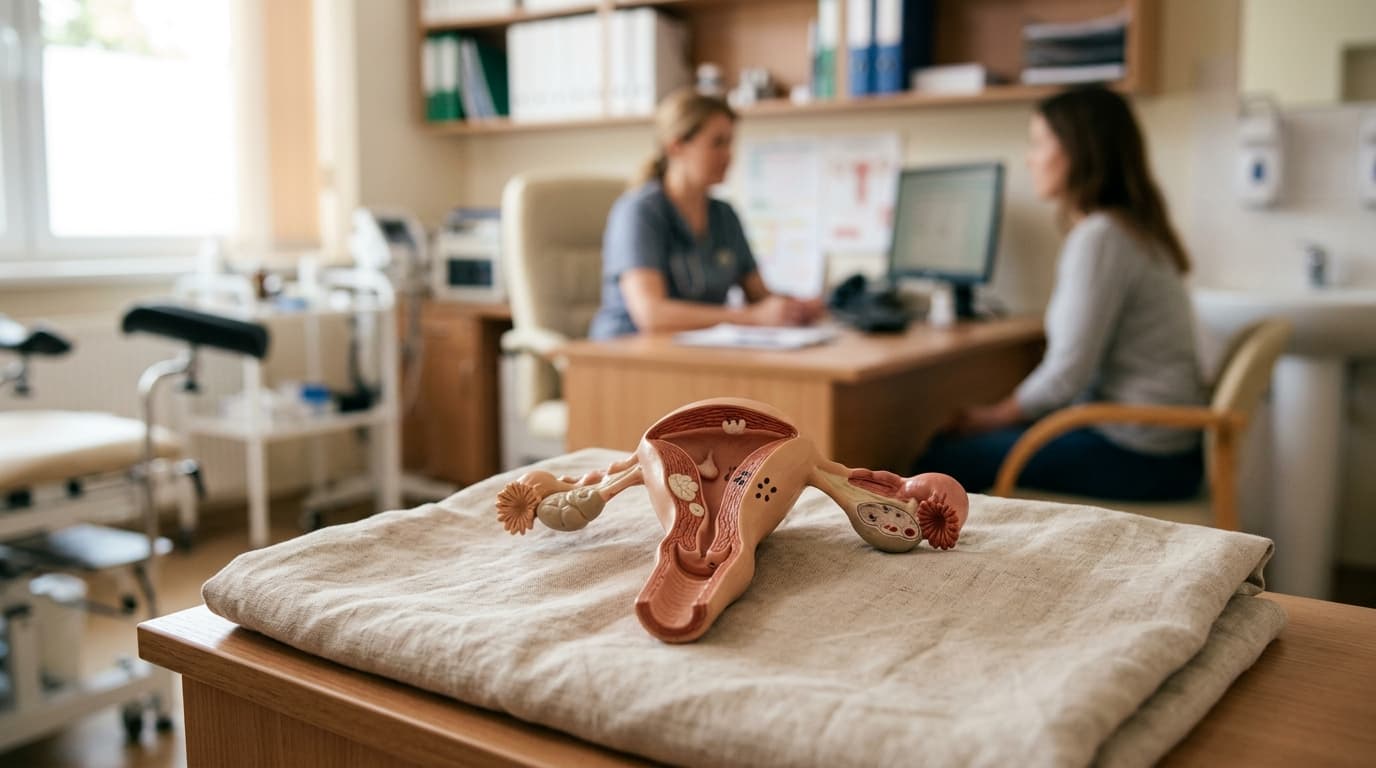
Understanding the cycle helps make sense of PMS. The menstrual cycle is usually divided, in a simplified way, into two large phases separated by ovulation. After ovulation occurs, the person enters what is called the luteal phase, which lasts until the period arrives. It is precisely in this final stretch of the cycle, in the second half, that hormones fluctuate a great deal and that PMS symptoms tend to appear.
That is why PMS is said to occur in the luteal phase, in the week or two before the period. When the period begins, symptoms tend to ease relatively quickly, and most women spend much of the cycle without these complaints. This rise and fall tracking the menstrual calendar is the signature of PMS and the main reason why noting symptoms over the months is so useful, as we will see further on.
How common PMS is
PMS is extremely common. The Office on Women's Health estimates that more than 90% of women report feeling some premenstrual symptom, and that about 75% have PMS proper at some point in their lives. Women in their 30s are among the most affected, although PMS can occur at any reproductive age.
The severe form, premenstrual dysphoric disorder, is far less frequent. Estimates from the sources consulted place PMDD in a small share of women of reproductive age, in the range of a few percent. In other words, feeling some discomfort before the period is almost the rule, having a PMS that repeats and bothers you is common, and having the severe form that compromises life is less common, but it exists and deserves attention.
PMS symptoms: physical and emotional
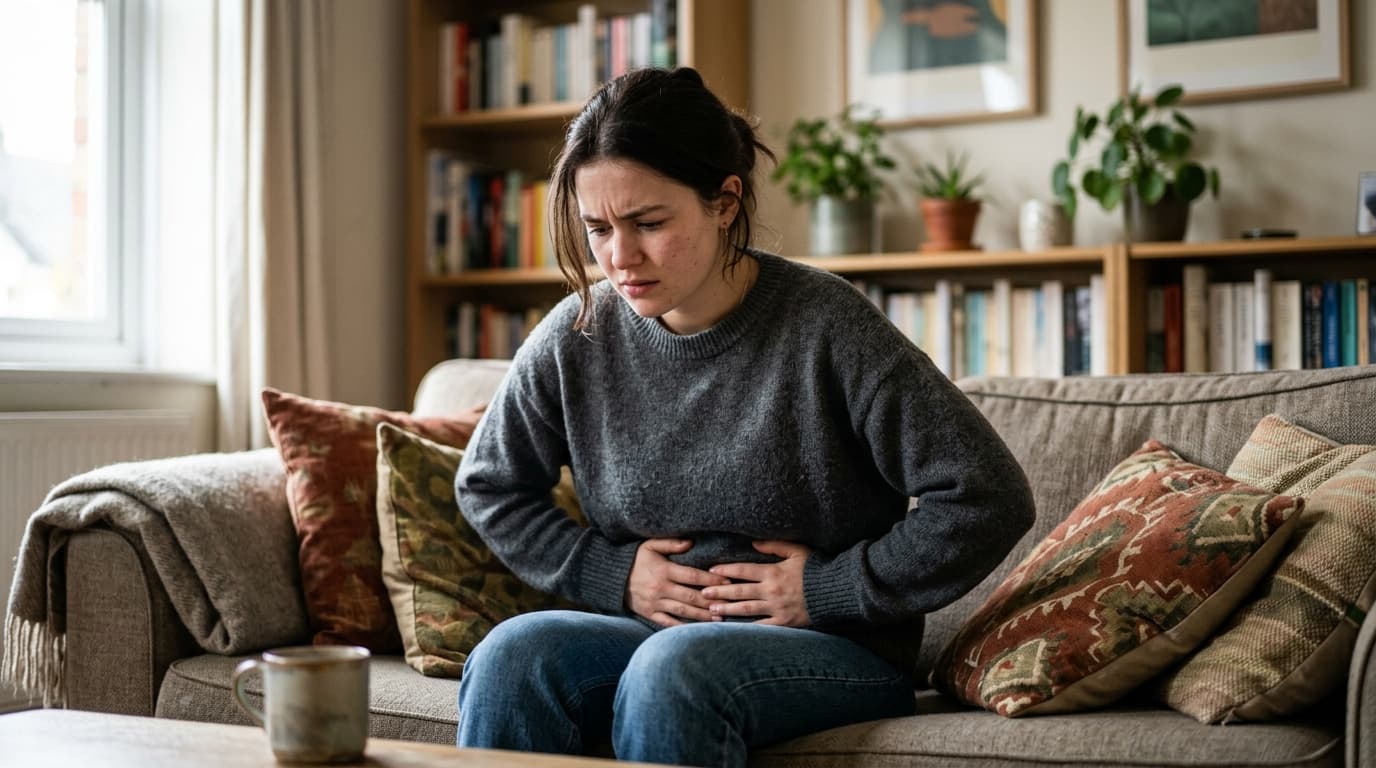
PMS symptoms vary a great deal from person to person and even from one month to the next in the same person. Some women feel mainly the physical side, others the emotional side, and many experience both. Official sources usually organize the symptoms into two broad groups.
In the physical group, the most cited are tender, swollen breasts, the feeling of bloating and a swollen belly, headaches, back and joint pain, changes in bowel habits (constipation or loose stools), cramps, fluid retention with a sense of weight gain, acne and changes in skin and hair, as well as cravings for certain foods. The Office on Women's Health also mentions reduced tolerance for noise and light and a sense of clumsiness or lack of coordination in some women.
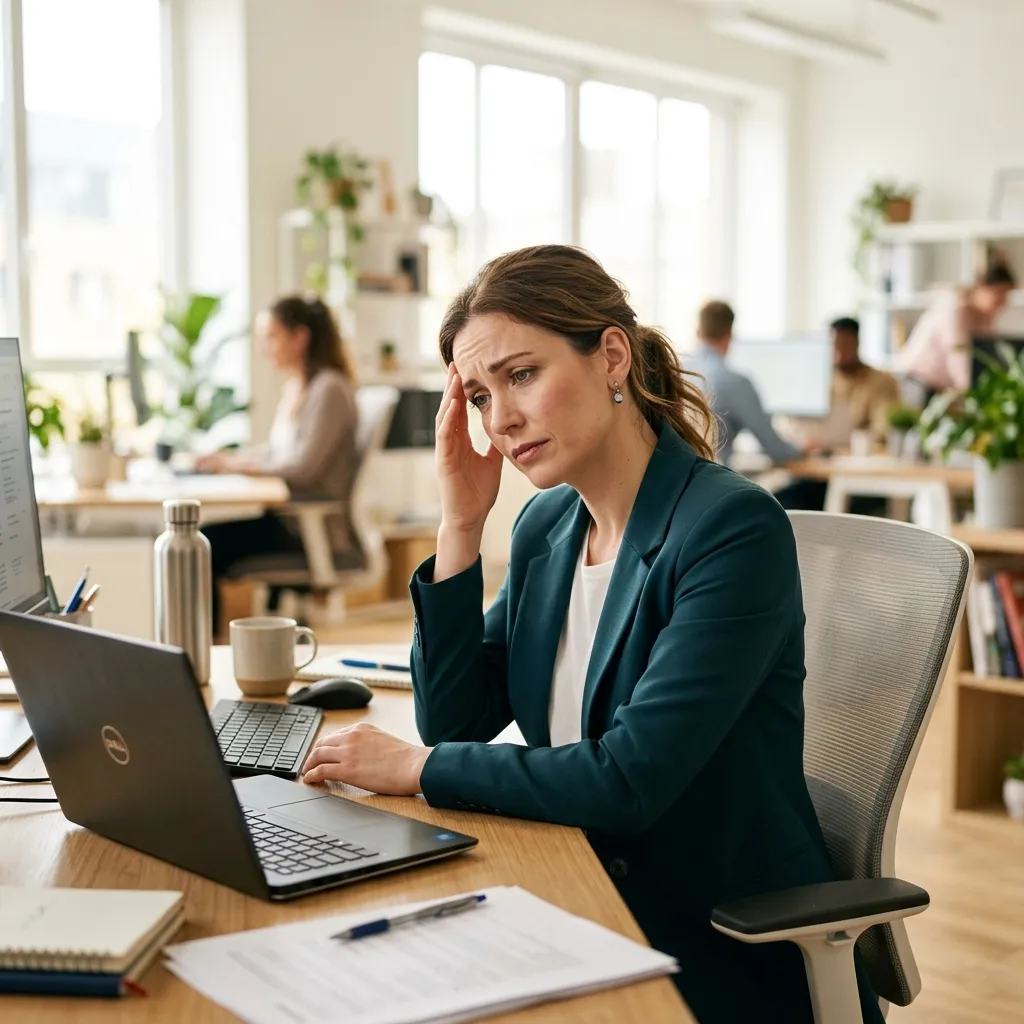
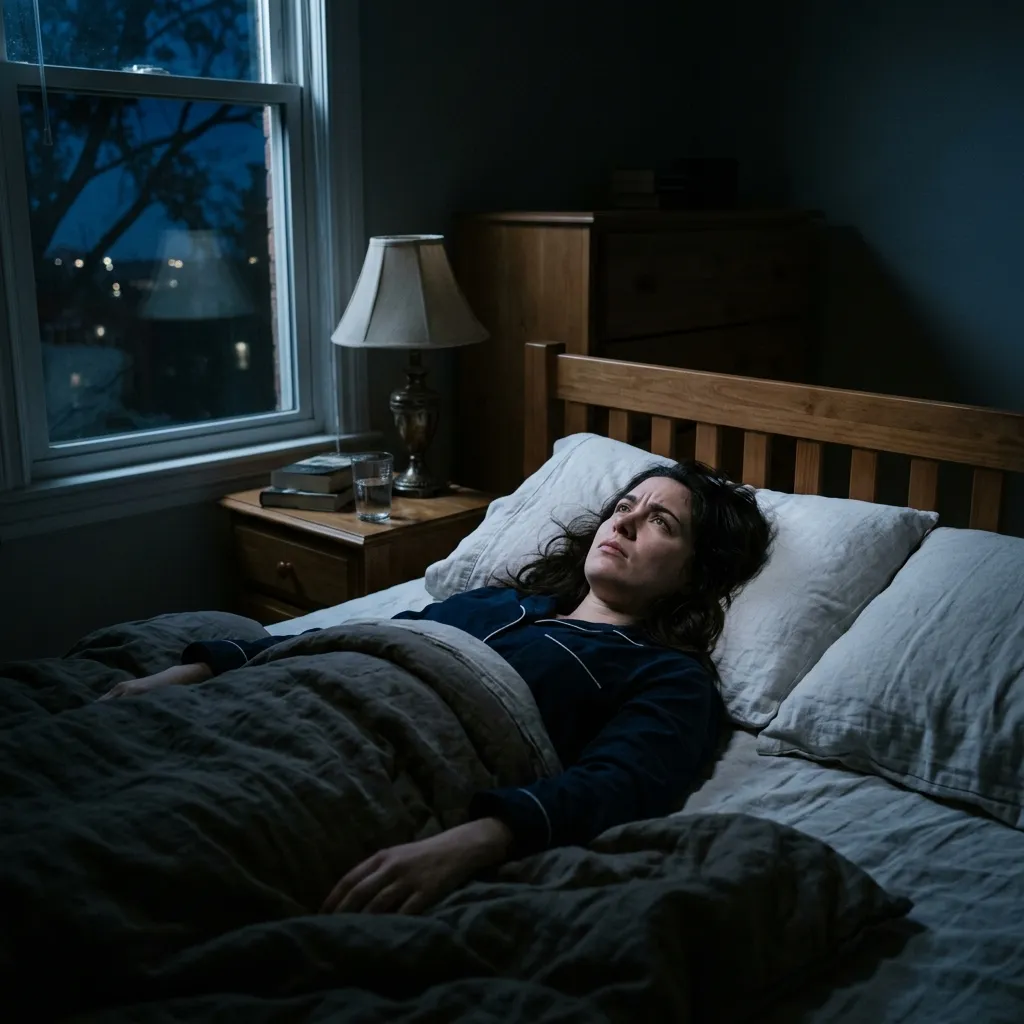
In the emotional and behavioral group, there is irritability, mood swings, the urge to cry, anxiety, sadness, tiredness, difficulty concentrating and remembering, changes in appetite, and changes in sleep, such as insomnia or unrefreshing sleep. A drop in sexual interest is also common. No woman needs to have all of these symptoms to have PMS, and the presence of some of them, repeating the pattern tied to the cycle, already characterizes the condition.
Table: most common physical and emotional symptoms
| Type | Frequent symptoms |
|---|---|
| Physical | Tender, swollen breasts, abdominal bloating, fluid retention, headaches, back and joint pain, cramps, changes in bowel habits, acne, cravings for certain foods |
| Emotional and behavioral | Irritability, mood swings, the urge to cry, anxiety, sadness, tiredness, difficulty concentrating and remembering, changes in appetite |
| Sleep and energy related | Insomnia or unrefreshing sleep, fatigue, lower energy |
| Pattern in time | Appear in the luteal phase (before the period) and ease when the period begins |
PMS and PMDD: when the picture is more severe
Not all PMS is the same. There is a severe form, premenstrual dysphoric disorder (PMDD), that goes well beyond the usual discomfort. The core difference between PMS and PMDD is not in having different symptoms, but in their intensity and in how much they disrupt life.
In PMS, symptoms are usually mild to moderate. They bother you and can make the days harder, but in general the person manages to keep up with work, school, and routine. In PMDD, the emotional symptoms are markedly more intense, with deep sadness, strong anxiety, marked irritability and anger, and they clearly compromise work, school, and relationships.
PMDD is recognized as a condition in its own right in the medical literature. According to the reference material from the U.S. National Library of Medicine (StatPearls), the diagnosis of PMDD follows criteria defined in the psychiatric classification manual (the DSM-5) and requires the presence of a minimum number of symptoms, at least one of them from the group of core mood symptoms, such as depressed mood, marked anxiety, mood instability, or irritability and anger. The symptoms concentrate in the final phase of the cycle, tend to be most intense in the days immediately before the period, and improve after it begins. An important point is that the diagnosis of PMDD usually calls for confirmation through a daily record of symptoms over at least two cycles, precisely to confirm the link with the menstrual cycle.
The central message is simple and important: if the emotional symptoms before the period are strong enough to take over your life, this is not fuss or weakness, and help is available. Seeking a professional evaluation is the right path.
Why PMS happens: causes and mechanisms
The exact cause of PMS is still not fully known, and the official sources themselves acknowledge this honestly. What is known is that the changes in hormone levels throughout the menstrual cycle play a central role. After ovulation, in the second half of the cycle, hormones undergo significant fluctuations, and it appears to be this fluctuation, rather than a high or low level in itself, that triggers symptoms in those who are more sensitive. These same hormonal shifts can influence other parts of the body too, from the skin to the hair, where they are one factor in some kinds of hair loss.
The NHS highlights exactly this point: PMS may be related to the changes in hormone levels during the cycle, and some women seem to be more sensitive to these variations than others. This helps explain why two people with similar cycles can have such different experiences, one with almost no symptoms and the other with marked PMS.
There is also the involvement of other factors that interact with hormones, such as how the body responds to certain brain substances linked to mood. That is why PMS is not just an isolated hormonal issue, but the result of an interaction between body, brain, and the cycle, which also explains why lifestyle measures, and not only medication, make a difference.
Factors that can make PMS worse
Although PMS has a hormonal basis, some habits and situations can intensify the symptoms or make the days harder. Knowing these factors helps you act on what is within your reach. Among the points most cited by official sources are:
- Ongoing stress and a lack of moments of rest
- Insufficient or irregular sleep
- A sedentary lifestyle and lack of physical activity
- High consumption of caffeine, salt, and sugar, especially in the two weeks before the period
- An unbalanced diet and long stretches without eating
It is worth remembering that these factors do not cause PMS, but they can add up and make the picture heavier. The good news is that several of them respond well to changes in habits, which puts a real part of the relief in your hands.

Self-care and lifestyle
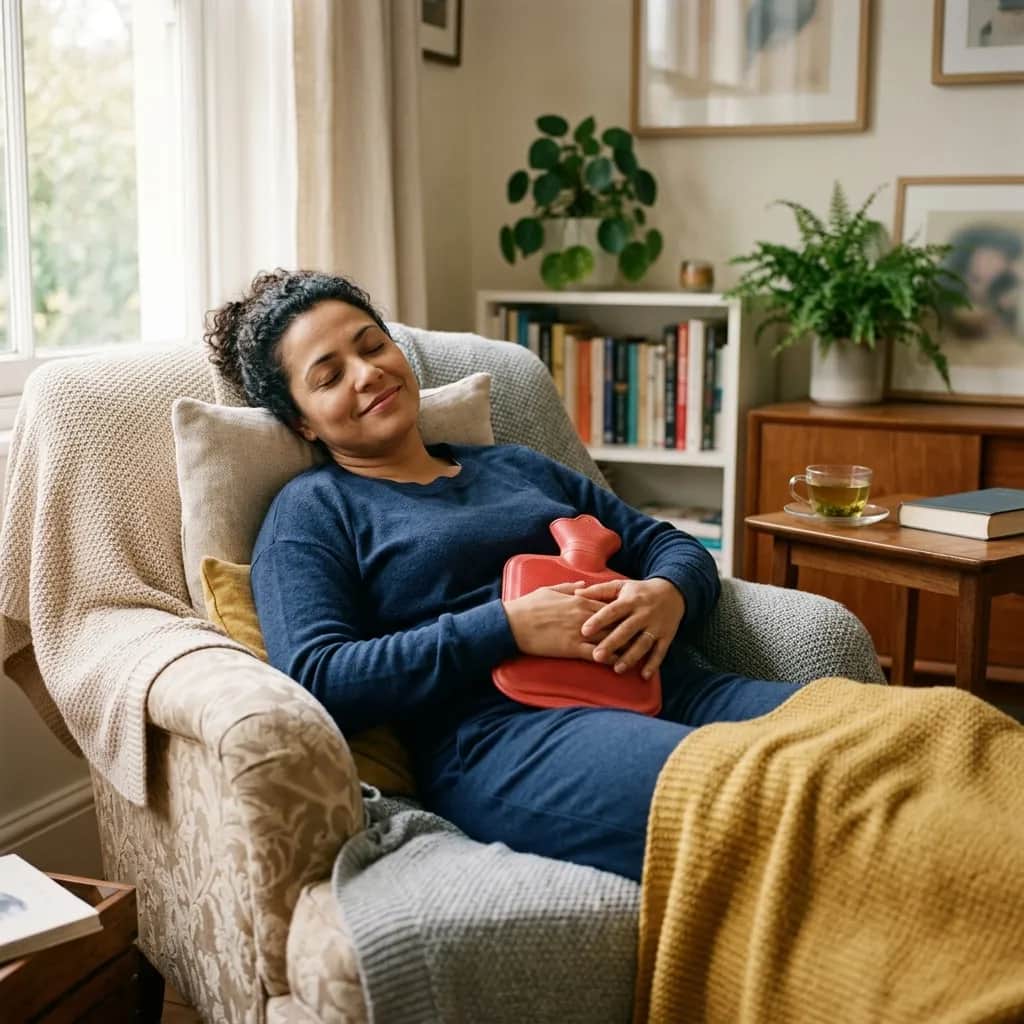
For most women with mild to moderate PMS, lifestyle measures are the first and most important line of care. They do not require a prescription, are low cost, and bring benefits that go beyond PMS. Official sources converge on the following guidance.
Be physically active regularly. Exercise, especially aerobic exercise, is one of the most consistent recommendations from the Office on Women's Health and the NHS to reduce PMS symptoms. Beyond the direct effect, physical activity improves sleep, mood, and the response to stress.
Take care of your sleep. Sleeping well and keeping regular hours helps with both physical and emotional symptoms. Unrefreshing sleep is itself a common PMS symptom, so taking care of this front usually brings relief on several others. If trouble sleeping is constant, it is worth learning more about sleep and insomnia.
Adjust your diet. Keeping a balanced diet and reducing salt, caffeine, and sugar in the two weeks before the period is guidance that appears in MedlinePlus and the Office on Women's Health. Staying well hydrated and swapping sugary drinks for water or an unsweetened ginger tea with lemon fits the same idea. The NHS also suggests eating smaller, more frequent meals throughout the day, rather than a few large ones, which helps keep energy more stable. A varied diet also covers minerals the body needs, including those in foods high in phosphorus.
Manage stress. Since stress can intensify symptoms, practices that help you relax, such as breathing exercises, stretching, yoga, or meditation, are part of the self-care recommendations. The point is not to eliminate stress, but to create regular outlets.
Keep healthy lifestyle habits. Maintaining healthy daily habits appears on the list of supportive measures, according to the NHS.
Keep a symptom diary. Noting when symptoms appear, how intense they are, and what was going on is one of the most useful and most underrated tools. With a few weeks of records, it becomes easier to confirm the link with the cycle, identify personal patterns, and assess what helps. This diary is also valuable information to bring to the appointment and, in the case of PMDD, is part of the diagnostic process itself.
About supplements, care is needed. Some guidance, such as that of the Office on Women's Health, mentions calcium and vitamin B6 among the measures some women find helpful for certain symptoms. This does not mean they are a cure, nor that they work for everyone, and the same caution applies to other supplements, such as vitamin D. Supplements can have effects and interactions with other medications, so it is best not to start anything on your own and to talk first with a health professional, who can assess whether they make sense in your case.
Treatment approaches
Treating PMS depends on the intensity of the symptoms and how much they affect life, and the decision about what to use is always up to a health professional. In general, care begins with the lifestyle measures described above. When they are not enough, or when symptoms are more intense, other approaches may come into play, always under medical evaluation.
For occasional physical symptoms, such as pain and cramps, common pain relievers can be used with good sense. For situations that go beyond that, official sources mention, among the options a doctor may consider, hormonal contraceptives, which act on the cycle, and, in selected cases, medications that act on mood, especially when the emotional component is strong or when there is PMDD. The NHS also mentions cognitive behavioral therapy as a useful approach for emotional symptoms. For the most difficult cases, there may be a referral to a specialist.
A note from this guide is in order here: we do not recommend medications, doses, or regimens. The choice of any treatment, including whether it is necessary and for how long, depends on an individual evaluation by a professional who knows your history. The role of this text is to help you understand the possibilities and arrive better informed at the conversation with your doctor.
When to see a doctor
Most women can live with PMS through lifestyle adjustments, but there are situations where it is worth seeking a professional evaluation. Bringing together the guidance from the sources consulted, consider seeing a doctor when:
- Symptoms are strong enough to disrupt daily life, work, school, or relationships
- Lifestyle changes have not brought enough relief
- Emotional symptoms are very intense, with deep sadness, strong anxiety, or marked irritability
- You suspect PMDD, the severe form, or want to better understand what you are feeling
- PMS has changed pattern or seems to be getting worse over time
One point that cannot be left out: if at any time thoughts of deep sadness, hopelessness, or harming yourself arise, this is an emergency and calls for immediate help. Reach out to a health service, a trusted person, or a support line without delay. The NHS stresses that severe emotional symptoms before the period should not be faced alone.
What to bring and ask at the appointment
To make the most of the evaluation, go prepared. Bring, if possible, your symptom diary with records of at least two or three cycles, noting when symptoms appear, how intense they are, and when they ease. Have in mind answers to questions like: how long this has been happening, which symptoms bother you most, whether they disrupt your routine, how your sleep, diet, and stress levels are, and what you have already tried. Depending on the picture, the doctor may also order tests, such as a complete blood count, to rule out other causes.
Useful questions to ask the doctor include: are my symptoms consistent with PMS or could it be PMDD, which changes in habits could help in my case, is there any treatment indicated for my situation, and what signs should make me come back. Arriving with this information organized makes the appointment more productive and helps the professional advise the best care for you.
Myths and facts about PMS
"PMS is just fuss." Myth. PMS is a recognized set of physical and emotional symptoms with a clear link to the menstrual cycle, described by official health sources. Dismissing the complaint is a mistake.
"Every woman has strong PMS." Myth. Symptoms vary a great deal. Many women feel only mild discomfort, others almost nothing, and a share have intense symptoms. The experience is individual.
"The symptoms are all in your head." Myth. PMS has a biological basis, linked to the hormonal fluctuations of the cycle, and involves both physical and emotional symptoms. It is not imagination.
"Exercise helps with PMS." Fact. Regular physical activity is among the most consistent recommendations from official sources to reduce symptoms.
"PMS and PMDD are the same thing." Myth. PMDD is a severe form, with far more intense emotional symptoms, that compromises life and needs professional follow-up. Common PMS is usually mild to moderate.
"When symptoms disrupt life, it is better to just endure it." Myth, and harmful. When PMS disrupts daily life, help is available and there are approaches that work. Seeking evaluation is the right step.
Summary: what to take from this guide
PMS is very common and, in most cases, mild to moderate, with physical and emotional symptoms that appear in the luteal phase, before the period, and ease when it begins. The hormonal fluctuations of the cycle play a central role, and some people are more sensitive to them. Self-care is the foundation of relief: regular physical activity, healthy sleep, a balanced diet with less salt, caffeine, and sugar in the weeks before the period, and strategies to handle stress. The symptom diary is a powerful tool for understanding your pattern and bringing it to the appointment. The non-negotiable point is to recognize when PMS starts to disrupt life or when emotional symptoms are intense: in those cases, and when PMDD is suspected, professional evaluation is the way. And whenever thoughts of deep sadness or self-harm arise, help should be immediate. PMS does not have to be suffered in silence, and understanding what happens is the first step to living each cycle better.
Frequently asked questions
When in the cycle does PMS happen?
Symptoms usually appear in the week or two before the period, during what is called the luteal phase of the cycle, and improve soon after the period begins. According to MedlinePlus, to characterize PMS the symptoms tend to appear in the five days before the period and resolve within four days after it starts, repeating in this pattern for at least three consecutive cycles.
Is PMS very common?
Yes. According to the Office on Women's Health, more than 90% of women report some premenstrual symptoms, and about 75% experience PMS at some point in their lives. The severe form, premenstrual dysphoric disorder (PMDD), is far less frequent and affects a smaller share of women of reproductive age.
What is the difference between PMS and PMDD?
The core difference is intensity and impact. In PMS, symptoms are usually mild to moderate and bothersome, but they do not stop the person from getting on with life. In premenstrual dysphoric disorder (PMDD), the emotional symptoms are far more intense and interfere clearly with work, school, and relationships. PMDD is recognized as a condition in its own right and needs professional follow-up.
What causes PMS?
The exact cause is not fully known. Official sources such as MedlinePlus and the NHS point out that the changes in hormone levels throughout the menstrual cycle, especially after ovulation, seem to play a central role, and that some people are more sensitive to these fluctuations than others.
What are the most common PMS symptoms?
The most cited physical symptoms include tender, swollen breasts, abdominal bloating, headaches, back and joint pain, changes in bowel habits, and cravings for certain foods. Emotional ones include irritability, mood swings, the urge to cry, anxiety, sadness, difficulty concentrating, and changes in sleep.
Does physical exercise help with PMS?
Yes, it is one of the most consistent recommendations across official sources. The Office on Women's Health and the NHS recommend regular physical activity, especially aerobic exercise, as part of self-care to reduce PMS symptoms. Exercising also helps with sleep and stress management, which influence the picture.
Do calcium and vitamin B6 cure PMS?
There is no promise of a cure. Some guidance, such as that of the Office on Women's Health, mentions calcium and vitamin B6 among the measures some women find helpful for certain symptoms. On the other hand, supplements can have effects and interactions, so it is best not to start anything on your own and to talk to a health professional first.
Can PMS disrupt sleep?
It can. Changes in sleep, such as trouble falling asleep or unrefreshing sleep, are among the symptoms reported in PMS and even more so in PMDD. Keeping regular sleep hours is one of the recommended self-care measures and usually improves mood and energy as well.
Does reducing salt, caffeine, and sugar help?
Several official sources, including MedlinePlus and the Office on Women's Health, suggest reducing salt, caffeine, and sugar in the two weeks before the period as part of self-care. It is not a rigid rule that applies the same way to everyone, but it is a simple measure many women notice makes a difference.
Is PMS just in your head or made up?
No. PMS is a recognized set of physical and emotional symptoms with a clear link to the menstrual cycle, described by official health sources. Treating the symptoms as exaggeration or dismissing the complaint is a mistake. When symptoms disrupt life, they deserve attention and evaluation, like any other health matter.
When does PMS warrant a medical evaluation?
When symptoms are strong enough to disrupt daily life, work, school, or relationships, or when lifestyle measures bring no relief. The severe form, PMDD, always needs professional follow-up. Thoughts of deep sadness or of harming yourself call for immediate help.
References
- Premenstrual Syndrome (MedlinePlus, U.S. National Library of Medicine)
- Premenstrual syndrome (Office on Women's Health, U.S. Department of Health and Human Services)
- Premenstrual syndrome, PMS (NHS, UK National Health Service)
- Síndrome premenstrual (MedlinePlus in Spanish, U.S. National Library of Medicine)
- Premenstrual Dysphoric Disorder (StatPearls, U.S. National Library of Medicine)
Author
Equipe Editorial GuiaDeSaude
The GuiaDeSaude Editorial Team researches and writes content from recognized medical sources (PubMed, Ministry of Health, WHO, Mayo Clinic, among others). All information is checked against at least two sources before publication.