Teething Rash in Babies: Why Drool Causes It and How to Soothe Your Baby's Skin

If you have a teething baby, you have probably noticed two things at once: a soaked bib and a patch of red, angry-looking skin around the mouth or chin. It can be alarming the first time you see it, especially because babies have such delicate skin and cannot tell you what is wrong. But this particular rash is one of the most common and most manageable things you will face during the teething months, and it almost always responds to a little gentle care at home.
Here is the part that surprises many parents: the rash is not really caused by the teeth pushing through. It is caused by drool. Teething makes babies produce a lot of extra saliva, and that constant wetness is what irritates the skin. Once you understand that simple fact, treating and preventing a teething rash becomes much more straightforward. This guide walks through what a teething rash is and why it happens, what it looks like and where it shows up, how to soothe and protect the skin, what to avoid, how to tell it apart from other baby rashes, and the red flags that mean it is time to call your pediatrician. This is educational information and does not replace your pediatrician.
What a teething rash is and why it happens
A teething rash is irritated, reddened skin that appears during the stretch of months when a baby is cutting teeth. It goes by several names, including drool rash and dribble rash, and all of them point to the same underlying cause. The teeth themselves are not damaging the skin. The drool is.
Teething tends to ramp up a baby's saliva production. Extra drooling is one of the most consistent signs of teething, often appearing even before the first tooth breaks through, and many babies drool heavily for months while their teeth come in. All of that saliva has to go somewhere, and a lot of it ends up running down the chin, pooling in the folds of the neck, and soaking into bibs and clothing.
The problem is that skin is not built to stay wet for hours at a time. When saliva sits against the skin, it breaks down the skin's natural protective layer and leaves it chapped and inflamed. Saliva can also carry tiny bits of food, which add to the irritation, especially once a baby has started eating solids. The result is the familiar teething rash on the face: red, sometimes bumpy, sometimes dry and rough skin in exactly the places where drool collects. It is essentially a contact rash from prolonged wetness, which is why keeping the skin dry is the heart of every solution.
It is also worth being clear about what teething does not do, because there is a lot of folklore around it. Teething is associated with drooling, sore and tender gums, and an urge to chew, and at most a slightly higher temperature. It does not cause a true fever, diarrhea, or a weakened immune system, and there is no good evidence that it makes babies generally ill. If your baby has those symptoms, they deserve their own explanation rather than being written off as teething.
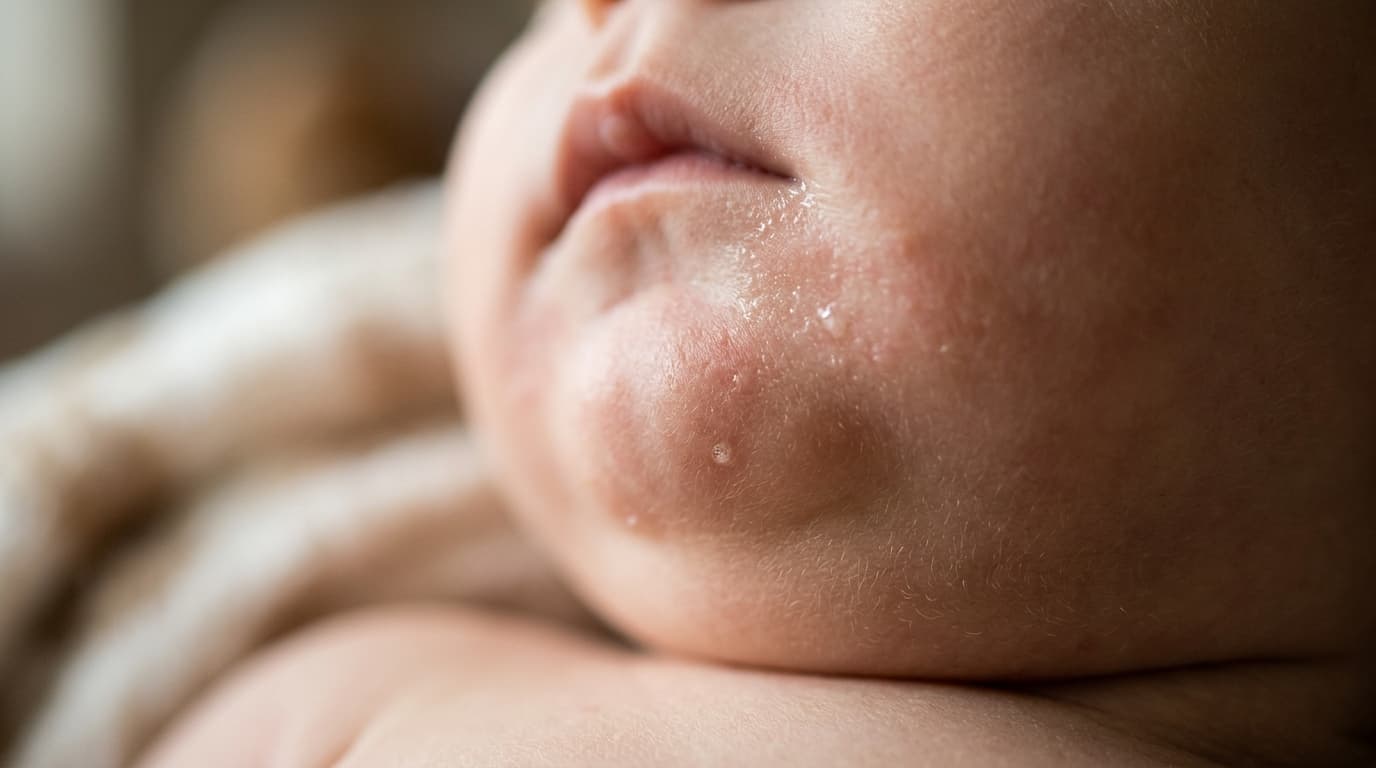
What it looks like and where it appears
A teething rash does not have one single look, but it has a recognizable pattern. Most often it shows up as flat or slightly raised red patches, clusters of small red bumps, or skin that simply looks chapped, dry, and rough. The skin may feel a little tender or itchy, and the redness can flare up after a particularly drooly day and then fade when the drooling eases off. This come-and-go rhythm is typical and follows the ebb and flow of saliva.
The location is the biggest clue, because the rash maps directly onto where drool travels. The chin is usually the first and most affected area, since saliva runs straight down from the mouth. From there it commonly spreads to the area right around the lips, the cheeks, and the soft folds of the neck where moisture gets trapped. If a baby drools enough that saliva runs past the bib, the chest can be affected too. Babies who chew on their hands may even get a touch of irritation there.
Because the cause is so mechanical, you can almost predict where a drool rash will appear by watching how your baby drools. A baby who tends to gnaw on one fist might get a patch on that hand, while a heavy chin-drooler will have the classic red chin. None of this is cause for worry on its own. A mild, dry, slightly red patch in a drool zone on an otherwise happy, well baby is the textbook picture of a simple teething rash. Staying well hydrated supports healthy skin in general, and a balanced intake of nutrients like vitamin D matters for a growing baby, though neither is a treatment for the rash itself.
How to soothe and protect the skin
The strategy for a teething rash is refreshingly simple, and it rests on one idea: keep the skin clean and dry, then protect it. Because the rash is caused by saliva sitting on the skin, almost everything you do should aim at reducing that contact.
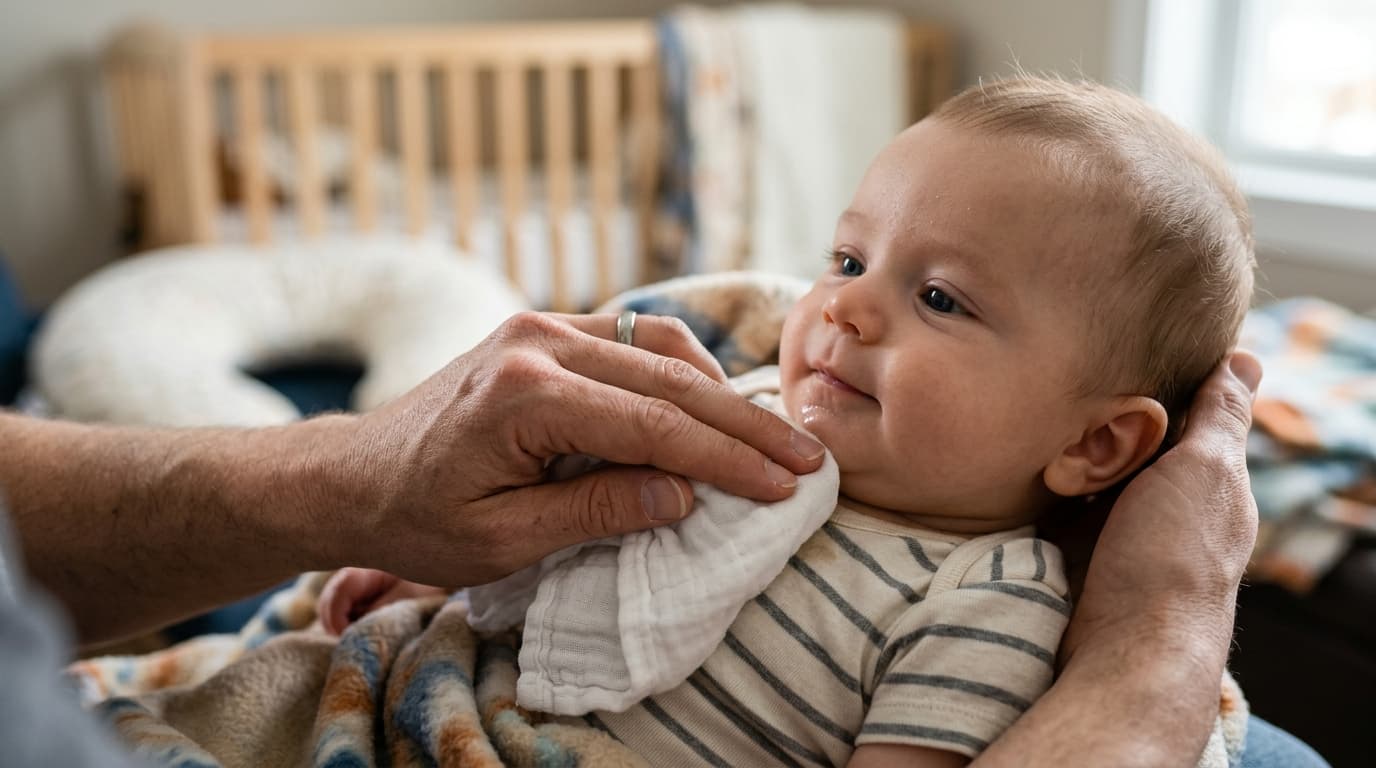
Start with gentle, frequent drying. Throughout the day, dab away drool from the chin, mouth, and neck with a soft, clean cloth. The key word is dab. Patting the skin dry is far kinder than rubbing, which can add friction to skin that is already irritated. A clean bib is your best friend here, because it catches drool before it reaches the chest and can be swapped out the moment it gets soggy. Changing wet bibs and clothing promptly keeps moisture off the skin in the first place.
When you do wash the area, keep it mild. Warm water and a soft cloth are usually enough, and you should pat the skin dry afterward rather than letting it air-dry while still damp. Once the skin is clean and dry, a thin layer of a plain, protective barrier can work wonders. A simple petroleum jelly or a basic, fragrance-free emollient creates a shield so that fresh drool slides off instead of soaking in. Applying that barrier before a known drooly stretch, such as before a nap or a feed, can head off a flare-up before it starts.
The other half of soothing a teething rash is soothing the teething itself, since a calmer baby drools and frets less. Letting your baby chew on a clean, firm rubber teething ring, or gently rubbing the gums with a clean finger or a cool, damp washcloth, can ease the gum discomfort that drives the drooling. For babies who have started solids, cool, soft foods can also be comforting. None of these are cures for the rash, but a more comfortable baby is easier to keep clean and dry. Broken nights are hard on parents too, and the strain can leave a tired caregiver with their own headache; a warm, soothing drink like ginger tea with lemon can be a small comfort during long teething stretches. If teething is disrupting everyone's nights, you are not alone, and there are gentle ways to handle the insomnia that broken sleep can bring to the whole household.
What to avoid
Knowing what not to do is just as important as knowing what to do, because some well-meaning habits can make a teething rash worse or introduce real safety risks. The first thing to avoid is harsh handling of the skin. Vigorous scrubbing, wiping with rough cloths, and over-cleaning can strip the skin further and prolong the irritation. Gentle and infrequent always beats aggressive.
Be cautious with products, too. Scented soaps, perfumed lotions, and harsh wipes can sting and irritate delicate baby skin, so plain and fragrance-free is the safer choice. Wash bibs, burp cloths, and clothing in a mild, unscented detergent so that the very fabrics meant to keep your baby dry are not adding new irritants. And do not reach for a medicated or steroid cream on your own. Anything beyond a plain barrier should be cleared with your pediatrician first, especially on a baby's face.
Some teething products carry genuine danger and should be avoided entirely. Numbing gels and rubs that contain ingredients such as benzocaine or lidocaine are not safe for babies, and neither are teething necklaces made of amber, wood, or beads, which pose choking and strangulation risks. Likewise, do not assume that any pain or fever a teething baby has must be from teething, and do not give pain or fever medicine without your pediatrician's guidance. If you are ever unsure whether a symptom is teething or something else, such as an early infection like the flu or a sore throat, ask rather than guess. A teething rash never needs antibiotics on its own, since it is irritation and not an infection, although a doctor may consider them if a rash becomes genuinely infected.
Teething rash vs other baby rashes and red flags
Part of staying calm about a teething rash is being able to recognize when a rash is probably something else. A typical drool rash is mild, lives in the drool zones (chin, mouth, cheeks, neck, chest), looks chapped or bumpy, comes and goes with drooling, and shows up on a baby who is otherwise feeling fine. When all of those boxes are checked, simple home care is usually all that is needed.
Other baby rashes behave differently, and the differences are your cue to look more closely. A rash that is far from the drool areas, that blisters or has fluid-filled spots, that spreads quickly across the body, or that comes alongside a baby who seems unwell is not acting like a drool rash. Importantly, teething does not cause a diaper rash, so redness in the diaper area has its own causes and its own care. The same goes for fever and diarrhea: these are not part of teething, and pairing them with a rash is a reason to think beyond drool. While simple home remedies suit a drool rash, the kind of comfort care used for an adult sore throat does not transfer to a baby's skin or to a baby who may be ill.
The single most useful habit is to watch the whole baby, not just the rash. A red chin on a smiling, eating, sleeping baby is reassuring. A rash on a baby who is feverish, very fussy, off their feeds, or just not themselves is a different situation that deserves a professional opinion. If a doctor ever needs to look for an infection or another cause behind a worsening rash and an unwell baby, they may run simple checks such as a complete blood count.
When to see a doctor
Most teething rashes never need a doctor, but there is a clear set of signs that mean you should reach out, and knowing them takes the worry out of the decision. Call your pediatrician if the rash blisters, cracks open, weeps, or oozes, or if it starts to look infected, because broken or weepy skin can let in infection and may need more than a barrier cream. Reach out, too, if the rash spreads beyond the usual drool areas, keeps getting worse, or simply does not improve after about a week of consistent gentle home care.
The other big trigger for a call is how your baby is doing overall. A high fever, signs of real illness, diarrhea, unusual sleepiness or fussiness, or refusing to feed are not features of teething, and they should never be brushed off as just teething alongside a rash. In those cases the rash is almost beside the point, and the priority is getting your baby checked. Trust your instincts here. You know your baby better than anyone, and there is never any harm in asking for advice when something feels off.
Finally, remember that this guide is general education, not a diagnosis. Every baby is different, and your pediatrician can look at your child's specific skin and symptoms and give advice tailored to them. When in doubt about any rash, fever, or change in how your baby is acting, a quick conversation with a healthcare professional is always the right call.
Key takeaways
A teething rash, also called drool rash or dribble rash, is red, irritated skin that appears during teething, but the teeth are not the cause. The real driver is the extra saliva that teething babies produce, which keeps the skin wet and chapped wherever drool collects: the chin, mouth, cheeks, neck, and sometimes the chest. It usually looks like red patches, small bumps, or dry, rough skin and comes and goes with drooling. Treating it is mostly about keeping the skin clean and dry: gently pat away drool with a soft cloth, change wet bibs promptly, wash the area with warm water, and apply a thin layer of a plain, fragrance-free barrier to clean, dry skin so saliva cannot soak in. Avoid harsh scrubbing, scented products, numbing gels with benzocaine or lidocaine, and teething necklaces, and do not use medicated creams without guidance. Teething does not cause true fever, diarrhea, or diaper rash, so those symptoms need their own explanation. Call your pediatrician if the rash blisters, cracks, oozes, spreads, looks infected, or does not improve with home care, or if your baby has a high fever or seems unwell. This article is general information and does not replace a pediatrician.
Frequently asked questions
What is a teething rash?
A teething rash is red, irritated skin that appears around a baby's mouth, chin, cheeks, neck, or chest during teething. It is also called drool rash or dribble rash. Despite the name, the teeth coming through do not cause the rash. It is caused by the extra saliva that teething babies produce, which keeps the skin wet and irritated.
Why does teething cause a rash if it is not the teeth?
Teething makes babies drool much more than usual. When skin stays wet with saliva for a long time, it gets chapped and irritated, and the saliva can also contain small bits of food that bother the skin. The rash is really a reaction to the drool, not to the teeth themselves, which is why it tends to appear wherever drool collects.
What does a teething rash look like?
It usually looks like flat or slightly raised red patches, small red bumps, or chapped, dry, or rough skin. It most often appears on the chin, around the mouth, on the cheeks, and on the neck or chest where drool runs down. It can come and go as drooling increases and decreases.
Where on the body does a drool rash appear?
A drool rash shows up wherever saliva sits against the skin. The most common spots are the chin, around the lips, the cheeks, and the folds of the neck. It can also reach the chest if drool runs down past a bib, and sometimes the hands if a baby chews on them.
How do I treat a teething rash at home?
Gently wipe drool from the face throughout the day with a soft, clean cloth, patting rather than rubbing. Keep the area clean and dry. After the skin is dry, you can apply a thin layer of a plain protective barrier, such as petroleum jelly or a simple emollient, so saliva cannot keep irritating the skin. A clean bib helps catch drool before it reaches the chest.
What should I put on a baby's drool rash?
A plain, fragrance-free barrier works best, applied to clean, dry skin to block saliva from soaking in. The goal is protection and moisture, not medication. Avoid scented or harsh products, and ask your pediatrician before using any medicated cream or anything new on your baby's skin.
How long does a teething rash last?
It tends to come and go for as long as a baby is drooling heavily, which can span several months of teething. Individual flare-ups often calm down within a few days once you keep the skin clean, dry, and protected. If a rash does not improve with simple home care, check with your pediatrician.
Is a teething rash dangerous?
A typical drool rash is harmless and not contagious. It is uncomfortable at most. It becomes a reason to call the doctor if the skin cracks, blisters, weeps, or oozes, if the rash spreads or worsens, or if your baby also seems unwell, since those signs can point to something other than simple drool irritation.
Can teething cause a fever or diaper rash?
Teething is linked to drooling, sore gums, and chewing, and at most a slightly raised temperature. It does not cause a true fever, diarrhea, or diaper rash. If your baby has a real fever, diarrhea, or seems sick, do not assume teething is the cause. Contact your pediatrician so another cause can be checked.
How can I prevent a drool rash?
Prevention is about keeping skin dry. Gently wipe away drool often, change wet bibs and clothing promptly, and use a soft cloth to dab the chin and neck. Applying a thin barrier to clean, dry skin before heavy drooling can also help saliva slide off instead of soaking in.
When should I take my baby to the doctor for a teething rash?
See a pediatrician if the rash blisters, cracks, oozes, or looks infected, if it spreads or does not improve with home care after about a week, or if your baby has a high fever or seems unwell. You know your baby best, so trust your instinct and seek advice whenever something worries you.
References
- Teething: 4 Tips to Soothe Your Baby (HealthyChildren.org, American Academy of Pediatrics)
- Tips for helping your teething baby (NHS, National Health Service, United Kingdom)
- Baby teething symptoms (NHS, National Health Service, United Kingdom)
- Teething (MedlinePlus Medical Encyclopedia, U.S. National Library of Medicine)
Author
Equipe Editorial GuiaDeSaude
The GuiaDeSaude Editorial Team researches and writes content from recognized medical sources (PubMed, Ministry of Health, WHO, Mayo Clinic, among others). All information is checked against at least two sources before publication.