Eye Gunk in Infants: Sticky Eye, Blocked Tear Ducts, and When to Worry

If you have a baby, you have almost certainly faced it: you go to lift your little one from the crib and one eye is half glued shut with a crust of sticky discharge, or there is a steady pool of goo in the corner near the nose. It looks worrying, and the first thought for many parents is an eye infection. In the vast majority of young babies, though, this everyday eye gunk is not an infection at all. It is a sign that the tiny drainage channel for tears has not finished opening yet.
This is one of the most common things parents notice in the first weeks and months, and it usually clears up on its own with nothing more than gentle cleaning. The trick is knowing the difference between ordinary sticky eye from a blocked tear duct and the less common situation where the eye is truly infected and needs a doctor. This guide walks through what eye gunk in infants is and what causes it, how a blocked tear duct works, how to gently clean the eye and massage the tear duct, how to tell sticky eye apart from conjunctivitis, the red flags that mean it is time to call your pediatrician, and what to expect over time. It is educational information and does not replace your pediatrician.
What eye gunk in infants is and what causes it
Eye gunk in infants is the discharge that collects in and around a baby's eye. It can be white, cream-colored, or yellow, and it tends to be stickiest first thing in the morning, when it may glue the eyelashes together overnight. Some babies have it in one eye, some in both, and the amount often varies from day to day. On its own, in a baby who is otherwise comfortable and feeding well, it is usually a harmless and very common finding.
The most frequent cause by far in young babies is a narrow or blocked tear duct. Tears are not just for crying. A thin film of tear fluid washes over the eye all the time to keep it clean and moist, and that fluid is supposed to drain away through a small channel that runs from the inner corner of the eye into the nose. In many newborns that channel has not fully opened, so tears cannot drain properly. They back up onto the surface of the eye, making it look watery, and as the fluid sits and dries it forms the familiar sticky discharge.
Because the issue is about drainage and not infection, the eye itself usually looks completely healthy: the white of the eye stays white, and the eye is not red, swollen, or sore. That single feature, a calm white eye with a watery, gunky corner, is the classic picture of a simple blocked tear duct. Less often, eye discharge in a baby can come from genuine eye irritation or an infection such as conjunctivitis, which is why it helps to know how the two look different. Babies who are run down by a cold or the flu sometimes have more eye discharge for a few days, because congestion around the nose makes an already narrow tear duct drain even less well.
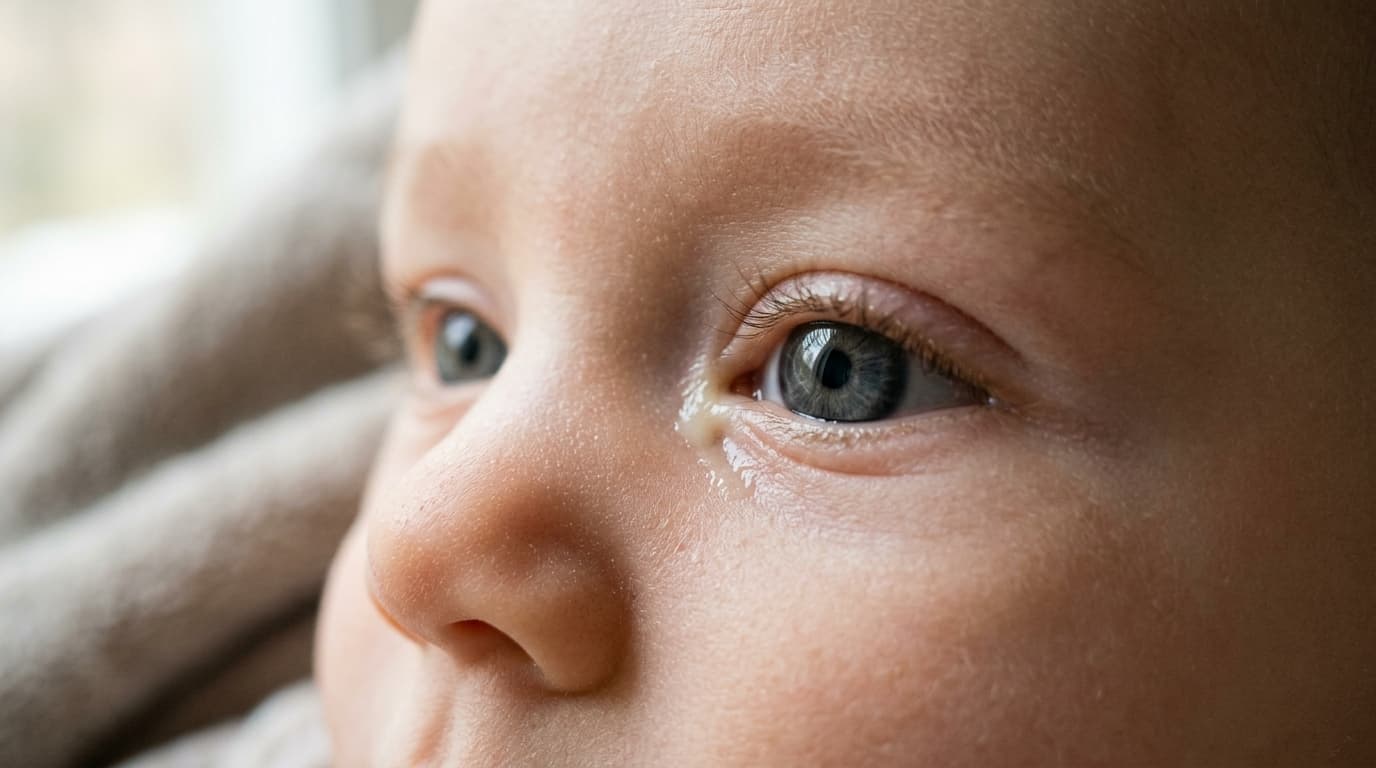
Blocked tear duct explained
The medical name for a blocked tear duct is nasolacrimal duct obstruction, but the idea is simple plumbing. Tears drain from tiny openings at the inner corners of the eyelids into a channel that empties into the nose. In a lot of babies, a thin tissue membrane is still covering the lower end of that channel at birth, so the pipe is effectively capped. It is a developmental delay in the drainage system, not damage and not something a parent did or could have prevented.
This is far more common than most parents realize. Studies suggest that somewhere around one in ten newborns, and by some counts more, has a tear duct that is at least partly blocked. Many parents do not notice anything in the very first days, then see the watering and sticky discharge start to appear in the first weeks or months as the baby begins producing more tears. That timing can feel alarming, but it simply reflects more tear fluid arriving at a drain that is not yet fully open.
The reassuring part is the outlook. The great majority of these blocked ducts open up on their own as the baby grows, with no treatment at all. Most have cleared within the first several months of life, and around nine in ten have resolved by the first birthday as the membrane finally opens and the duct starts draining normally. In the meantime the job at home is mostly comfort and hygiene: keeping the eye gently clean while nature does the work. Like many things in those first months, from teething rash to drool that gathers around soothers and pacifiers, it is the kind of common, self-limiting hiccup that looks worse than it is.
How to gently clean a baby's eye and massage the tear duct
Keeping the eye clean is the main thing you can do at home, and the technique matters because a baby's skin and eyes are delicate. Use a piece of clean, soft cotton wool or gauze dampened with clean, cooled boiled water. Wipe gently from the inner corner of the eye, the side nearest the nose, outward toward the ear. Use a fresh piece of cotton wool for every single wipe, and never use the same piece on both eyes, so that you are not carrying discharge from one eye to the other. When you are done, pat the area dry with a clean, soft cloth.
You can clean the eyes as often as they get sticky, including any time the lashes crust over after sleep. The goal is simply to lift away the dried discharge so the eye stays comfortable and the lashes do not stay stuck together. There is no need to dig into the eye or to use anything other than plain cooled boiled water unless a doctor has told you otherwise. Harsh wiping, scrubbing, or scented products do not belong anywhere near a baby's eye.
Many parents are also shown a gentle tear duct massage, which can help nudge the blocked membrane to open. The general idea is to use a clean finger to apply light pressure on the side of the nose, right at the inner corner of the eye, and then stroke gently downward toward the tip of the nose. It is usually done a few times a day. Some guidance frames it as helpful but not strictly required, since most ducts open without any massage at all. Because the technique and the right amount of pressure matter, it is best to have your pediatrician show you exactly how to do it rather than guessing. This article does not give doses or medical treatment, and you should not put any drops or medicine in a baby's eye unless a doctor has prescribed them.
Eye gunk vs conjunctivitis: how to tell
The single most useful skill here is telling an ordinary blocked tear duct apart from conjunctivitis, sometimes called pink eye. They can both produce discharge, which is what confuses people, but they look different where it counts. With a blocked tear duct, the eye waters and has sticky discharge, yet the eye itself stays white and calm. The white of the eye is not red, the eyelid is not swollen, and the baby does not seem to be in pain. The discharge can even be yellowish and still be nothing more than backed-up tears.
Conjunctivitis is different because it involves inflammation, not just poor drainage. With conjunctivitis the white of the eye and the inner eyelid look red or pink, the eyelid may be swollen or puffy, and the discharge is often yellow or green. The eye may look sore or irritated, and the baby may be more bothered by it. In short, redness and swelling are the dividing line. A watery, gunky eye that is otherwise white points toward a tear duct issue, while a red, swollen eye points toward inflammation or infection that a doctor should assess.
It is worth being honest that the two can be genuinely hard to tell apart, and a sticky eye from a blocked duct can occasionally get infected on top of the blockage. That is why the safe rule is simple: if the eye looks truly red or the eyelid is swollen, do not try to sort it out at home. Treat it as more than ordinary sticky eye and contact your doctor. Conjunctivitis sometimes needs prescribed treatment such as antibiotic eye drops, but whether any antibiotics are appropriate is a decision for a clinician, not something to start on your own. This is also true for any infection that seems to be spreading, just as you would seek advice for a worsening sore throat or a high fever rather than self-treating.

Red flags and when to see a doctor
Most eye gunk in infants never needs a doctor, but there is a clear set of warning signs that should prompt a call, and knowing them takes the guesswork out of the decision. Contact your pediatrician if the white of the eye looks red or pink, if the eyelid is swollen or red, or if a tender red lump appears at the inner corner of the eye near the nose, since that can signal an infection of the tear sac. Pain, a baby who seems unusually sensitive to light, or any fever alongside the eye symptoms are also reasons to be seen rather than to wait.
A few situations deserve extra caution. Eye discharge in a very young newborn, especially in the first days or couple of weeks of life, should be checked by a clinician rather than assumed to be a simple blocked duct, because infections in that age group are taken seriously. The same goes for an eye that cannot open because of swelling, a cornea (the clear front of the eye) that looks cloudy, or a baby who is generally unwell, off feeds, or not their usual self. When the whole baby seems affected, the eye is no longer the only concern.
Trust your instincts throughout. You know your baby better than anyone, and there is never any harm in asking for advice when something feels off, even if it turns out to be nothing. A blocked tear duct that is still causing a sticky, watery eye at around 12 months of age is also worth raising, because by then a doctor may want to take a closer look or consider a simple procedure to open the duct. None of this is something to manage alone, and your pediatrician can examine your baby and give advice tailored to them. Caring for a fussy baby with a gunky eye can wear parents out, and broken sleep can bring its own headache or even stretches of insomnia, so look after yourself too.
What to expect over time
For most babies, the story of eye gunk has a quiet, happy ending. As the drainage system finishes maturing over the first months of life, the blocked membrane opens, tears start draining the way they should, and the watering and sticky discharge fade away without any treatment. You may notice the sticky eye come and go before it disappears for good, often looking worse after naps and overnight sleep, or flaring up for a few days whenever your baby catches a cold and the nose gets congested.
While you wait, the routine stays the same: clean the eye gently and as often as it gets sticky, do any tear duct massage your pediatrician has shown you, and keep an eye out for the red flags. There is no need to keep your baby home or to treat sticky eye as contagious, because a blocked tear duct is not an infection passing from one person to another. General good care helps the whole baby thrive in these months, from staying well hydrated through feeds to getting enough vitamin D as advised for healthy growth, even though neither does anything specific for the tear duct itself.
If the blockage does not clear on its own, it is not a cause for alarm. Around the first birthday, if a sticky, watery eye is still a problem, a pediatrician or eye specialist can assess it and discuss options, including a quick, common procedure to open the duct. If at any point a doctor suspects a true infection rather than a simple blockage, they may examine the eye closely and, in some cases, run general checks such as a complete blood count to understand what is going on. Either way, the path forward comes from a professional who has actually looked at your baby.
Key takeaways
Eye gunk in infants is the sticky white or yellow discharge that collects in the corner of a baby's eye, and in young babies it is usually caused by a narrow or blocked tear duct rather than an infection. The tear drainage channel into the nose is often not fully open at birth, so tears back up and dry into a crust, leaving the eye watery but otherwise white and calm. It is very common and almost always clears on its own as the duct matures, with most resolving in the first months and the great majority by the first birthday. At home, gently clean the eye with clean cotton wool dampened in cooled boiled water, wiping from the inner corner outward and using a fresh piece each time, and do any tear duct massage exactly as your pediatrician shows you. The key difference from conjunctivitis is redness and swelling: a watery, gunky but white eye suggests a blocked duct, while a red or swollen eye suggests inflammation or infection. Call a pediatrician for redness, eyelid swelling, a tender lump at the inner corner, light sensitivity, pain, or fever, for discharge in a very young newborn, or if a blocked duct is still causing trouble around 12 months. Do not put any drops or medicine in a baby's eye unless a doctor prescribes them. This article is general information and does not replace a pediatrician.
Frequently asked questions
What is eye gunk in infants?
Eye gunk in infants is the sticky white, cream, or yellow discharge that builds up in the inner corner of a baby's eye and can stick the eyelashes together, especially after sleep. In young babies it most often comes from a narrow or blocked tear duct, which keeps tears from draining away so they back up and dry into a crust. It is common and usually harmless.
Why does my baby have so much eye discharge?
The most common reason in babies is a blocked tear duct. The tiny channel that drains tears from the eye into the nose may still have a thin membrane over its opening at birth. Tears cannot drain normally, so the eye looks watery and a sticky discharge forms on and around it. As the duct opens over the first months, the discharge usually fades.
What is a blocked tear duct in a baby?
A blocked tear duct, also called nasolacrimal duct obstruction, happens when the channel that carries tears from the eye into the nose is not fully open. A thin tissue membrane often remains over the lower opening. Because tears cannot drain, they pool in the eye, make it watery, and form a sticky discharge. It affects a notable share of newborns and usually clears on its own.
Is a blocked tear duct dangerous?
On its own, a blocked tear duct is not dangerous and usually causes only watering and mild sticky discharge in an otherwise healthy, white eye. It becomes a reason to call the doctor if the eye turns red, the eyelid swells, a tender red lump appears at the inner corner near the nose, or your baby develops a fever, since those can signal an infection.
How do I clean eye gunk from my baby's eye?
Use a piece of clean, soft cotton wool or gauze dampened with clean cooled boiled water. Gently wipe each eye starting from the inner corner near the nose and moving outward. Use a fresh piece for every wipe and a separate piece for each eye so you do not move discharge from one eye to the other. Pat the area dry afterward.
Should I massage my baby's tear duct?
A gentle tear duct massage can help and is often shown to parents by a pediatrician. Using a clean finger, apply light pressure on the side of the nose near the inner corner of the eye, then stroke gently downward toward the tip of the nose. It is repeated a few times a day. It is not always required, since many ducts open on their own, so check with your pediatrician first.
How do I know if it is a blocked tear duct or conjunctivitis?
With a blocked tear duct the eye waters and has sticky discharge, but the eye itself stays white and is not red, swollen, or painful. With conjunctivitis the white of the eye and the eyelid look red or pink, there may be swelling, and the discharge is often yellow or green. If the eye is genuinely red or swollen, treat it as more than simple sticky eye and call your doctor.
Do blocked tear ducts need antibiotic eye drops?
A simple blocked tear duct does not need antibiotic eye drops, even when the discharge looks yellow, as long as the eye itself is white and not red or swollen. Antibiotic drops are for infections such as conjunctivitis, where the eye is red and inflamed. A doctor decides whether drops are needed, so do not start any medicine on your own.
When will my baby's eye gunk go away?
Most blocked tear ducts open on their own as the drainage system matures. A large majority clear during the first months, and the great majority have resolved by the first birthday. While you wait, the sticky eye tends to come and go, often worse after sleep or when your baby has a cold. If it is still causing problems at about 12 months, talk to your pediatrician.
Can a cold make my baby's eye discharge worse?
Yes. When a baby has a cold or a stuffy nose, the lining around the tear drainage system can swell, which makes an already narrow tear duct drain even less well. You may notice more watering and more sticky discharge during those days. It usually settles again as the cold clears. If the eye becomes red or the eyelid swells, have it checked.
When should I take my baby to the doctor for eye gunk?
Call a pediatrician if the white of the eye is red or pink, the eyelid is swollen or red, there is a tender lump at the inner corner near the nose, your baby seems sensitive to light or in pain, or there is a fever. Also seek advice for discharge in a very young newborn, if the eye cannot open, or if a blocked tear duct is still causing trouble around 12 months of age.
Author
Equipe Editorial GuiaDeSaude
The GuiaDeSaude Editorial Team researches and writes content from recognized medical sources (PubMed, Ministry of Health, WHO, Mayo Clinic, among others). All information is checked against at least two sources before publication.