Adenomyosis vs Endometriosis: How They Differ and Why It Matters
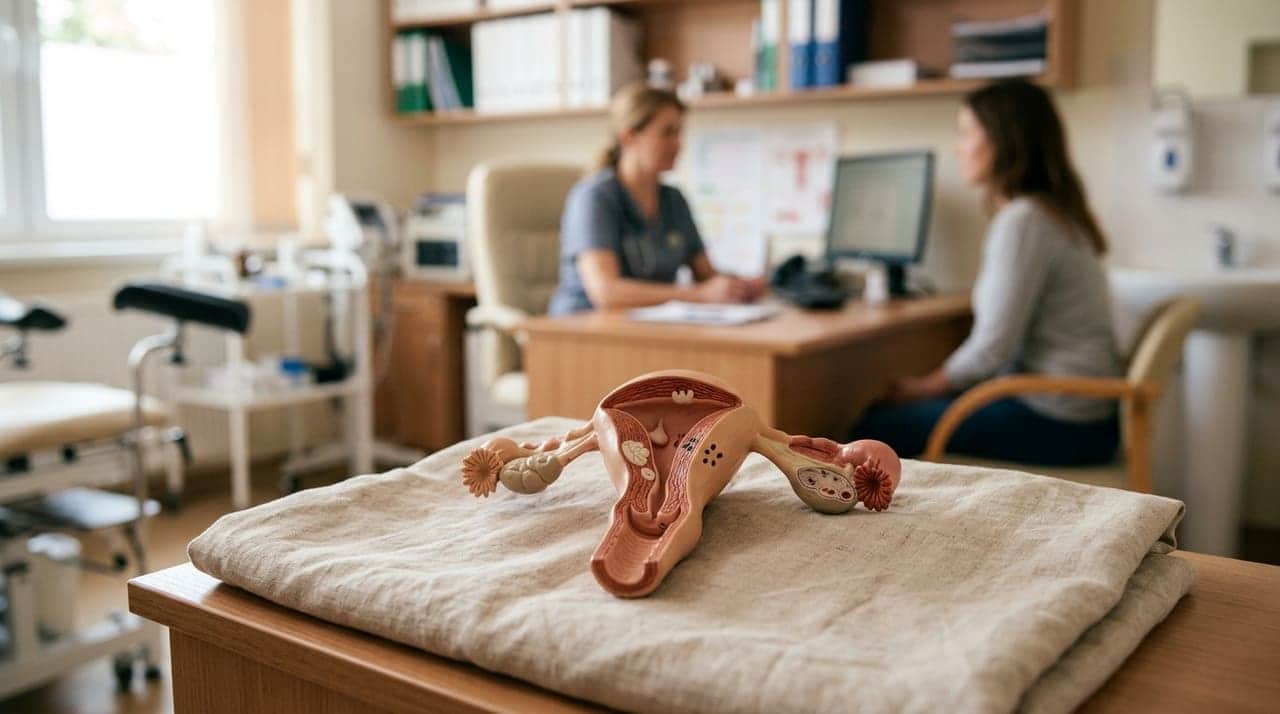
Few health terms get mixed up as often as adenomyosis and endometriosis. They sound similar, they both involve tissue like the lining of the uterus, and they can both turn a period into days of pain and heavy bleeding. Many people use the words almost interchangeably, yet they describe two distinct conditions that sit in different places in the body. Understanding that one difference, where the tissue grows, makes the rest of the picture much easier to follow.
This guide breaks down adenomyosis vs endometriosis in plain language. It explains what each condition is, the symptoms that tend to go with it, how doctors tell them apart, and the important fact that they can occur together in the same person. It is educational only, it does not replace a health professional, and only a doctor can diagnose either condition. If your periods are painful or heavy, that is a good reason to get checked.
Quick answer: how adenomyosis and endometriosis differ
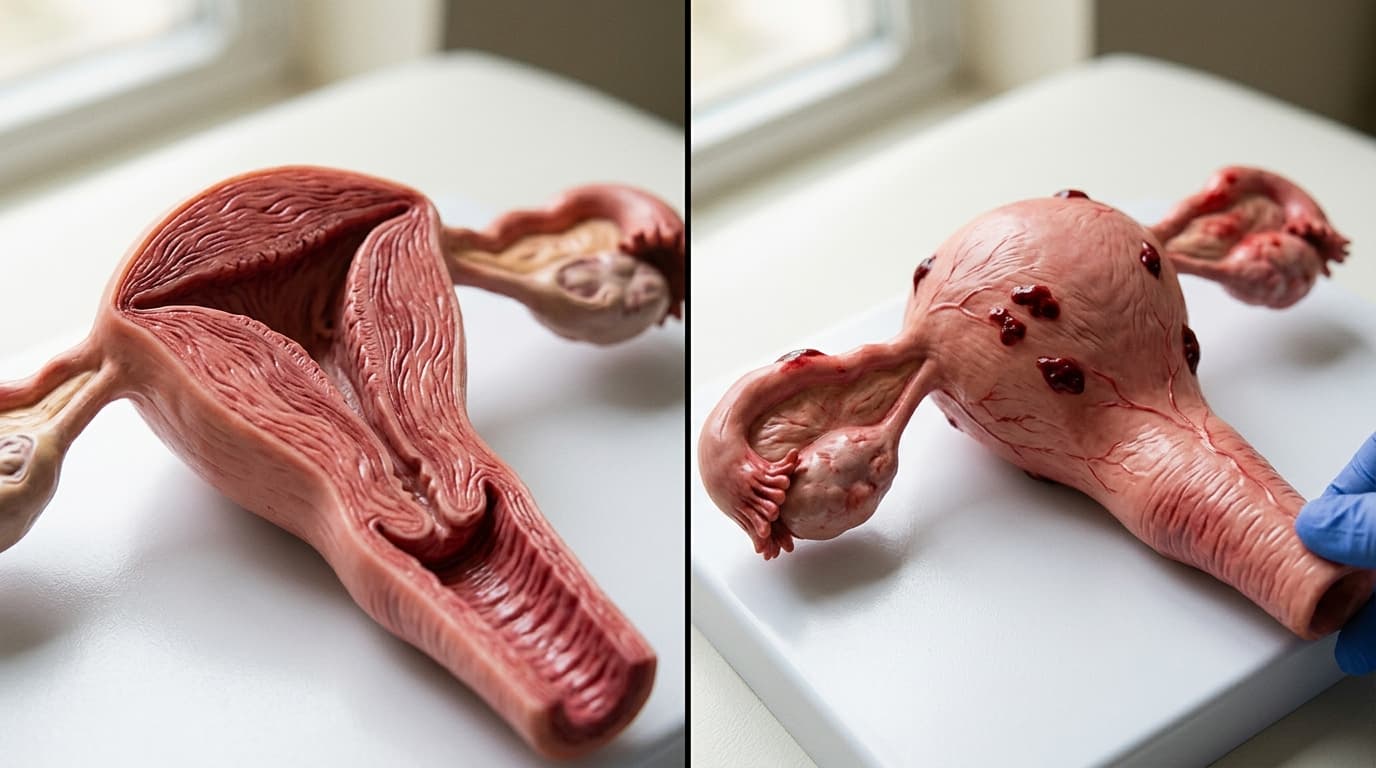
If you remember one thing, make it this. Both conditions involve tissue similar to the lining of the uterus, but the location is what sets them apart. In adenomyosis, that tissue grows into the muscle wall of the uterus. In endometriosis, it grows outside the uterus, on structures such as the ovaries, fallopian tubes, or the lining of the pelvis.
That single distinction explains many of the differences that follow. Because adenomyosis sits inside the uterine muscle, it tends to make the uterus enlarge and can drive heavy, painful periods. Because endometriosis sits outside the uterus, it can irritate nearby organs and tissues, which is why it sometimes brings pain with bowel movements, urination, or intercourse.
The two are not opposites, though. They share overlapping symptoms, similar suspected causes, and several risk factors, and they can exist in the same body at the same time. The rest of this article looks at each condition on its own, then lines them up side by side.
What endometriosis is and its symptoms
Endometriosis is a condition in which tissue similar to the lining of the uterus grows in other parts of the body. Most often it appears in the pelvic area, on the ovaries, fallopian tubes, the space behind the uterus, and the peritoneum, which is the lining of the abdomen. Less commonly it can show up in places such as the bladder, bowel, or, rarely, well beyond the pelvis.
The symptoms can vary a lot from one person to another. Pelvic pain is the hallmark, ranging from mild to intense, and it often peaks around the menstrual period. Many people also have severe cramps, heavy bleeding or spotting between periods, pain during or after intercourse, and pain with bowel movements or urination, especially during a period. Fatigue and digestive complaints like bloating, constipation, or diarrhea are common too. Some of these sensations can resemble the ups and downs of premenstrual syndrome, which is one reason the condition is so easy to overlook at first.
For some people, difficulty becoming pregnant is what eventually leads to the diagnosis, because endometriosis can affect fertility and may cause few obvious symptoms in the meantime. The pain itself can be confusing, since it overlaps with so many other complaints. A passing headache or the visual disturbances of an ocular migraine are unrelated, but chronic pain and poor sleep often travel together, which is one reason ongoing insomnia can wear people down while they search for answers.
What adenomyosis is and its symptoms
Adenomyosis is a thickening of the walls of the uterus that happens when tissue similar to the lining grows into the muscular layer of the uterus itself. As this tissue continues to respond to the menstrual cycle from inside the muscle, the uterus can become enlarged and tender, sometimes growing noticeably in size.
The most common adenomyosis symptoms are heavy or prolonged menstrual bleeding, often with clots, along with painful cramps that can be severe. Many people also describe ongoing pelvic pain or pressure that may not be limited to their period, pain during intercourse, and a sense of fullness or bloating low in the abdomen. Because the bleeding can be heavy and irregular, it is sometimes hard to distinguish from other kinds of spotting, including the light flow some people wonder about when reading how implantation bleeding typically lasts. Importantly, a significant share of people with adenomyosis have no symptoms at all and only learn about it during an exam or imaging done for another reason.
Adenomyosis is more often found in people who are a bit older, frequently between the late thirties and the early fifties, and in those who have given birth or had previous uterine surgery. As with endometriosis, the heavy bleeding can be tiring over time, and persistent blood loss is one of the reasons a doctor might check iron levels with a complete blood count. General wellness habits matter alongside medical care, including steady hydration and attention to nutrients such as vitamin D, though none of these replaces a proper evaluation.
The key differences side by side
Seeing the two conditions next to each other makes the contrast clearer. Here is a short comparison of the points that matter most.
- Location: adenomyosis grows within the muscle wall of the uterus, while endometriosis grows outside the uterus, on organs and tissues in the pelvis and occasionally beyond.
- Effect on the uterus: adenomyosis can enlarge and thicken the uterus, while endometriosis typically does not change the uterus itself but can affect nearby structures.
- Timing of pain: adenomyosis pain may be present much of the time, while endometriosis pain often flares around the period.
- Typical age pattern: adenomyosis is found more often in people in their late thirties to early fifties, frequently after childbirth, while endometriosis is commonly recognized in younger people, including during the reproductive years.
- How it is confirmed: adenomyosis is usually identified with imaging such as ultrasound or MRI, while endometriosis is confirmed definitively only with a surgical procedure called laparoscopy.
What they have in common is just as important. Both involve endometrial-like tissue, both can cause heavy periods, severe cramps, pelvic pain, and pain with intercourse, and both have been linked to difficulty conceiving. Their causes are not fully understood, and researchers continue to study hormones, inflammation, and genetics for both.
How each is diagnosed, and how they can occur together
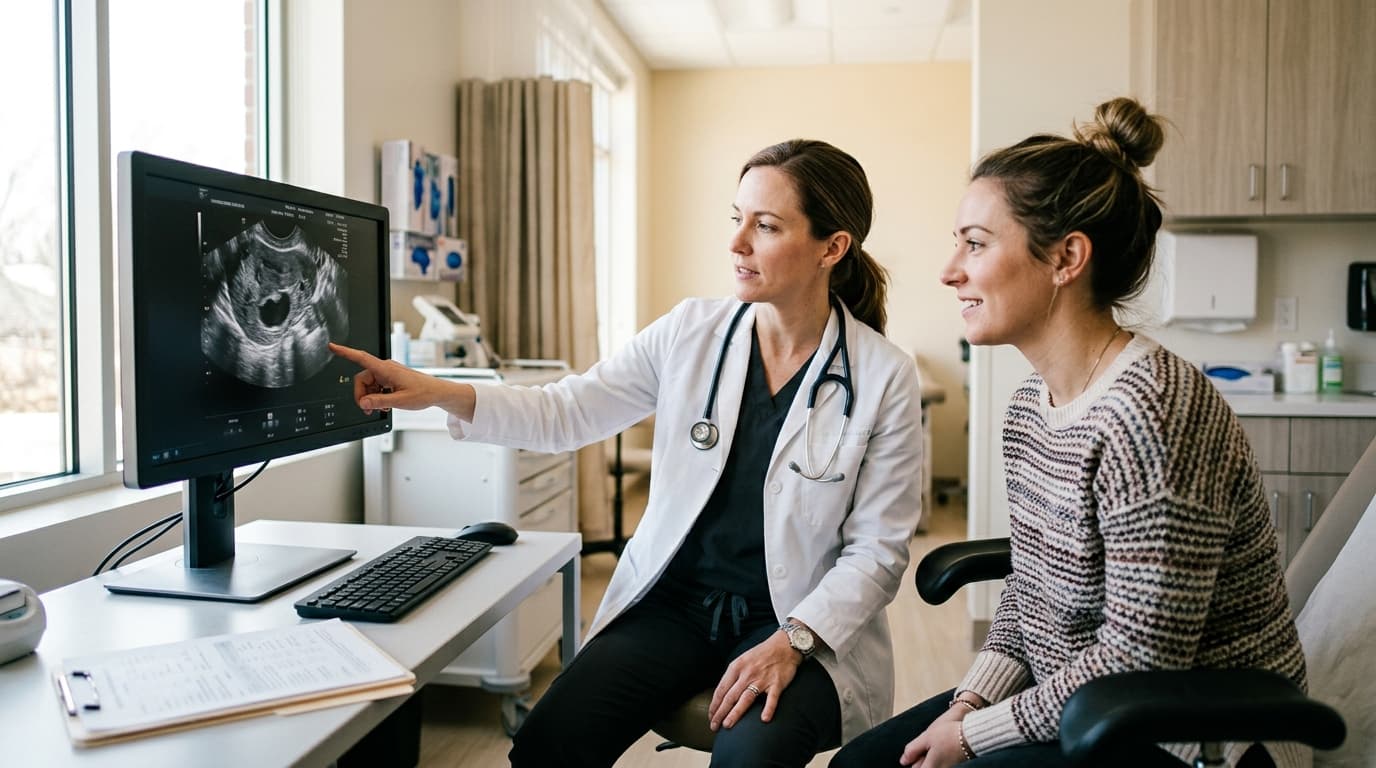
Diagnosis usually starts the same way for both conditions, with a conversation about your symptoms and a pelvic exam. From there the paths diverge a little. For adenomyosis, a doctor looks for an enlarged or tender uterus and turns to imaging, most often a transvaginal ultrasound and, when more detail is needed, an MRI, which can show the thickened uterine wall. Ultrasound alone does not always give a clear answer, which is part of why MRI is sometimes added.
For endometriosis, imaging such as ultrasound or MRI can raise suspicion, but the only way to confirm it definitively is laparoscopy. In this minimally invasive procedure a surgeon passes a small camera through a tiny cut in the abdomen to look directly at the tissue and, if appropriate, remove a sample for examination. Because symptoms overlap with other conditions, including fibroids and pelvic inflammatory disease, getting to a firm diagnosis can take time and patience.
It is also entirely possible to have both conditions at once. They share risk factors, and having endometriosis is associated with a higher chance of adenomyosis. Someone may be diagnosed with one and later found to have the other as well. None of this is something to sort out alone, and self-diagnosis is never wise. The same caution applies to treatment, including not reaching for antibiotics for pelvic pain that has nothing to do with an infection. Only a doctor can put the whole picture together.
When to see a doctor and what helps in general
Painful periods are common, but pain that disrupts your life is not something you simply have to endure. It is worth seeing a doctor if your periods are very heavy or last a long time, if cramps are severe, if you have ongoing pelvic pain or pressure, pain during intercourse, or pain with bowel movements or urination, or if you are having trouble becoming pregnant. Tracking your symptoms across a few cycles, including how heavy the bleeding is and when the pain appears, gives your doctor useful information.
Some signs deserve prompt attention. Soaking through a pad or tampon every hour for several hours, passing very large clots, feeling faint or dizzy, or sudden severe pelvic pain are reasons to seek care quickly rather than wait. A fever with pelvic pain is different from the ache of period cramps and is not the same as a passing illness like the flu, so it should be checked. These red flags do not mean a specific diagnosis, but they do mean you should be evaluated without delay.
In a general sense, the most helpful step is getting a clear assessment so that care can be matched to what is actually going on. Day-to-day measures such as adequate rest, staying hydrated, gentle movement, and managing stress can support overall wellbeing while you work through the process, but they are not a substitute for medical evaluation, and they do not cure either condition. When period pain is severe or bleeding is heavy, the lasting answer comes from a professional who can examine you, order the right imaging, and explain your options. This article is educational and does not replace that personalized care.
Summary
Adenomyosis vs endometriosis comes down to one tidy idea: both involve tissue similar to the lining of the uterus, but adenomyosis grows inside the muscle wall of the uterus while endometriosis grows outside the uterus, on the ovaries, fallopian tubes, and other pelvic tissues. That difference in location shapes how each tends to behave, including the way adenomyosis can enlarge the uterus and how endometriosis can irritate nearby organs.
The conditions share a great deal, including heavy periods, severe cramps, pelvic pain, pain with intercourse, and links to fertility difficulty, and they can occur together in the same person. Adenomyosis is usually identified through imaging such as ultrasound or MRI, while endometriosis is confirmed definitively with laparoscopy. Because the symptoms overlap so much, only a doctor can tell them apart. If your periods are painful or heavy, or if you have ongoing pelvic pain, that is a clear reason to seek an evaluation rather than guess.
Frequently asked questions
What is the main difference between adenomyosis and endometriosis?
The main difference is where the tissue grows. Both conditions involve tissue similar to the lining of the uterus, but in adenomyosis that tissue grows into the muscle wall of the uterus itself, while in endometriosis it grows outside the uterus, on areas such as the ovaries, fallopian tubes, or the lining of the pelvis. Because the location differs, the typical symptoms and the way each is diagnosed and managed can differ too.
Can you have adenomyosis and endometriosis at the same time?
Yes. It is possible to have both conditions at once, and they share several risk factors. Having one can be linked to a higher chance of having the other. Because their symptoms overlap heavily, someone may be diagnosed with one and later found to have the other as well. Only a doctor can sort out what is going on through examination and imaging.
What are the symptoms of adenomyosis?
Common adenomyosis symptoms include heavy or prolonged menstrual bleeding, sometimes with clots, painful cramps, ongoing pelvic pain or pressure, pain during intercourse, and a feeling of fullness or bloating in the lower abdomen. The uterus can become enlarged and tender. Some people have no symptoms at all and learn about it only during an exam or imaging done for another reason.
What are the symptoms of endometriosis?
Endometriosis often causes pelvic pain that can be severe, intense menstrual cramps, heavy bleeding or spotting between periods, pain during or after intercourse, and pain with bowel movements or urination, especially during a period. Many people also report fatigue and difficulty becoming pregnant. As with adenomyosis, some people have few or no symptoms until a fertility evaluation reveals it.
How is adenomyosis diagnosed?
A doctor usually starts with a pelvic exam, which may show an enlarged or tender uterus. Imaging is then used to look at the uterine wall, most often a transvaginal ultrasound and, when more detail is needed, an MRI. In the past a definitive diagnosis was made only after the uterus was examined following surgery, but today imaging plays the central role in identifying it.
How is endometriosis diagnosed?
Evaluation usually begins with a medical history and a pelvic exam, sometimes followed by ultrasound or MRI. These can suggest endometriosis, but the only way to confirm it definitively is laparoscopy, a minimally invasive procedure in which a surgeon passes a small camera through a tiny cut in the abdomen to look at the tissue directly and, if needed, take a sample.
Which is more painful, adenomyosis or endometriosis?
Pain is very individual, and neither condition is reliably more painful than the other. Both can cause severe period pain and chronic pelvic pain. One difference people sometimes notice is timing. Adenomyosis pain may be present more of the time, while endometriosis pain often flares around periods. The intensity does not tell you which condition you have, which is why a medical evaluation is important.
Can adenomyosis or endometriosis affect fertility?
Both conditions have been associated with difficulty becoming pregnant, and for some people fertility concerns are what lead to the diagnosis. Many people with either condition do conceive, however. Because each situation is different, anyone worried about fertility should speak with a doctor who can look at their full history and discuss the options that fit them.
What causes adenomyosis and endometriosis?
The exact cause of each is not fully understood. Researchers are studying several possible factors, including hormones, inflammation, genetics, and, for endometriosis, ideas such as menstrual blood flowing backward. Risk factors that have been linked to adenomyosis include prior childbirth and previous uterine surgery, and having endometriosis is among them. A family history can raise the risk of endometriosis.
Does a hysterectomy cure these conditions?
Removing the uterus addresses adenomyosis because the affected tissue is within the uterine muscle, but it ends the ability to become pregnant and is a major decision. It does not remove endometriosis tissue that sits outside the uterus, although it may help some symptoms. Treatment choices are highly individual, so they should be discussed thoroughly with a doctor rather than assumed.
When should I see a doctor about painful or heavy periods?
It is worth seeing a doctor if your periods are very heavy or last a long time, if cramps are severe enough to disrupt daily life, if you have ongoing pelvic pain, pain during intercourse, or pain with bowel movements or urination, or if you are having trouble conceiving. Seek prompt care for soaking through pads or tampons every hour, feeling faint, or sudden severe pelvic pain. This article is educational and is not a diagnosis.
Author
Equipe Editorial GuiaDeSaude
The GuiaDeSaude Editorial Team researches and writes content from recognized medical sources (PubMed, Ministry of Health, WHO, Mayo Clinic, among others). All information is checked against at least two sources before publication.