Foods High in Phosphorus: What This Mineral Does and Where to Find It

Phosphorus rarely gets the attention that calcium or iron receive, yet it is the second most abundant mineral in the body and shows up in nearly every cell. It helps build the hard structure of bones and teeth, sits at the center of how cells store and release energy, and is part of the genetic material that every cell carries. For most people, getting enough phosphorus is not a struggle at all. The more useful questions are which foods supply it, how well the body absorbs it from different sources, and why a small group of people needs to keep an eye on how much they take in.
This guide explains what phosphorus does, walks through the foods that are highest in it, looks at the difference between phosphorus from animal foods, plant foods and additives, and covers what the main health authorities say about high intake and who should be more careful. It draws on MedlinePlus, from the United States National Library of Medicine, the Nutrition Source from the Harvard T.H. Chan School of Public Health, the Office of Dietary Supplements at the National Institutes of Health, and a 2020 scientific review on dietary phosphorus and bone metabolism. None of this replaces personal medical advice, but it should give you a clear, grounded picture.
What phosphorus does in the body
Phosphorus is a mineral the body uses constantly, in many different roles. According to MedlinePlus, it makes up about 1 percent of a person's total body weight, and most of it is stored in the bones and teeth. That is its most visible job: phosphorus teams up with calcium to build the hard mineral structure that gives the skeleton its strength, a process that also depends on vitamin D, which helps the body absorb calcium.
Beyond the skeleton, phosphorus is busy inside every cell. MedlinePlus notes that the body needs phosphorus to make protein for the growth, maintenance and repair of cells and tissues, and that it helps the body produce ATP, a molecule used to store energy. Harvard's Nutrition Source describes phosphorus as a key element of bones, teeth and cell membranes, adds that it helps activate enzymes and keeps blood pH within a normal range, and points out that phosphorus is part of DNA, RNA and ATP, which Harvard calls the body's major source of energy.
There is also a quieter set of jobs. MedlinePlus lists roles in how the body uses carbohydrates and fats, in normal kidney function (which also depends on good hydration), in muscle contraction, in keeping a regular heartbeat and in nerve signaling. Put together, this is a mineral that is less about one dramatic function and more about being part of the basic machinery of life. When you eat, move, think and even when you rest, phosphorus is involved, which is one reason persistent fatigue, when it is not simply down to poor sleep or insomnia, is worth discussing with a professional.
How much phosphorus do you need
The reference numbers are easy to find and easy to misread, so it helps to keep them simple. Both Harvard's Nutrition Source and the NIH Office of Dietary Supplements give a Recommended Dietary Allowance of 700 mg per day for adults aged 19 and older. MedlinePlus lists the same 700 mg per day for adults, with higher amounts during the growth years: children and teenagers aged 9 to 18, and pregnant or breastfeeding people under 18, need about 1,250 mg per day.
It is worth knowing that these are population reference values, meant to cover the needs of almost everyone in a group, not a personal target to hit exactly each day. The Office of Dietary Supplements points out that most people in the United States actually get more phosphorus than they need from the foods they eat. In other words, for the average person eating a varied diet, falling short is unlikely.
Harvard also notes an upper reference level, intended to flag intakes that may carry risk over time. Harvard lists a tolerable upper intake of 4,000 mg per day for adults aged 19 to 70, and 3,000 mg per day for those aged 71 and older. These ceilings matter most in the context of additives and supplements rather than ordinary whole foods, a point we return to below.
Which foods are high in phosphorus
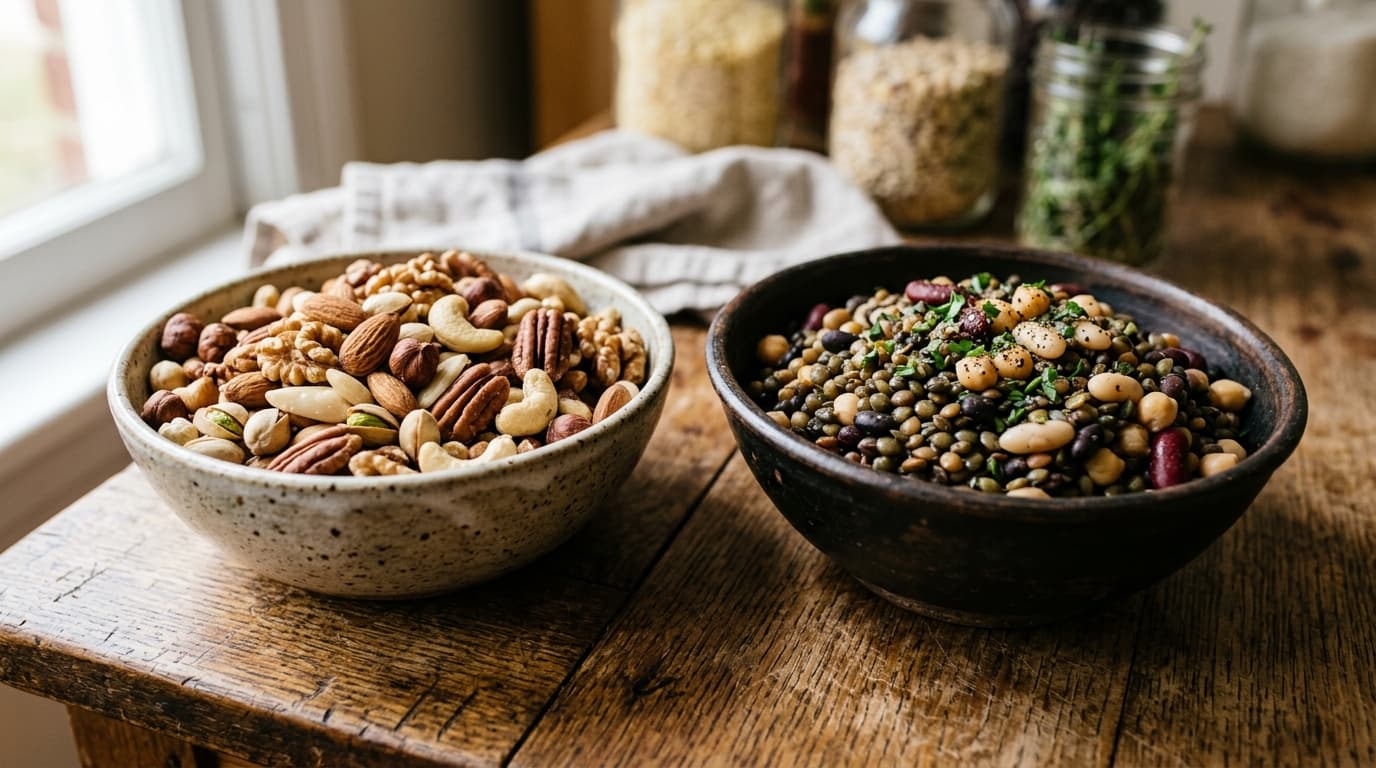
The good news for anyone trying to meet their needs is that phosphorus is spread across many everyday foods. Harvard's Nutrition Source names dairy, red meat, poultry, seafood, legumes and nuts as natural sources, with specific examples including salmon, beef, pork, beans, seeds and whole wheat products, along with some vegetables such as asparagus, tomatoes and cauliflower. MedlinePlus highlights meat and milk as main dietary sources and adds that whole grain breads and cereals carry more phosphorus than products made from refined flour. Both note that fruits and vegetables, while valuable for other reasons, contribute only small amounts of phosphorus.
A practical way to picture it is to group the richest sources by food type.
| Food group | Examples high in phosphorus |
|---|---|
| Dairy | Milk, cheese, yogurt |
| Fish and seafood | Salmon and other fish |
| Meat and poultry | Beef, pork, chicken |
| Eggs | Whole eggs |
| Nuts and seeds | Almonds, sunflower seeds, pumpkin seeds |
| Legumes | Beans, lentils, peas |
| Whole grains | Whole wheat bread, whole grain cereals |

Notice that this list overlaps heavily with foods many people already eat for protein. That overlap is one reason phosphorus deficiency is uncommon: a plate built around dairy, fish, meat, eggs, beans or nuts tends to deliver plenty without any special effort. For people who eat mostly plant foods, legumes, nuts, seeds and whole grains all contribute, though, as the next section explains, how much of that phosphorus the body actually takes up is a separate question.
Animal, plant and added phosphorus: why the source matters
Not all phosphorus is absorbed the same way, and this is one of the most useful things to understand about the mineral. The body does not simply count milligrams on a label. It depends on the chemical form the phosphorus comes in.
Harvard's Nutrition Source explains that phosphorus from animal foods is generally absorbed more efficiently than phosphorus from plant foods. The reason lies in how plants store the mineral. Much of the phosphorus in seeds, grains, beans and nuts is bound up as phytates, also called phytic acid, a form the human gut does not break down well. MedlinePlus makes the same point about grains, noting that the phosphorus in whole grain breads and cereals is not in a form that is easily absorbed. So a serving of whole grains may list a fair amount of phosphorus, yet the body takes up only part of it.
Added phosphorus is the opposite story. The Office of Dietary Supplements notes that inorganic added phosphorus is highly absorbed by the body. Harvard puts a number on it: phosphate additives are absorbed at roughly 90 percent, compared with about 40 to 60 percent from natural animal and plant foods. This gap is the key to understanding why nutrition scientists pay more attention to additives than to the phosphorus in a piece of fish or a handful of beans.
Phosphate additives in processed foods
Beyond the phosphorus that occurs naturally in food, a great deal of it is added during processing. The Office of Dietary Supplements notes that many processed foods contain additives that supply phosphorus, and lists examples such as phosphoric acid, sodium phosphate and sodium polyphosphate. These additives are used to preserve foods, improve texture, retain moisture and enhance flavor, and they appear in a wide range of products from processed meats and cheeses to baked goods and colas. Swapping some of those sugary drinks for water or a simple ginger tea with lemon is one easy way to cut back.
Because added phosphate is absorbed so efficiently, it contributes more to the body's phosphorus load than its share of the diet might suggest. Harvard's Nutrition Source reports that phosphate additives make up a meaningful portion of the phosphorus in the typical United States diet. The 2020 review in PMC, Importance of Dietary Phosphorus for Bone Metabolism and Healthy Aging, describes a similar picture at the population level: it notes that phosphorus intakes in Western diets often exceed the recommended daily allowance by roughly one-and-a-half to two-fold, driven in large part by food additives.
For someone who wants a sense of how much added phosphate they are getting, the ingredient list is the place to look. Words containing "phos," such as phosphoric acid, sodium phosphate or polyphosphate, signal added phosphorus. Nutrition labels in many countries do not list phosphorus as a separate line, so the ingredient list is often the only clue. None of this means processed foods are off limits for a healthy person with normal kidneys. It simply explains why authorities single out additives, and why they matter most for the groups discussed next. Colas, worth noting, also carry caffeine, which in excess is a known trigger of headache for some people, and their acidity can irritate the mouth, sometimes contributing to a swollen taste bud.
Why very high intake draws caution
For a healthy person whose kidneys work normally, the body is good at handling the phosphorus that comes in, holding on to what it needs and clearing the rest. The cautions raised by health authorities are mainly about either very high sustained intake or situations where the body cannot clear phosphorus properly.
MedlinePlus frames the core risk clearly: high phosphorus levels in the blood, which a doctor can check alongside tests such as a complete blood count, can combine with calcium to form deposits in soft tissues, but this mainly happens in people with severe kidney disease or a problem regulating calcium. In other words, the danger is less about phosphorus itself and more about whether the body can keep it in balance.
The bone angle is where the research review adds detail. The PMC review explains several ways that excessive phosphorus may work against bone over time. Very high phosphorus can shift the balance with calcium, and lower available calcium can trigger the release of parathyroid hormone, which the review notes stimulates bone resorption, the breakdown of bone tissue. The review also reports that high dietary phosphorus has been associated in some studies with a higher risk of bone fractures, and it discusses hormonal signals such as FGF23 that help the body manage phosphorus levels. Harvard's Nutrition Source echoes this theme, noting that a high intake of phosphate additives has been associated with negative effects on bone metabolism.
These are associations and mechanisms drawn from research, not a verdict that phosphorus in food is harmful for the general population. The consistent message across the sources is one of balance: the body is built to manage normal intake, and the concern grows mainly when intake is very high, when it comes heavily from highly absorbed additives, or when the kidneys cannot do their part. The review itself stresses that keeping phosphorus balance steady over the long term is what supports healthy bones and healthy aging.
Who should watch their phosphorus intake
Most people do not need to track phosphorus at all. A few groups, though, have good reason to be more careful, and for them this is a matter to discuss with their own care team rather than to manage alone.
The clearest example is chronic kidney disease. Harvard's Nutrition Source explains that healthy kidneys remove excess phosphorus from the body, but when the kidneys are not working well they cannot keep up. Phosphorus then builds up in the blood, which Harvard notes may speed the progression of kidney disease and raise the risk of cardiovascular disease. This is why people with reduced kidney function are often advised to pay attention to phosphorus, and especially to highly absorbed phosphate additives. The right targets and food choices vary from person to person and belong to a medical plan, not a general article.
A second, more specific caution comes from the Office of Dietary Supplements, which notes that some laxatives containing sodium phosphate can raise phosphorus levels, and that taking more than the recommended dose can be dangerous, particularly for people who are dehydrated or who have kidney disease or heart disease. The broader point from the same source is reassuring for everyone else: phosphorus is naturally present in many foods, most people in the United States already get more than they need, and the best approach for the general population is to get nutrients mainly from food and beverages rather than from supplements.
Putting it together
Phosphorus is a quietly essential mineral. It builds bones and teeth alongside calcium, sits inside the energy system of every cell as part of ATP, and forms part of cell membranes and genetic material, as MedlinePlus and Harvard's Nutrition Source describe. The Recommended Dietary Allowance for adults is 700 mg per day, and because phosphorus is found in dairy, fish, meat, poultry, eggs, nuts, legumes and whole grains, most people meet that easily. In fact, the Office of Dietary Supplements notes that people in the United States tend to get more than they need.
The more nuanced points are about form and balance. Phosphorus from animal foods is absorbed better than from plants, where much of it is locked in phytate, while phosphate additives are absorbed very efficiently and make up a notable share of intake in modern diets. High intake, especially from additives, is where authorities urge caution: the PMC review links excess phosphorus to effects on calcium balance, parathyroid hormone, bone resorption and fracture risk, and Harvard connects high phosphorus to cardiovascular and kidney concerns when the kidneys cannot clear it. For people with chronic kidney disease, and for anyone using sodium phosphate products, those cautions are real and personal, and should be handled with a health professional. For most healthy people, the takeaway is simpler: a varied diet supplies plenty of phosphorus, and keeping processed, additive-heavy foods in proportion is a sensible part of eating well, the same kind of balanced eating recommended as self-care for other everyday concerns, such as PMS.
Frequently asked questions
What does phosphorus do in the body?
Phosphorus is involved in many essential processes. According to MedlinePlus, it helps form bones and teeth, plays a role in how the body uses carbohydrates and fats, and is needed to make protein for the growth, maintenance and repair of cells and tissues. It also helps the body produce ATP, a molecule the body uses to store energy. Harvard's Nutrition Source adds that phosphorus is a key element of bones, teeth and cell membranes, helps activate enzymes, keeps blood pH in a normal range, and is part of DNA, RNA and ATP.
How much phosphorus do adults need per day?
The Recommended Dietary Allowance for adults aged 19 and older is 700 mg per day, according to both Harvard's Nutrition Source and the NIH Office of Dietary Supplements. MedlinePlus also lists 700 mg per day for adults, with higher amounts for children and teens aged 9 to 18 and for pregnant or breastfeeding people under 18, who need about 1,250 mg per day. These figures are general references, not individual prescriptions.
Which foods are highest in phosphorus?
Phosphorus is found in many foods. Harvard's Nutrition Source lists dairy, red meat, poultry, seafood, legumes and nuts as natural sources, with examples such as salmon, beef, pork, beans, seeds and whole wheat products. MedlinePlus notes that meat and milk are main sources and that whole grain breads and cereals contain more phosphorus than products made from refined flour. Fruits and vegetables provide only small amounts.
Is phosphorus from animal foods absorbed better than from plants?
Generally yes. Harvard's Nutrition Source explains that phosphorus from animal foods tends to be absorbed more efficiently than phosphorus from plant foods. Many plants store phosphorus as phytates, or phytic acid, which the body does not break down well, so less of that phosphorus is absorbed. MedlinePlus similarly notes that the phosphorus in whole grains is not in a form the body absorbs easily.
What are phosphate additives and why do they matter?
Phosphate additives are inorganic forms of phosphorus added to many processed foods. The NIH Office of Dietary Supplements lists examples such as phosphoric acid, sodium phosphate and sodium polyphosphate, and notes that inorganic added phosphorus is highly absorbed by the body. Harvard's Nutrition Source estimates these additives make up a meaningful share of phosphorus in the typical US diet and reports that added phosphate is absorbed at about 90 percent, compared with roughly 40 to 60 percent from natural animal and plant foods.
Can you get too much phosphorus from food?
For most healthy people, the NIH Office of Dietary Supplements notes that people in the United States generally get more phosphorus than they need, and a true excess from ordinary food is uncommon when the kidneys work normally. MedlinePlus explains that high phosphorus levels in the blood mainly become a problem in people with severe kidney disease or a problem regulating calcium, where phosphorus can combine with calcium and form deposits in soft tissues.
Is phosphorus deficiency common?
No. MedlinePlus notes that phosphorus deficiency is rare because the mineral is widely available in food. Harvard's Nutrition Source lists possible signs of low phosphorus, such as poor appetite, muscle weakness, bone pain and fatigue, but these are uncommon in people eating a varied diet, which also helps supply the nutrients linked to healthy hair and to avoiding some causes of [hair loss](/en/mens-health/hair-loss). Any concern about deficiency should be evaluated by a health professional.
How are phosphate additives linked to bone health?
A 2020 review in PMC, Importance of Dietary Phosphorus for Bone Metabolism and Healthy Aging, explains that very high phosphorus intake can disturb the balance between calcium and phosphorus, may trigger parathyroid hormone release that stimulates bone resorption, and is associated in some studies with a higher risk of fractures. Harvard's Nutrition Source similarly reports that high intake of phosphate additives has been associated with negative effects on bone metabolism.
Who should pay closer attention to phosphorus intake?
People with chronic kidney disease are the main group. Harvard's Nutrition Source explains that when the kidneys cannot remove excess phosphorus, levels build up, which may speed the progression of kidney disease and raise cardiovascular risk. The NIH Office of Dietary Supplements also warns that some laxatives containing sodium phosphate can raise phosphorus levels and may be dangerous in people who are dehydrated or who have kidney or heart disease. Anyone in these groups should follow the guidance of their own care team.
Do I need a phosphorus supplement?
Most people do not. The NIH Office of Dietary Supplements notes that phosphorus is naturally present in many foods, that most people in the United States get more than they need, and that the best approach is to get nutrients mainly from food and beverages. Supplements are useful only when food cannot meet needs, and that decision should involve a health professional.
Does the calcium to phosphorus balance matter?
It can. The PMC review on dietary phosphorus and bone metabolism explains that calcium and phosphorus together form hydroxyapatite, the mineral that gives bone its strength, and that maintaining a reasonable balance between them supports normal bone and tooth mineralization. A diet very high in phosphorus, especially from additives, and relatively low in calcium may work against that balance over time.
Are whole grains a good source of phosphorus?
Whole grains do contain phosphorus. MedlinePlus notes that whole grain breads and cereals provide more phosphorus than refined flour products, but adds that much of the phosphorus in grains is bound as phytate and is not absorbed easily. So whole grains contribute phosphorus along with fiber and other nutrients, even though not all of it is taken up by the body.
References
- Phosphorus in diet (MedlinePlus, U.S. National Library of Medicine)
- Phosphorus (The Nutrition Source, Harvard T.H. Chan School of Public Health)
- Phosphorus, Fact Sheet for Consumers (Office of Dietary Supplements, National Institutes of Health)
- Importance of Dietary Phosphorus for Bone Metabolism and Healthy Aging (Serna and Bergwitz, 2020, PMC)
Author
Equipe Editorial GuiaDeSaude
The GuiaDeSaude Editorial Team researches and writes content from recognized medical sources (PubMed, Ministry of Health, WHO, Mayo Clinic, among others). All information is checked against at least two sources before publication.