10 Best Foods for Prostate Health: A Practical Eating Guide for Men
The prostate is a small gland that quietly does its job for decades, and most men only start thinking about it once changes in urination or a routine check bring it to attention. By then, a common question is whether food can help. The honest answer is that no single food keeps the prostate healthy, and no eating plan prevents or treats prostate disease on its own. What the evidence does suggest is gentler and more reassuring: the same balanced, mostly plant-forward way of eating that protects the heart also tends to support prostate health over the long run.
This guide walks through ten of the best foods for prostate health, with a clear-eyed view of what the research shows and what it does not. It then puts those foods into a realistic eating pattern, covers what is worth limiting, and looks at the lifestyle habits, such as weight and activity, that sit alongside diet. It also flags the prostate symptoms that should send you to a doctor rather than to the kitchen. Think of this as a practical starting point for everyday choices, not a medical plan, and not a replacement for advice from your own health professional.
Why diet matters for prostate health
The most useful idea to hold onto is that there is no special prostate diet separate from general healthy eating. Authorities tend to describe the prostate-supportive pattern in almost the same words they use for a heart-healthy one: plenty of vegetables and fruit, whole grains, beans and other legumes, fish and other lean proteins, nuts and healthy oils, with red meat, processed meat and heavily processed foods kept low. When the foundation is good, the prostate benefits as part of the whole body benefiting.
It also helps to be honest about the limits of the science. Studying how food affects the prostate is genuinely hard. Diet is tangled up with weight, activity, genetics and dozens of other factors, and meaningful effects might take fifteen or twenty years to show up. As a result, most of what we know comes from studies that find associations rather than proof of cause and effect. That is why careful sources use words like "may support" and "has been associated with" instead of promises. None of the foods below should be treated as a shield against disease. They are simply good choices that, taken together and over time, build a pattern worth having.
The list: foods good for the prostate
Here are ten prostate friendly foods that show up most often in nutrition guidance for men. The value is in the pattern they create together, not in any one item.
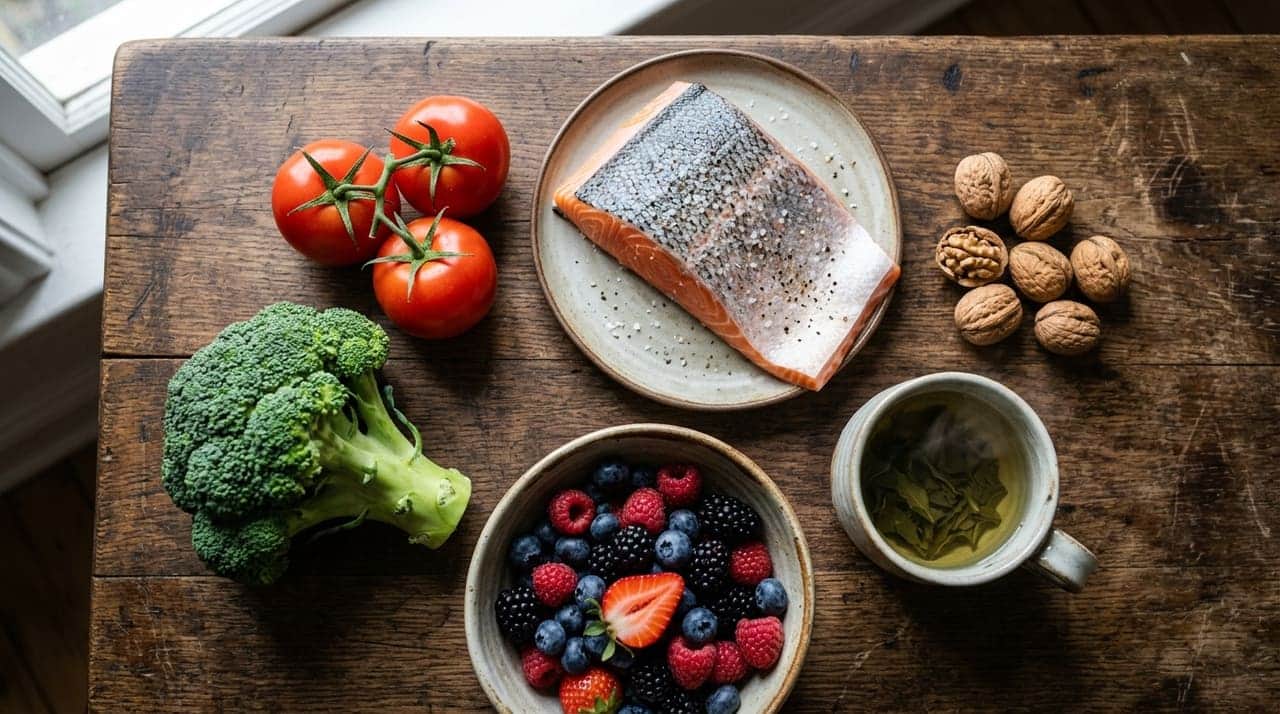
- Tomatoes and tomato products. Tomatoes are a major source of lycopene, an antioxidant that some studies have linked with prostate health. Cooking tomatoes with a little oil, as in sauces and soups, makes the lycopene easier to absorb. Watermelon and pink grapefruit also supply lycopene.
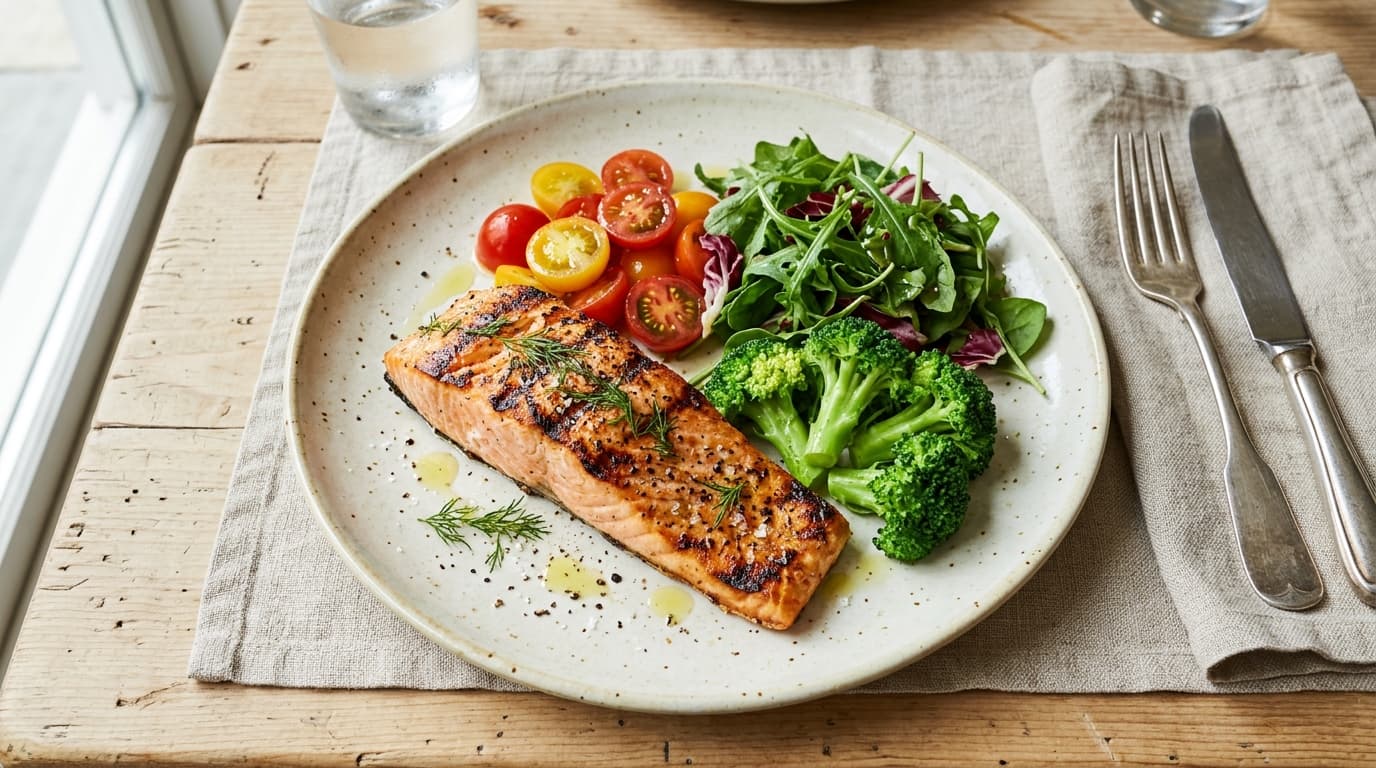
- Fatty fish. Salmon, mackerel and sardines provide omega-3 fats that support heart and overall health, and they make a good stand-in for red and processed meat.
- Cruciferous vegetables. Broccoli, cauliflower, Brussels sprouts, kale and cabbage contain natural plant compounds, and several population studies have associated regular intake with better prostate outcomes.
- Berries. Strawberries, blueberries, blackberries and raspberries are rich in antioxidants and vitamin C, part of the colourful produce experts recommend.
- Nuts and seeds. Almonds, walnuts, pecans and pumpkin seeds offer healthy fats and minerals such as zinc and selenium, and they make a satisfying swap for processed snacks.
- Legumes. Beans, lentils and chickpeas, including soy foods, are filling plant proteins that fit naturally into a meat-light, prostate-supportive pattern.
- Green tea. This unsweetened drink contains polyphenols and has been associated in some studies with prostate health, and it is a healthy replacement for sugary beverages.
- Olive oil. Extra virgin olive oil is a core healthy fat in Mediterranean-style eating, useful for cooking vegetables and dressing salads.
- Deeply coloured fruit and vegetables. Beyond the items above, the general rule is to favour bright, deep colours, since different pigments carry different beneficial plant compounds.
- Water. Staying well hydrated supports normal urinary function, although men with bothersome urinary symptoms may prefer to ease off fluids in the couple of hours before bed.
What the evidence does and does not show is worth repeating here. These associations are encouraging but modest, and none amounts to proof that a food prevents or treats any disease. The sensible takeaway is to enjoy these foods regularly as part of a varied diet, not to chase any one of them as a cure.
How these foods fit a balanced eating pattern
Lists are easy to admire and hard to live by, so it helps to translate them into meals. A practical target many sources mention is several servings of vegetables and fruit each day, often phrased as at least five, with plenty of colour on the plate. Around that core, whole grains replace refined ones, and protein comes more from fish, skinless poultry, beans and eggs than from red meat. Healthy fats such as olive oil, nuts and avocado take the place of butter and fried foods.
This is essentially a Mediterranean-style approach, and its strength is that it is realistic. You do not need exotic ingredients or strict rules. A tomato-based pasta sauce with a side of greens, a salmon fillet with roasted broccoli, a bean stew, a handful of walnuts and a cup of green tea instead of a soda are all ordinary choices. Because variety is part of the point, no single meal carries the weight. The pattern is what counts, and it is forgiving of the occasional indulgence. If a full overhaul feels daunting, changing one habit at a time tends to stick better than trying to fix everything at once. A varied diet like this also supplies broad nutrition that supports many systems, including the nutrients tied to healthy hair and to avoiding some causes of hair loss, and bone-supporting nutrients such as vitamin D.
What to limit
The flip side of eating more good foods is easing off the ones linked with less favourable outcomes. The usual advice is to limit, not necessarily eliminate, a few categories. Red meat such as beef, pork and lamb, and especially processed meats like bacon, sausage, bologna and hot dogs, are worth keeping occasional rather than routine. High intake of full-fat dairy and of saturated and trans fats from fried, fast and packaged foods falls into the same bracket. Heavily processed foods high in refined sugar and refined carbohydrates are best kept to the edges of the plate.
Sugary drinks deserve a special mention, since sodas and many fruit juices add a lot of sugar with little benefit, and unsweetened drinks like water and green tea, or a tea with ginger and lemon, are easy upgrades. Some men with urinary symptoms also find that caffeine and very spicy foods aggravate things, so trimming those can be worth a personal experiment. None of this is about fear or strict prohibition. It is about balance: when the limited foods are genuinely occasional, the overall pattern stays healthy, and good hydration rounds it out.

Lifestyle beyond food
Diet does not work alone, and the habits around it may matter just as much. A healthy body weight is one of the most consistent themes in men's health guidance, since carrying excess weight is tied to a range of less favourable outcomes. The good news is that the eating pattern above, with its emphasis on vegetables, whole foods and modest portions, naturally supports a healthy weight without calorie counting.
Physical activity is the other pillar. Regular movement, even something as accessible as brisk walking, has been linked with fewer urinary symptoms and better quality of life in men, and aerobic activity in particular tends to help. The broad recommendation is simply to be active most days. Beyond weight and movement, other healthy lifestyle habits fit the same picture of general health that supports the prostate. None of these habits is a treatment, but together they create the conditions in which a good diet can do its quiet work. If you are tracking your overall health, routine checks such as a complete blood count are something your doctor may order as part of a wider picture, and stress and sleep matter too, which is why some men look into things like how to test cortisol levels when fatigue lingers.
When to see a doctor for prostate symptoms
Food and lifestyle are for the long game. Symptoms are different, and they call for a professional. See a doctor if you notice a weak, slow or interrupted urine stream, difficulty starting to urinate, a frequent or urgent need to go, getting up several times a night to urinate, a feeling that the bladder does not empty fully, blood in the urine or semen, or pain in the pelvis, lower back or on urination. These signs have many possible explanations, and most are not the worst case, but they are not something to diagnose yourself or to treat with diet.
This matters because some symptoms overlap with conditions that need specific treatment, including infections that may call for antibiotics, and because timely evaluation gives you and your doctor the most options. A doctor can also advise on screening based on your age and personal risk, a conversation worth having even when you feel well. Treat persistent symptoms, ongoing pelvic or lower-back discomfort, or even a stubborn headache that accompanies feeling unwell, as reasons to check in rather than to wait. Eating well supports your health, but it is the start of looking after your prostate, not the whole of it, and it works best alongside, not instead of, regular medical care, much as managing a long-term condition such as rheumatoid arthritis relies on professional follow-up.
Summary
A prostate-supportive diet is not a special or complicated plan. It is the familiar, balanced, mostly plant-forward pattern that also protects the heart: lots of colourful vegetables and fruit, whole grains, beans, fish, nuts, seeds and healthy oils, with red meat, processed meat, full-fat dairy, fried foods and sugary drinks kept occasional. Tomatoes, fatty fish, cruciferous vegetables, berries, nuts and seeds, legumes and green tea are sensible foods to feature more often, valued for the pattern they build together rather than any single promise.
The evidence behind these choices is encouraging but limited, and no food prevents or treats prostate disease on its own. Pair good eating with a healthy weight and regular activity, and you have done the realistic, worthwhile part that is within your control. For symptoms, screening questions and any specific concern, see a doctor. This article is educational and does not replace advice from a qualified health professional who knows your situation.
Frequently asked questions
Is there really a diet that is best for prostate health?
There is no single official prostate diet. The eating pattern most often linked with prostate health is the same balanced, mostly plant-forward pattern recommended for the heart and overall wellness: plenty of vegetables and fruit, whole grains, beans, fish, nuts and healthy oils, with red and processed meat kept low. The simplest way to eat for your prostate is to eat well in general.
What are the best foods for prostate health?
Commonly highlighted foods include cooked tomatoes and other lycopene-rich produce, fatty fish such as salmon and sardines, cruciferous vegetables like broccoli and cauliflower, berries, nuts and seeds, legumes, green tea, and healthy fats such as olive oil. None of these works in isolation. They matter as part of a varied diet built mostly around plants and unprocessed foods.
Do tomatoes and lycopene protect the prostate?
Tomatoes are a useful, nutrient-dense food and a major source of lycopene, an antioxidant some studies have associated with prostate health. The evidence is mixed and far from proof, so tomatoes should be seen as a healthy addition rather than a guaranteed protection. Cooking tomatoes with a little oil, as in sauces, can make their lycopene easier for the body to absorb.
Can any food prevent prostate cancer?
No food has been shown to prevent prostate cancer. Diet research in this area is difficult and would need to follow people for many years to draw firm conclusions, so most findings show associations rather than cause and effect. A healthy overall pattern may be part of lowering long-term risk, but it cannot guarantee any outcome, and it does not replace screening or medical care.
Is fish good for the prostate?
Fatty fish such as salmon, mackerel and sardines supply omega-3 fats that support general and heart health, and they are a sensible alternative to red and processed meat. Choosing fish, skinless poultry, beans and eggs as protein sources fits the balanced pattern usually recommended for prostate and overall health.
Are dairy and red meat bad for the prostate?
It is more about quantity than a strict ban. Some research has linked frequent red meat, processed meat and high dairy intake with less favourable prostate outcomes, so the usual advice is to limit these rather than eliminate them. Keeping portions modest and leaning on fish, beans and vegetables for protein is a reasonable approach.
Does green tea help prostate health?
Green tea contains plant compounds called polyphenols and has been associated in some studies with prostate health, though the evidence is limited and not conclusive. As an unsweetened drink it is a healthy choice that can replace sugary beverages, which is a benefit in itself, but it should be seen as part of a pattern rather than a remedy.
How much fruit and vegetables should I aim for?
General guidance is to eat several servings of vegetables and fruit each day, often described as at least five servings, favouring deeply and brightly coloured produce. Variety matters because different colours supply different beneficial plant compounds. Building meals around vegetables, fruit, whole grains and legumes is the foundation of a prostate-supportive diet.
Can diet shrink an enlarged prostate?
Diet is not a proven treatment for an enlarged prostate, and it cannot be relied on to shrink one. A balanced eating pattern, a healthy weight and regular activity may support urinary and overall health, but persistent urinary symptoms should be assessed by a doctor, who can recommend appropriate treatment based on your situation.
Do supplements work better than food for the prostate?
For most men, whole foods are the better choice. Nutrients in food come packaged with fibre and other helpful compounds, and the overall eating pattern seems to matter more than any single nutrient. Supplements are not a substitute for a good diet, and some can interact with medicines or carry risks, so any supplement decision should involve a health professional.
When should I see a doctor about my prostate?
See a doctor if you notice a weak or interrupted urine stream, needing to urinate often or urgently, trouble starting, getting up repeatedly at night, blood in the urine or semen, or pelvic discomfort. These symptoms have many possible causes and are not a diagnosis on their own, but they deserve a proper medical evaluation rather than self-treatment with food or supplements.
Author
Equipe Editorial GuiaDeSaude
The GuiaDeSaude Editorial Team researches and writes content from recognized medical sources (PubMed, Ministry of Health, WHO, Mayo Clinic, among others). All information is checked against at least two sources before publication.